Electrostatic coating, Spraying paint, Electrostatic powder coating
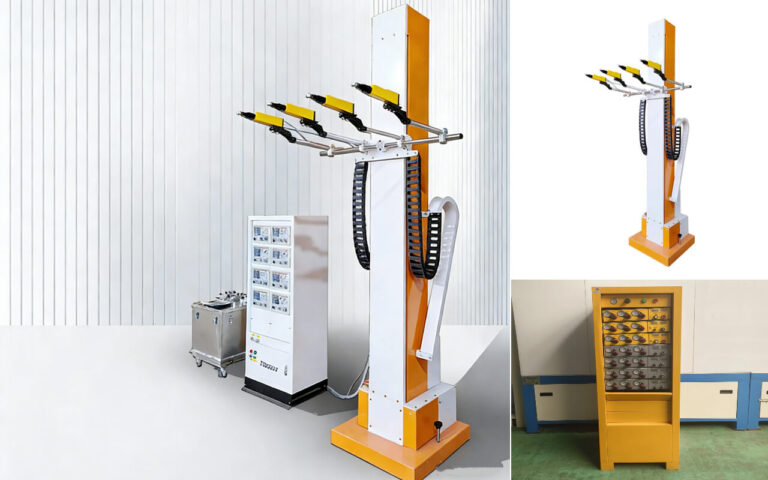
Electrostatic coating & spraying paint is a coating method that utilizes the principle of corona discharge: atomized coating particles acquire a negative charge within a high-voltage DC electric field and are attracted to the surface of a positively charged substrate. The equipment consists of components such as a spray gun or spray cup and a high-voltage power supply.
Electrostatic Coating & Spraying Paint Technology
Electrostatic coating & spraying paint is a surface treatment process that uses an electrostatic field to attract coating particles to a substrate. Its operating principle involves creating an electrostatic field where the spray gun or spray disc is positively charged and the workpiece is negatively charged. Under the influence of the high-voltage electric field, the coating forms a mist cloud that is attracted to the workpiece surface, achieving a coating utilization rate of over 80%. This technology is primarily used for coating metal substrates in sectors such as automotive manufacturing, home appliances, and construction, with a significant market share in powder coating applications.
Operating Principle
Electrostatic coating & spraying operates on the principle of electrostatic attraction: the grounded object to be coated serves as the positive electrode, while the coating atomizer (such as a spray cup or spray disc) is connected to a high-voltage source to serve as the negative electrode.
The steel strip to be oiled passes between upper and lower oil-spraying beams; these beams are constructed from a specialized aluminum alloy and mounted on adjustable, insulated support arms. The gap on the spraying beam can be precisely adjusted to a uniform 0.2 mm. Internally, the beam features an oil reservoir with an inlet connected at the center and return lines connected at both ends. Positioned at a specific distance from the steel strip, the beams are designed so that the oil flows to the discharge slot under zero pressure. When energized, a high-voltage electrostatic field is generated between the spraying beam and the grounded steel strip. Corona discharge occurs at the negative electrode, imparting a negative charge to the emitted oil mist. Driven by the electrostatic field, the charged particles are attracted efficiently and uniformly along the electric field lines onto the passing steel strip, creating a distinctive “wrap-around effect.” While positive corona discharge can also be used, negative polarity corona discharge is preferred because it has a lower critical (onset) voltage, offers greater stability and safety, and is less prone to sparking.
Electrostatic Powder Coating, Electrostatic Coating Line
Powder coatings are renowned for their high material utilization rates and environmental friendliness. While typical powder coating line speeds are around 10 m/min, the industry is increasingly focused on curing cycles, which are approaching their practical limits. New opportunities for conventional powder coatings are emerging, including applications for medium-density fiberboard (MDF), plastic components, and the coating of pre-assembled heat-sensitive units such as electric motors and pneumatic gas springs.
Powder coatings offer significant potential in the coil coating sector. Applications include perforated and embossed metals, as well as high-build and textured finishes; furthermore, properties such as hardness, flexibility, scratch resistance, and chemical resistance can be enhanced. Pre-coated coils offer distinct advantages over conventionally post-coated coils in terms of production efficiency, quality, and—most notably—environmental performance.
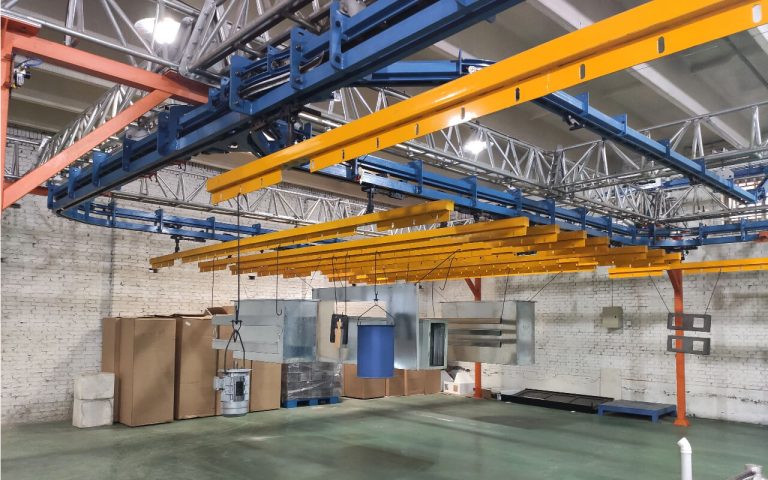
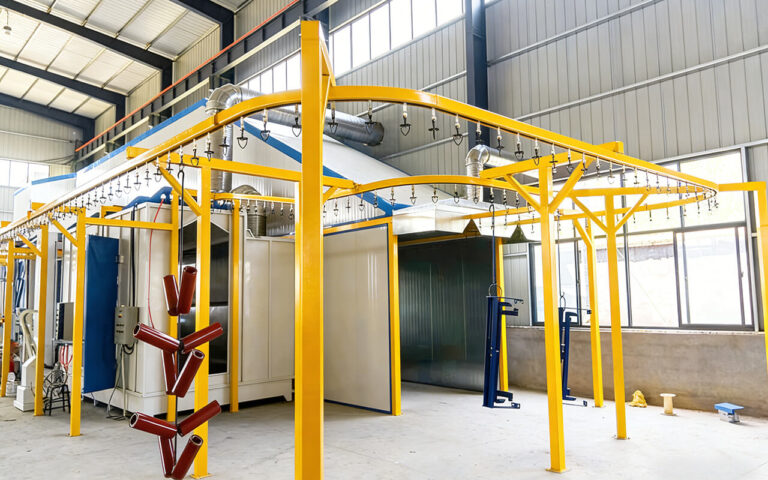
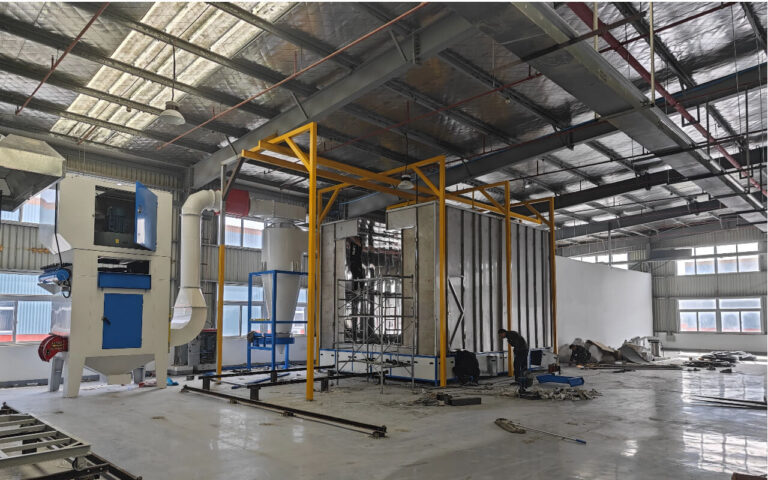
Electrostatic powder coating line are automated metal surface coating production lines based on the principle of electrostatic adsorption. They are mainly used for surface treatment of industrial products such as aluminum profiles, guardrails, control cabinets, air conditioner housings, fan grilles, and satellite antennas.

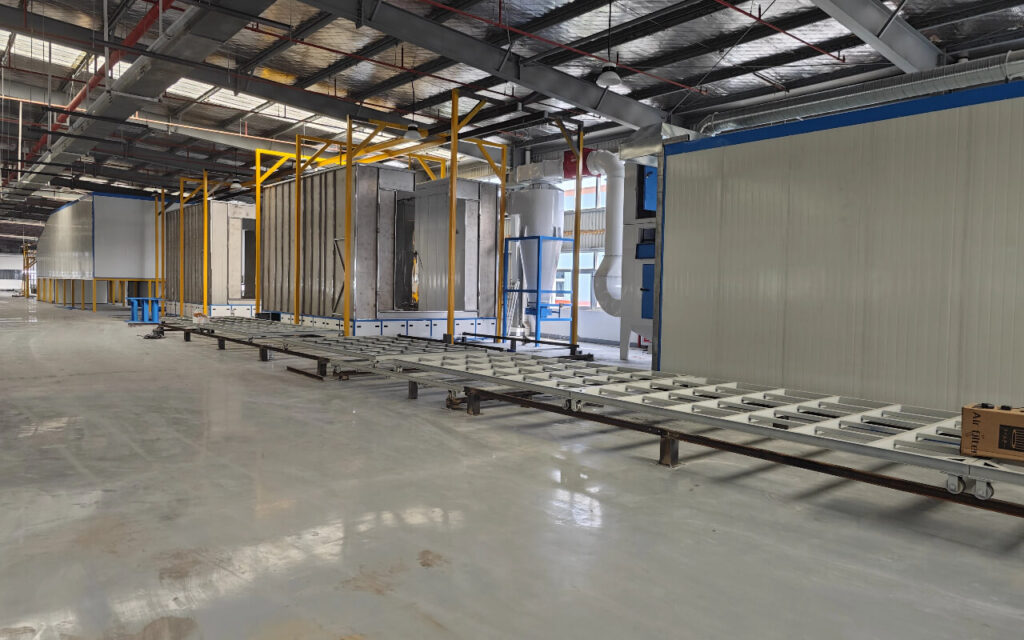
Electrostatic coating & spraying can also be combined with electrophoretic coating (electro-coating); in this hybrid process, the primer is applied via electrophoresis and the topcoat via electrostatic spraying, enabling continuous, automated coating operations. This combined application method has already been adopted in the automotive and bicycle manufacturing industries.