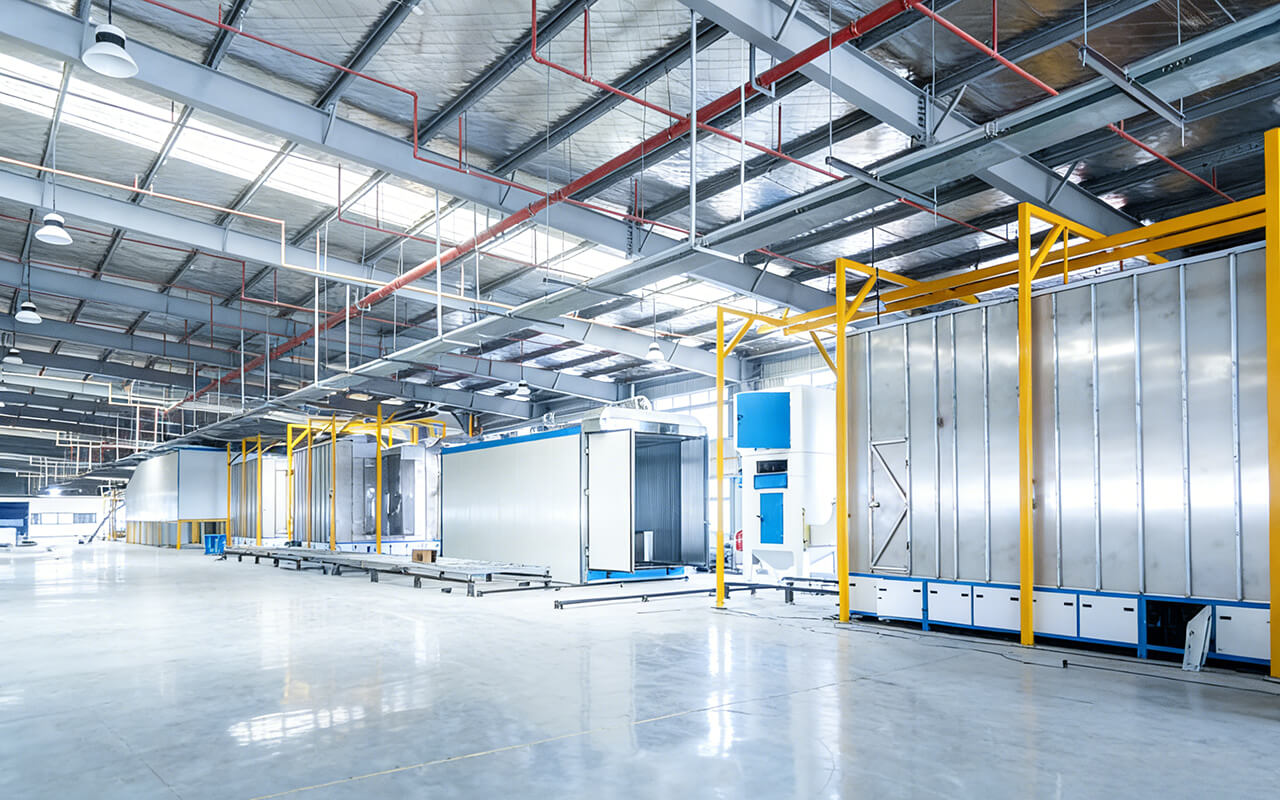
Electrostatic powder coating line, Automatic coating machine
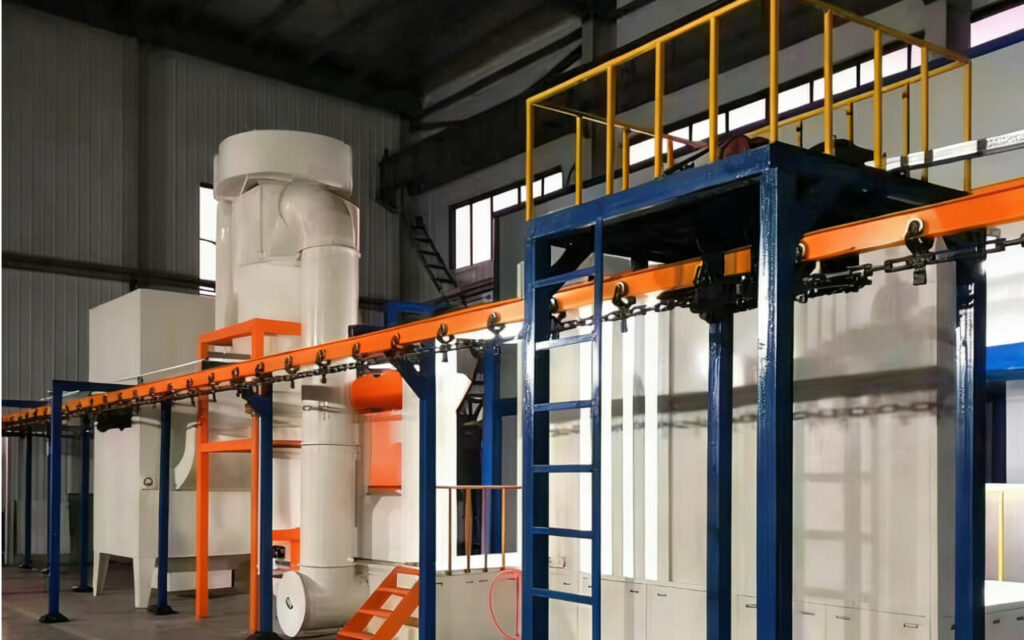
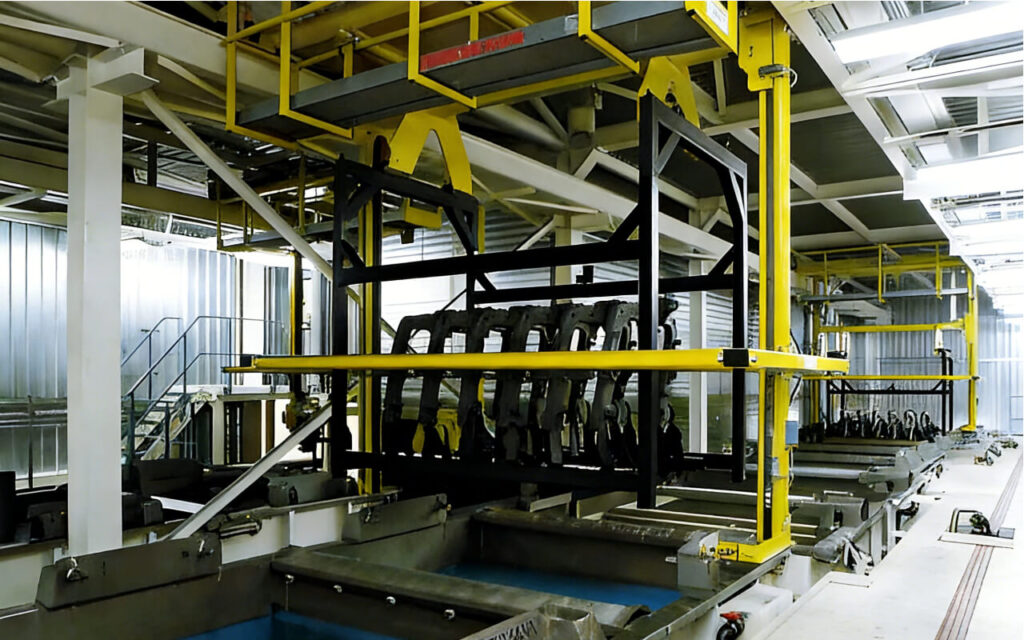
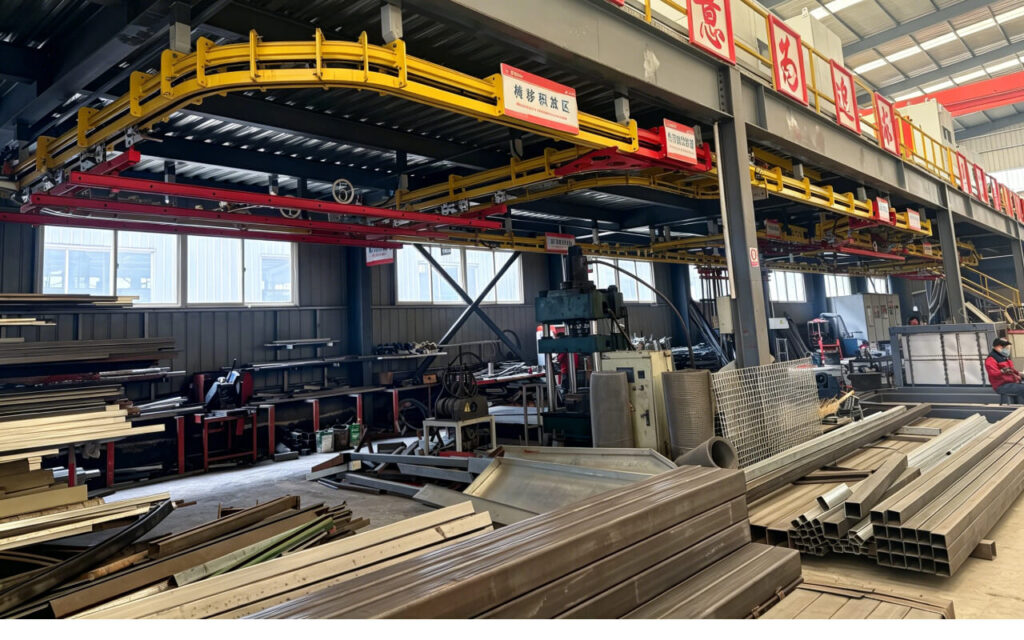
Electrostatic powder coating line are automated metal surface coating production line based on the principle of electrostatic adsorption. They are mainly used for surface treatment of industrial products such as aluminum profiles, guardrails, control cabinets, air conditioner housings, fan grilles, and satellite antennas.
The core process includes four stages: pretreatment (degreasing, derusting, phosphating), electrostatic spraying, high-temperature curing (160-210℃), and cooling. High-voltage electrostatics cause plastic powder to be uniformly adsorbed onto the workpiece surface, and a dense protective layer is formed after baking. The system consists of a powder supply device, an electrostatic spray gun, and a powder recovery device. The spray gun can generate up to 100kV voltage, overcoming the challenges of spraying deep cavities. The powder supply device supports 50-foot-long pipeline delivery and precise control of powder output. Related technological improvements include spraying devices that reduce electrostatic powder adsorption on the cylinder walls and agglomeration, and self-cleaning electrostatic powder coating equipment with a nozzle collection function to prevent nozzle entanglement.
Compared to traditional painting processes, this technology boasts advantages such as 95% paint utilization, no harmful gas emissions, and a single-coat thickness of 50-80μm. It also reduces energy consumption by 30% and supports secondary recoating before curing to improve yield. The recovery device utilizes a combination of cyclone dust collectors and filter cartridges, achieving a powder recovery rate exceeding 85%. The powder coating area typically includes the powder coating chamber, powder supply and recovery device, the area near its opening, powder storage, and areas where explosive dust may be generated.
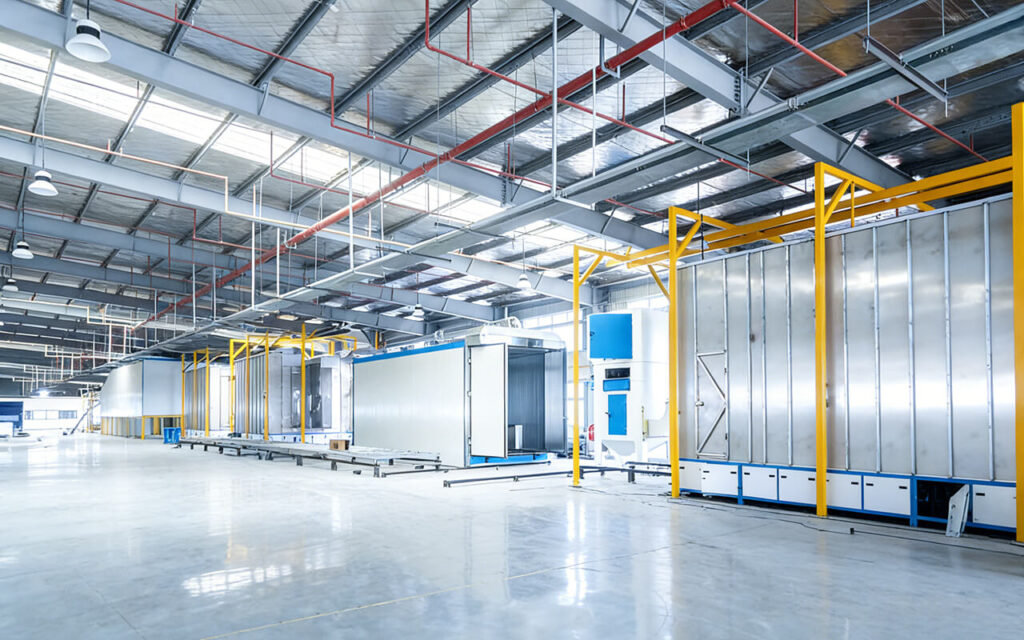
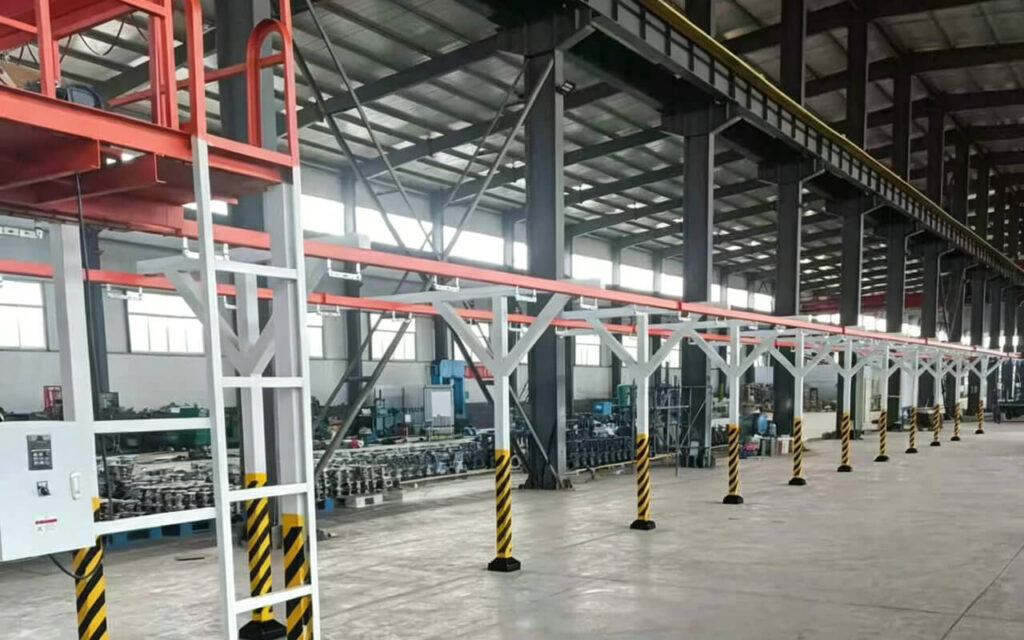
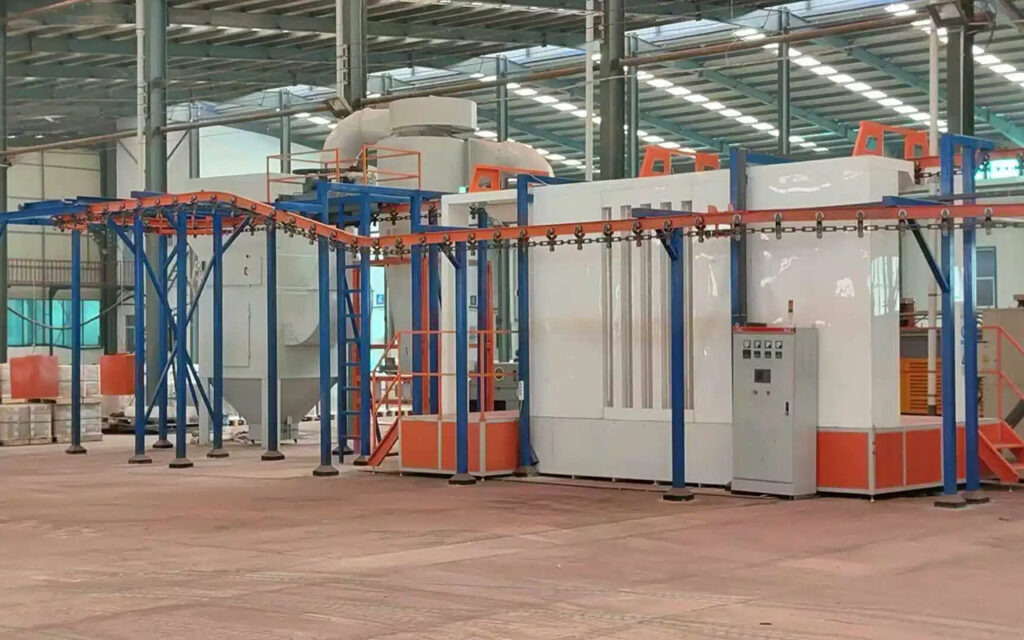
Electrostatic Coating & Spraying Paint
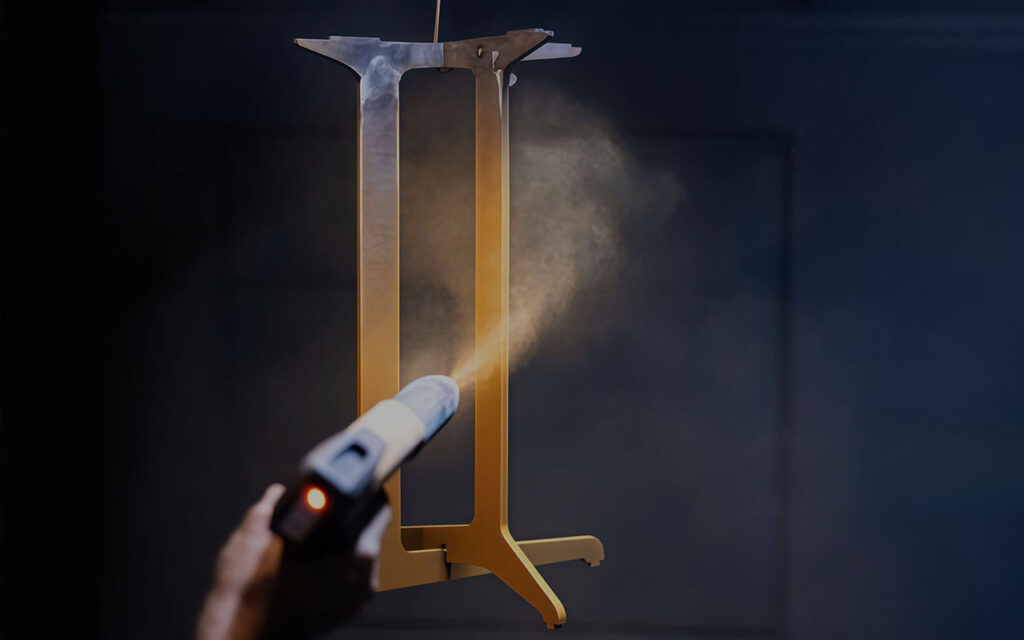
Electrostatic coating & spraying paint is a coating method that utilizes the principle of corona discharge: atomized coating particles acquire a negative charge within a high-voltage DC electric field and are attracted to the surface of a positively charged substrate. The equipment consists of components such as a spray gun or spray cup and a high-voltage power supply.
Electrostatic powder coating process:
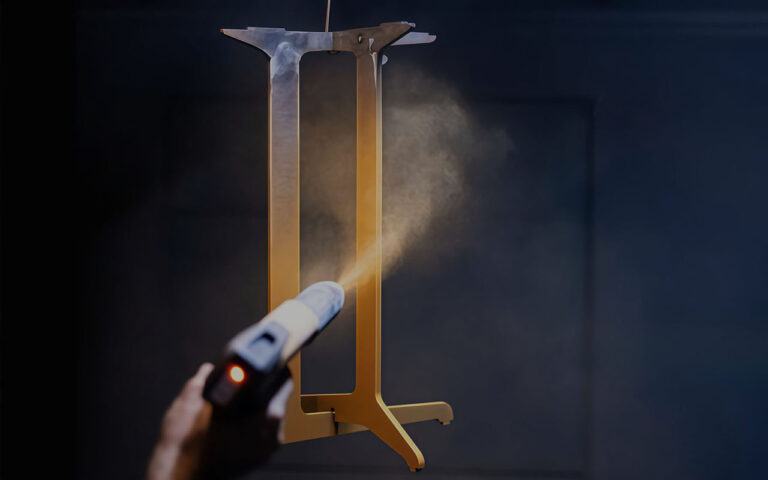
Plastic powder is charged using high-voltage electrostatic equipment and uniformly adsorbed onto the surface of the workpiece under the influence of an electric field. After high-temperature baking, the plastic particles melt into a dense protective layer that firmly adheres to the workpiece surface.
The powder electrostatic powder coating line mainly includes the following processes:
- Pretreatment (degreasing, derusting, phosphating);
- Electrostatic spraying;
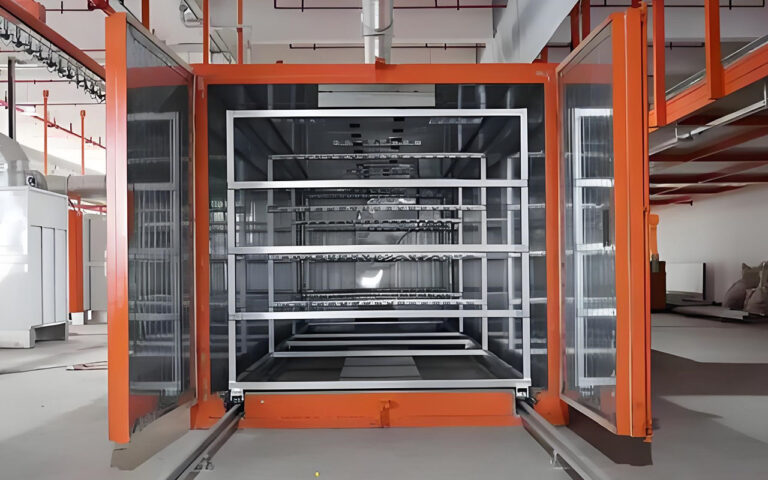
- High-temperature curing (the curing temperature is typically 160-210 degrees Celsius, depending on the composition of the powder and the required thickness);
- Cooling after removal from the oven.
Composition of an electrostatic powder coating system:
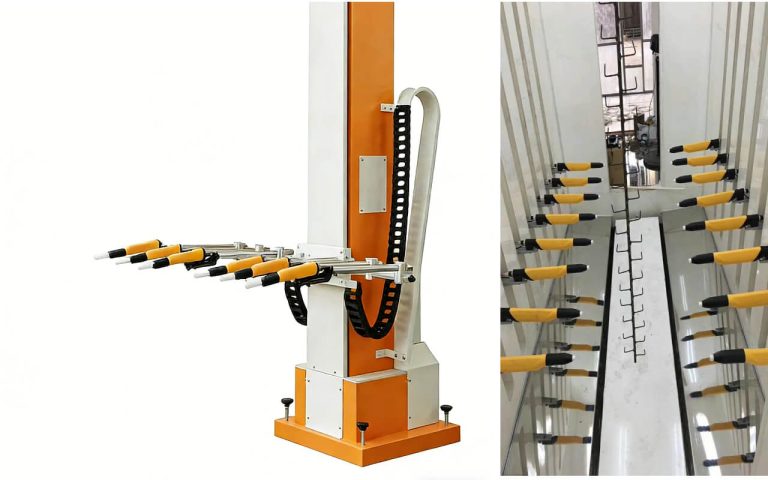
A typical electrostatic powder coating system consists of a powder supply device, one or more electrostatic spray guns and control devices, an electrostatic generator (usually located inside the electrostatic spray gun), and a powder recovery device.
1. Powder Supply Device
In the powder supply device, the powder is in a fluidized state, achieved through compressed air. The powder is then carried by a high-speed airflow via siphon action, forming a powder-air mixture. This mixture passes through a Venturi powder pump and a powder delivery pipe, finally reaching the spray gun.
The powder delivered to the spray gun is adjustable. Specifically, the parameters of the powder and air can be adjusted separately to change the powder output and atomization state, thereby achieving different coating thicknesses to meet the needs of different products. The powder supply device has sufficient capacity to provide adequate pressure and flow even with a 50-foot-long powder delivery pipe for the spray gun.
2. Regarding Static Electricity
The high voltage and low current generated by the electrostatic generator cause the electrode needles at the front of the spray gun to discharge in the air. When the powder is sprayed through the nozzle, the powder particles become charged and reach the grounded workpiece surface through the dual action of electrostatic adsorption and airflow.
The spray gun can generate sufficient voltage to ensure maximum coating effect, with a maximum voltage of up to 100kV. When spraying inner corners or deep cavities, the spray gun can effectively overcome the Faraday cage effect, ensuring good coverage and uniform film thickness on all surfaces of the workpiece to be sprayed.
3. Spray Gun
The structural design of the spray gun must meet the charging requirements of the powder, and the functional design must meet the spraying requirements of various forms of spraying operations and workpieces of various shapes.
Powder coating is a new process in surface coating technology, which is a coating process that uses powder to form a film. It can replace traditional paint processes in many situations.
Electrostatic powder coating line equipment:
1. Spraying System:
(a) High Voltage Electrostatic Generator: Dedicated high voltage power supply. Used to generate a high-intensity electrostatic field, approximately 2KV/cm.
(b) Electrostatic Powder Coating Gun: A manual spray gun can achieve uniform coating. The maximum powder output can reach 350g/min.
(c) Powder Supply Tank: Stores approximately 20-100kg of powder and is equipped with a powder pump for continuous powder supply to the powder coating gun.
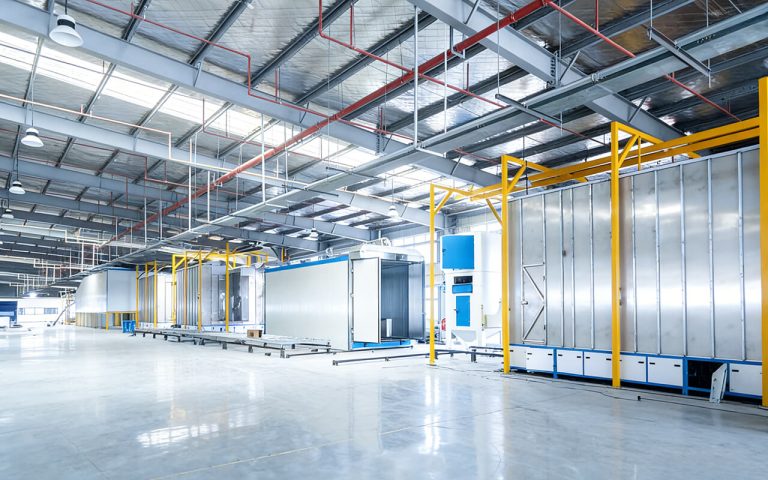
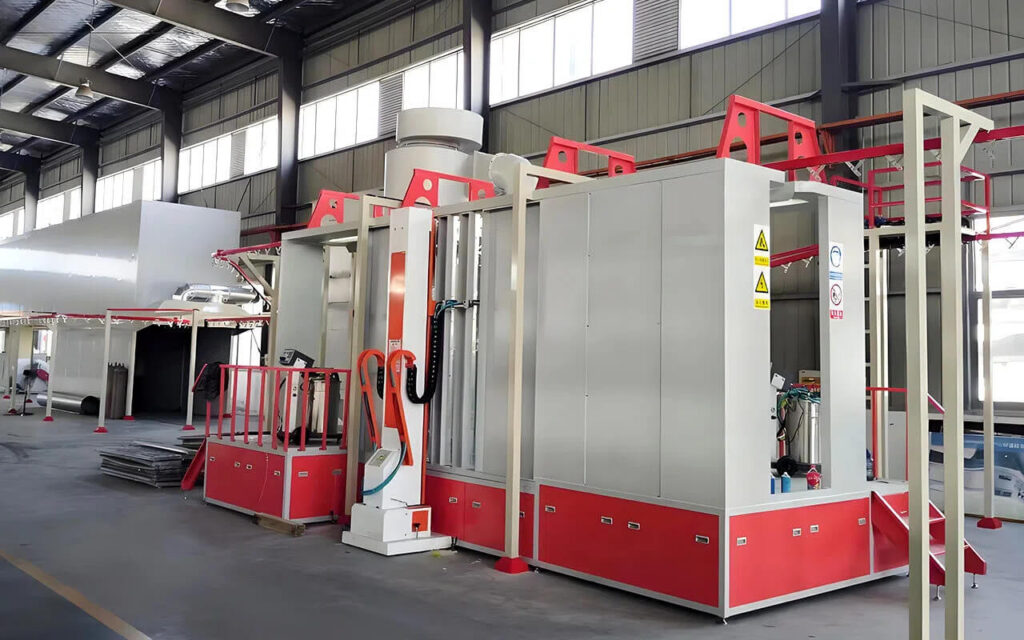
2. Powder Coating Chamber (Powder Coating Booths):
The working chamber for coating operations on the workpiece.
Powder coating booths, Powder spray booths
The powder coating booths is the core equipment of the electrostatic powder coating system. Its aerodynamic design maintains a stable airflow, keeping dust content below the lower explosive limit of 10g/m³, ensuring operational safety. Constructed of stainless steel, it is equipped with a vibrating screen filter and a quick color-changing device, supporting multi-color powder interchangeability…
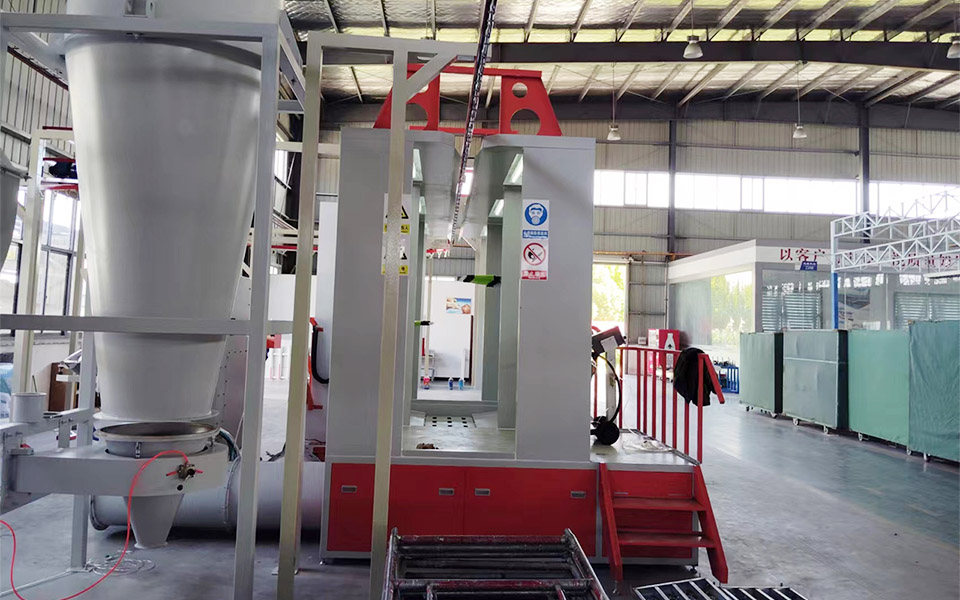
3. Powder Recovery Equipment:
Its main technical indicator is a powder recovery rate > 85%. There are three main combination types:
Powder Coating Recovery System
The electrostatic powder coating recovery system originated from dust collection equipment in environmental protection machinery. Its core function is to achieve the separation of the two-phase mixture (gas and solid). The key difference is that the solid phase collected in dust removal is waste, whereas the solid phase recovered here is valuable material for reuse.
(a) Cyclone dust collector and baghouse dust collector.
(b) Filter cartridge recovery (without duct connection)
(c) Multi-tube small cyclone dust collector and ceramic sintered plate dust collector.
4. Others:
The system also includes air source treatment, vibrating screens, and instruments for testing coating performance.
Advantages of Electrostatic powder coating Line
Compared to traditional painting processes, powder coating offers the following advantages:
- High Efficiency: One-time film formation increases productivity by 30-40%.
- Energy Saving: Reduces energy consumption by approximately 30%.
- Less Pollution: No organic solvent evaporation (free from harmful gases such as toluene and xylene found in paints).
- High Coating Utilization Rate: Up to 95% or more, and the powder can be reused multiple times after recovery.
- Excellent Film Performance: One-time film thickness can reach 50-80μm, with better adhesion, corrosion resistance, and other comprehensive indicators than painting processes.
- Low Yield: Secondary recoating is possible before curing.
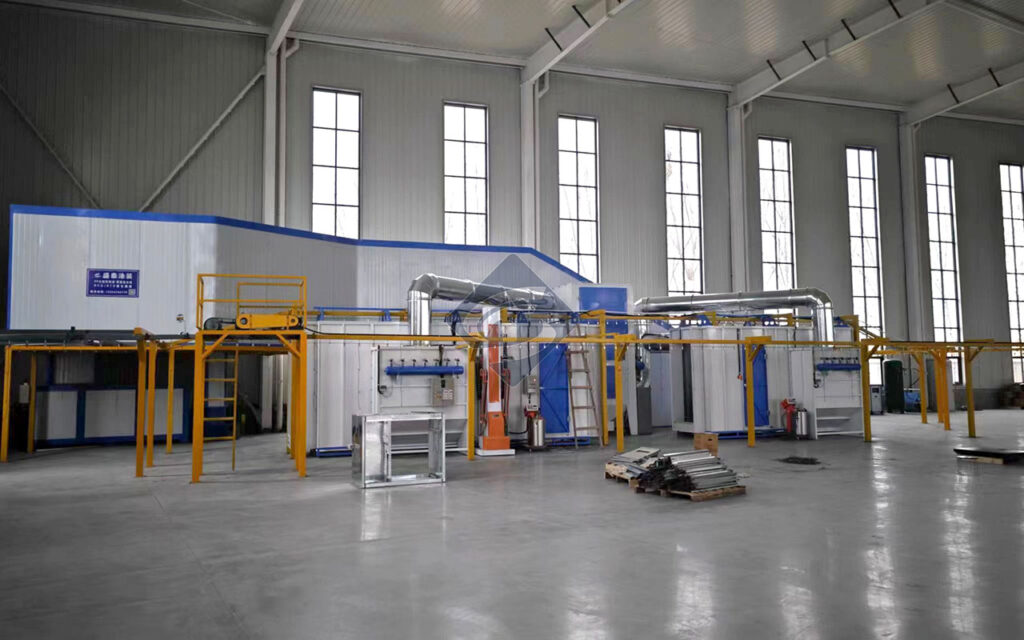
SHENGTAI: Powder Coating Line & Equipment
15 Years of Coating Solutions
ShengTai excels in providing custom automatic powder coating line, Liquid coating line & E-coating line solutions.