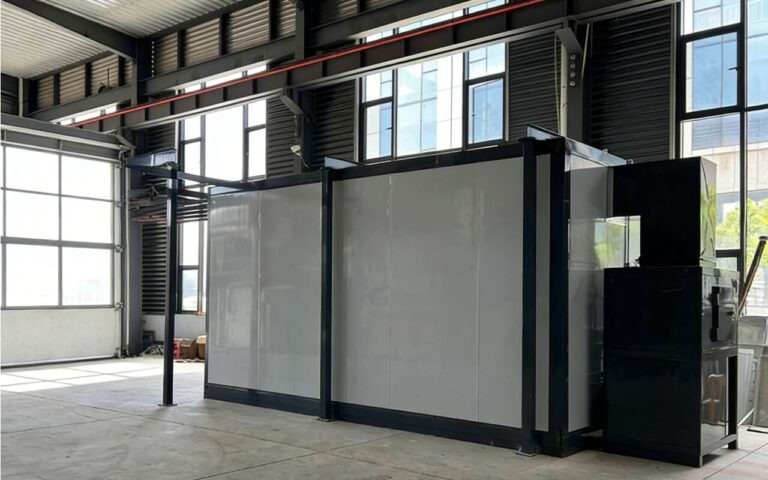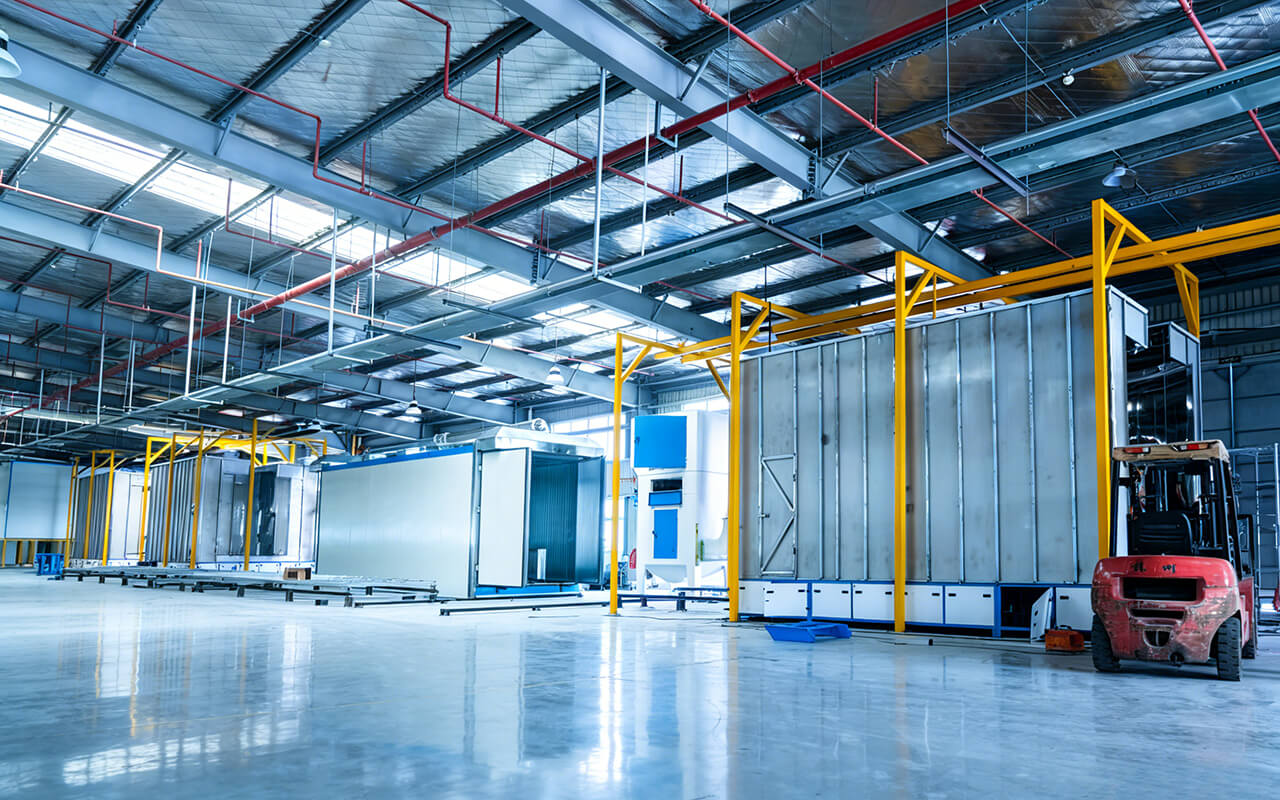
Automatic spray coating machine, Automated powder coating line
Coating refers to the application of a protective or decorative layer onto metal or non-metal surfaces. Automated powder coating line have evolved from manual operations to assembly lines and, subsequently, to automated coating & painting production lines. With the continuous rise in automation levels, these lines are finding increasingly widespread application across diverse sectors of industrial production.
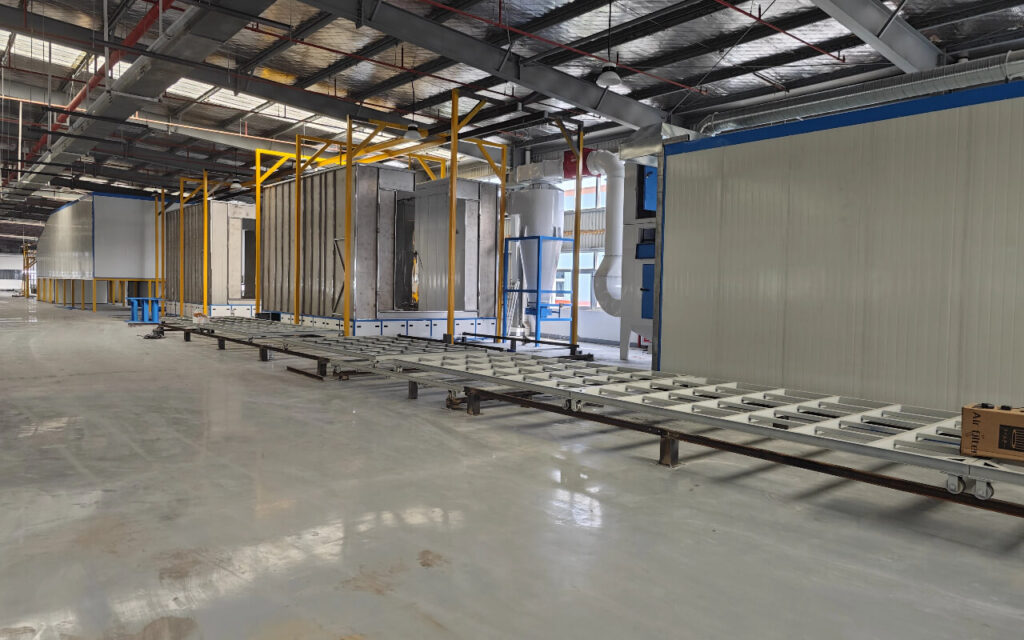
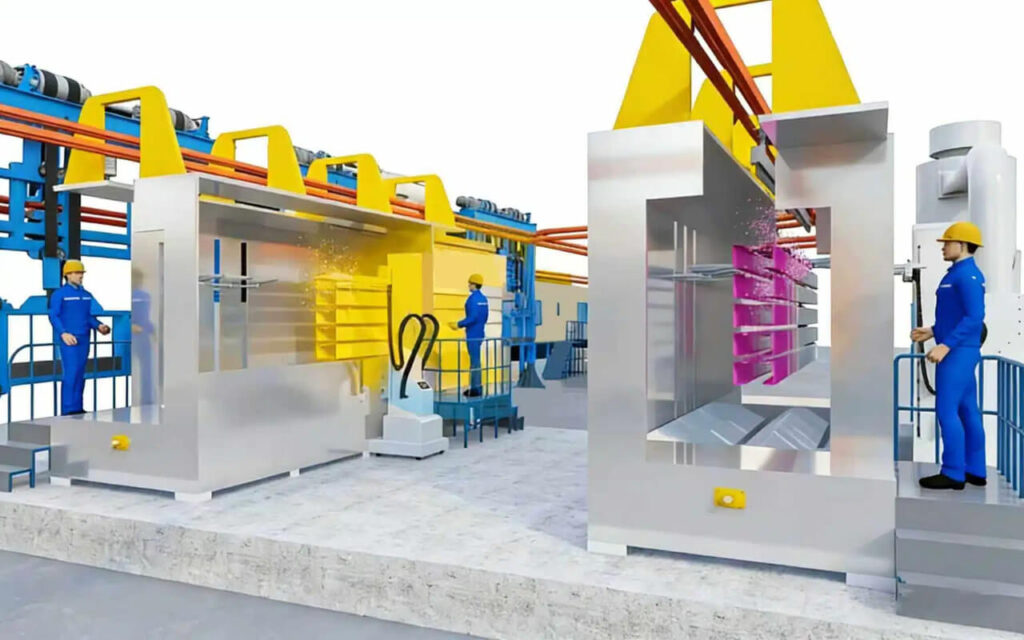
Automatic Powder Coating Line
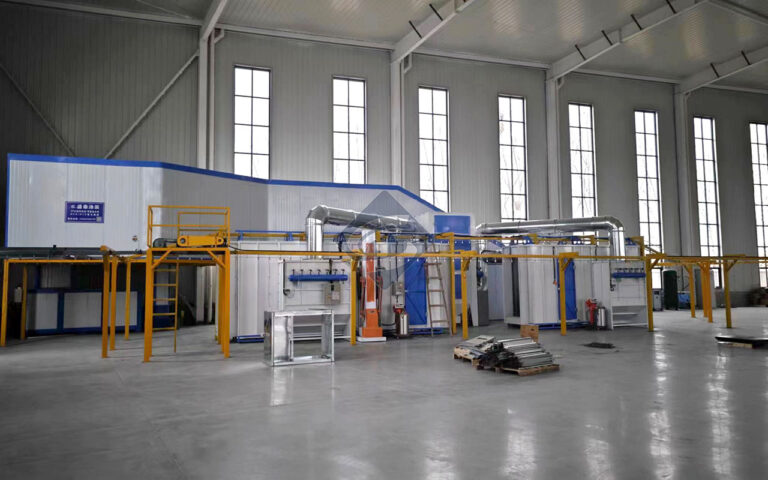
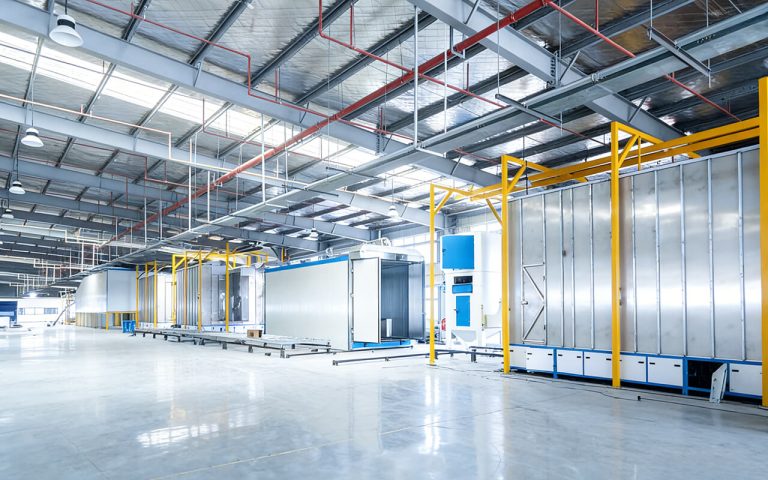
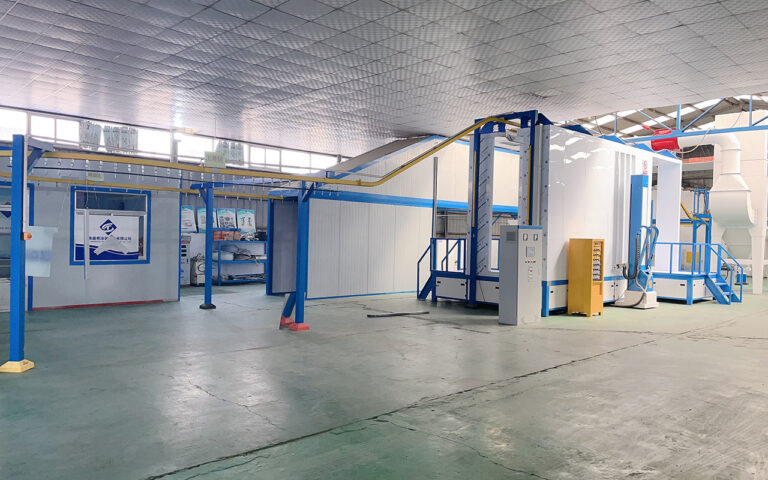
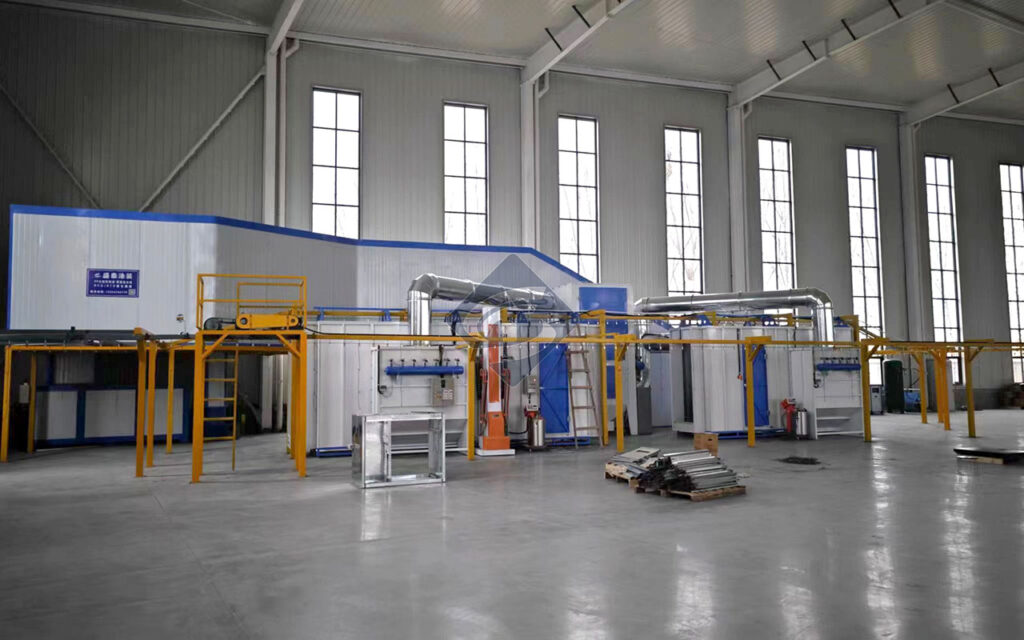
A automatic powder coating line is a specialized assembly line system used in industrial manufacturing for the surface painting and powder coating of workpieces. It comprises pre-treatment equipment, a powder coating system, painting equipment, a curing oven, a heat source system, an electrical control system, and a suspended conveyor chain.
The curing oven within the coating and painting line utilizes a hot air circulation method, maintaining the internal temperature variation within a tolerance of ±3°C; the heat source can be selected from electricity, steam, natural gas, or fuel oil. This system is suitable for the coating of individual workpieces or small batches, and it integrates with equipment such as suspended conveyors and electric rail trolleys to facilitate transport operations.
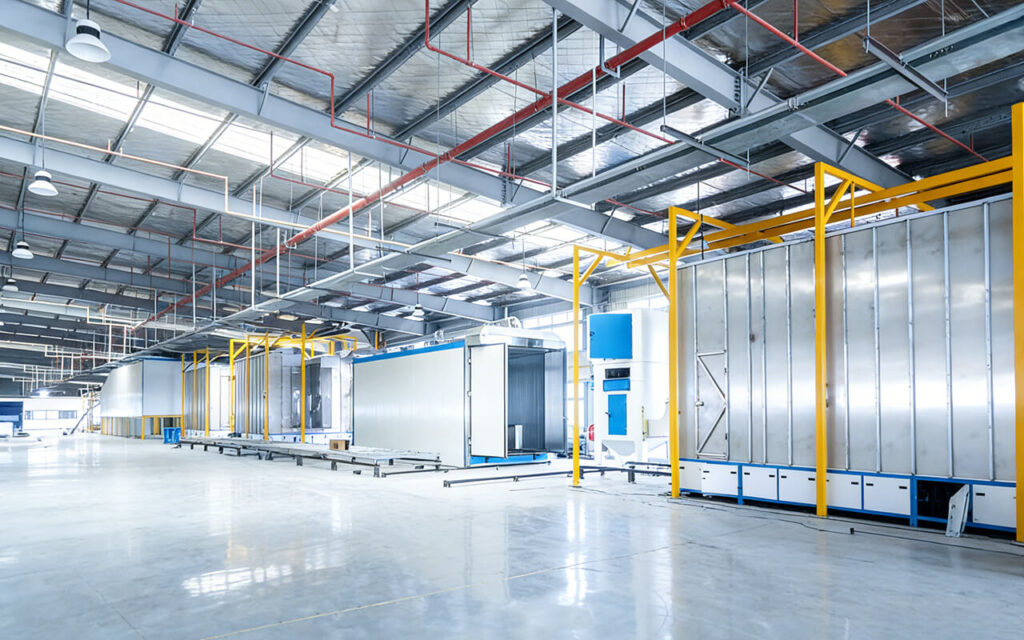

The Process of a Powder Coating Line
The process flow of the automatic powder coating line is divided into three stages: pre-treatment (degreasing, rust removal, and phosphating), coating (spraying within a paint booth), and drying/curing. The electrical control system employs a Programmable Logic Controller (PLC) to automate process control, while the suspended conveyor chain is capable of transporting workpieces weighing between 500 and 600 kg. The paint booth options include both oil-curtain and water-curtain designs; for the actual painting stage, optional configurations include robotic electrostatic spraying or a fixed-gun spindle system. Following digital upgrades, the system incorporates intelligent conveying and automated spraying equipment—integrating online inspection modules and AI vision detection systems—to support flexible production across multiple product varieties.
Step 1: Pretreatment Operations in the Coating Line
Pretreatment methods range from simple manual processes to automated systems; the latter include automatic spraying and automatic immersion-spray hybrid processes. Workpieces must undergo surface treatment to remove oil and rust prior to powder coating. This stage utilizes various chemical agents, primarily derusting agents, degreasers, surface conditioners, and phosphating agents.

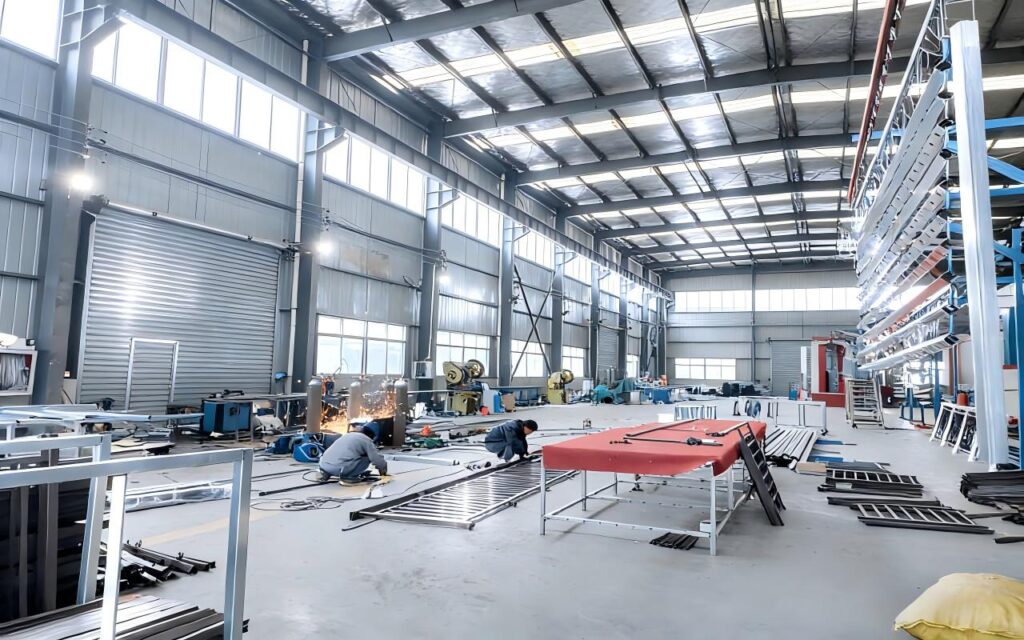
In the pretreatment section or workshop, the primary priority is establishing strict protocols for the procurement, transport, storage, and handling of strong acids and alkalis. Workers must be provided with appropriate protective clothing and safe, reliable equipment for containment, transport, and chemical preparation; furthermore, emergency response and rescue procedures must be established for potential accidents. Secondly, given the generation of waste gas, liquid waste, and other by-products during pretreatment, environmental protection measures—such as exhaust ventilation, liquid drainage systems, and waste treatment facilities—must be installed. The quality of pre-treated workpieces varies depending on the specific pre-treatment solutions and the process flow of the coating line. For well-processed workpieces, oil and rust are completely removed; to prevent immediate re-rusting, phosphating or passivation is typically performed in the final stages of pre-treatment. Before powder coating, the phosphated workpieces must be dried to remove surface moisture. For small-batch or single-unit production, air drying (natural or wind-assisted) is generally used. For high-volume assembly line operations, low-temperature drying in ovens or drying tunnels is standard practice.
Step 2: Coating (Spray Booth Application)
Manual powder coating equipment is typically used for small batches, whereas either manual or automatic equipment may be used for high-volume production. Regardless of the method, quality control is crucial. It is essential to ensure uniform powder coverage and consistent thickness, while preventing defects such as thin coating, missed spots, or powder being rubbed off.


During this stage of the coating line, special attention should be paid to the workpiece hooks. Before curing, any powder adhering to the hooks should be blown off to prevent the excess powder from curing in place. If removing excess powder before curing proves difficult, the cured powder film must be stripped from the hooks promptly to ensure good electrical conductivity, thereby facilitating powder adhesion for the next batch of workpieces.
Step 3: Powder Coating Line Curing Process
Key considerations for this process include the following: For small-batch or single-unit production, care must be taken to avoid knocking off powder before the workpiece enters the curing oven; if powder is rubbed off, it should be touched up immediately. Strict control over the process, temperature, and duration is required during baking to prevent color variations, over-baking, or under-curing caused by insufficient time.
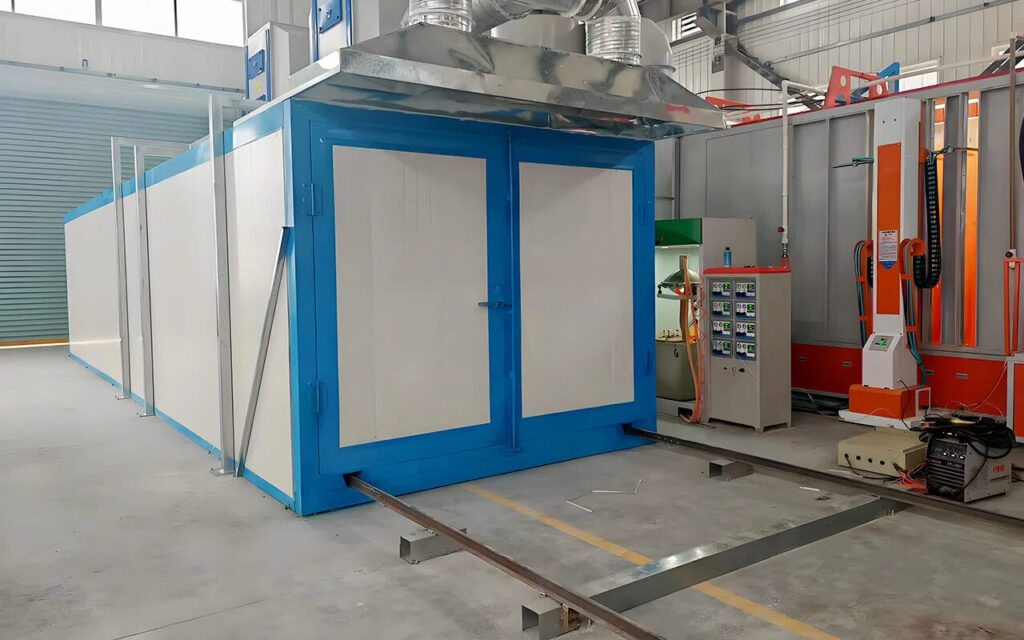
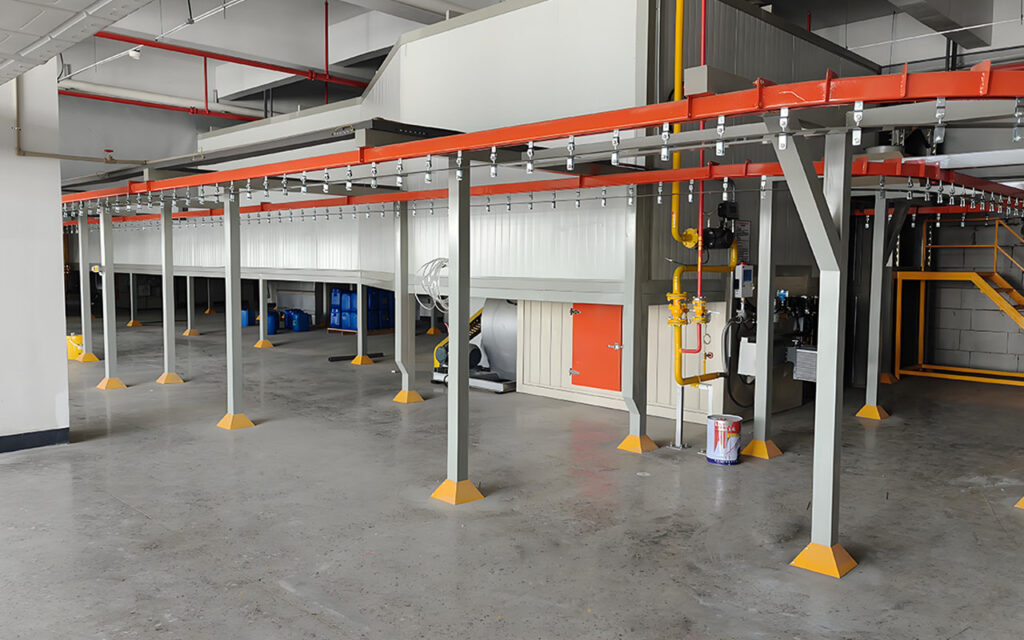
For high-volume workpieces on automatic conveyors, a careful inspection for missed spots, thin coating, or rubbed-off powder is required before they enter the drying tunnel. Non-conforming parts must be identified and prevented from entering the tunnel; whenever possible, they should be removed and re-coated. If a workpiece is rejected due to thin coating, it can be re-coated and cured again after exiting the drying tunnel. Applications span industries such as automotive manufacturing, home appliances, and 3C electronics; some production lines are equipped with water-based paint circulation systems and VOC exhaust treatment units.
SHENGTAI: Powder Coating Line & Equipment
15 Years of Coating Solutions
ShengTai excels in providing custom automatic powder coating line, Liquid coating line & E-coating line solutions.