

 English
 Español
 Português
 Русский
 عربي
عربي Türkçe
 Deutsch
 Polski
 Français
 Italiano
 Tiếng Việt
Electrical Power Unit, Power Supply System
The DC power supply and power distribution system is a critical factor in ensuring the quality of electrophoretic coating. Its stability and reliability directly affect key performance indicators such as coating thickness, uniformity, and adhesion. With proven expertise in designing and manufacturing high-performance E coating lines and E coating equipment, ShengTai Painting Equipment provides reliable and efficient solutions to meet diverse industrial coating requirements.
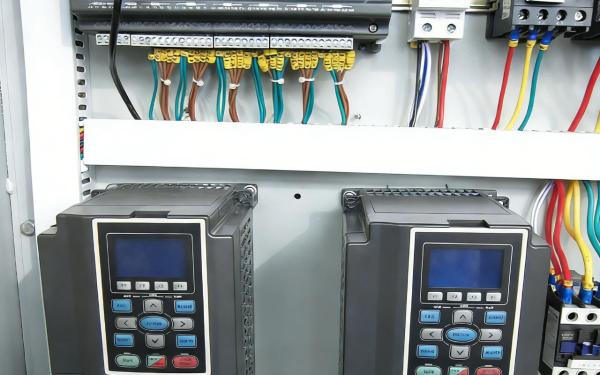
The DC power supply and power distribution system of an E coating line is a core component of the electrophoretic coating process. Its primary function is to provide stable direct current to ensure uniform deposition of the coating on the workpiece surface.


DC Power Supply
-
Rectifier
The rectifier is the key component of the DC power supply, responsible for converting industrial alternating current (AC) into direct current (DC). Modern electrophoretic coating systems typically use diode or thyristor (SCR) rectifiers, which achieve rectification by controlling one-way current conduction. -
Filtering Device
After rectification, the DC output may still contain AC ripple (voltage pulsation). Filtering devices—usually a combination of inductors and capacitors—are used to eliminate these pulsations, resulting in a smoother output voltage and minimizing negative effects on coating quality. In general, the voltage ripple is required to be no more than 5% of the average DC voltage. -
Voltage Regulator
The output voltage can be adjusted according to process requirements. In most E coating lines, the voltage regulation range is typically 0–500 V, with the exact operating voltage determined by factors such as workpiece type and coating material characteristics.
Power Distribution System
1. Conductive Devices
These components connect the DC power supply to the workpieces and electrodes in the electrophoresis tank, ensuring reliable current transmission. Common conductive methods include:
-
Busbar Connection: Conductive copper busbars are installed above the electrophoresis tank, and the workpiece hangers make contact with the busbar to energize the parts.
-
Conveyor Track Conduction: The conveying track itself is used as a conductor to transmit current to the workpieces, although this method may cause some wear to the track over time.
-
Magnetic or Clamp Connections: Suitable for small workpieces or special applications, using magnetic contacts or clamps to temporarily connect electrodes to the workpieces.
2. Multi-Stage Power Supply Control
To improve coating quality and throwing power, some E coating equipment adopts multi-stage voltage control. For example, a lower voltage (50–100 V) is applied when the workpiece initially enters the tank to avoid intense electrolysis. In the main electrophoresis zone, the voltage is increased to 150–250 V to ensure sufficient coating thickness and uniformity.
3. Safety Protection Devices
These include overvoltage protection, overcurrent protection, and leakage protection. When abnormalities occur, the system automatically cuts off the power supply to prevent equipment damage and electrical hazards.
4. Coordinated Control with the Process
The DC power supply and power distribution system must work in close coordination with other parts of the E coating line, such as the conveyor system, temperature control system, and anode system. For example, when the conveyor stops, the power supply should automatically reduce the voltage to a safe level. Since temperature fluctuations can affect paint conductivity, voltage or current compensation may be required accordingly.
Conclusion
In summary, the DC power supply and power distribution system is a critical factor in ensuring the quality of electrophoretic coating. Its stability and reliability directly affect key performance indicators such as coating thickness, uniformity, and adhesion. With proven expertise in designing and manufacturing high-performance E coating lines and E coating equipment, ShengTai Painting Equipment provides reliable and efficient solutions to meet diverse industrial coating requirements.


