

 English
 Español
 Português
 Русский
 عربي
عربي Türkçe
 Deutsch
 Polski
 Français
 Italiano
 Tiếng Việt
Complete Guide to Automotive Paint Repair — From Surface Prep to Mirror Finish
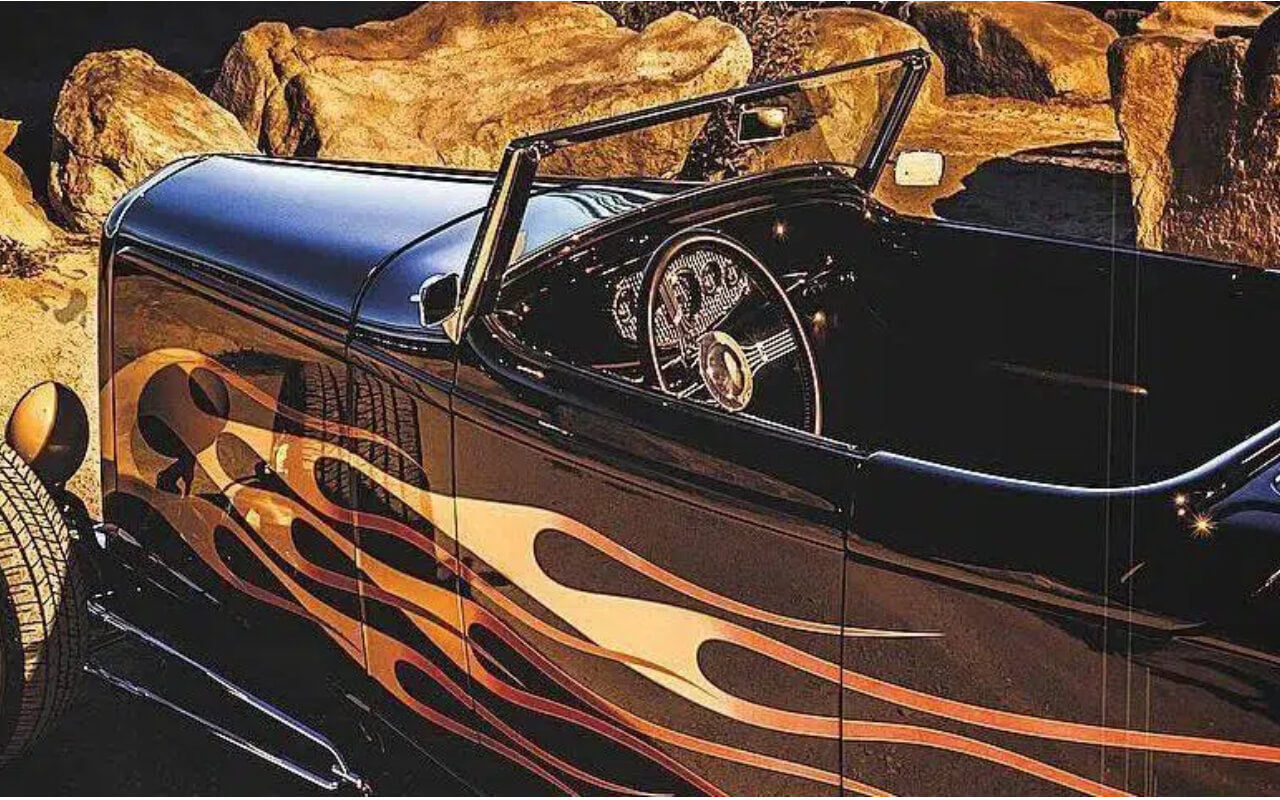
Car painting for automobiles generally uses bake-cure coatings. In vehicle plants, after the frame and body shell welding are completed, the next operation is painting. Types include conventional paint, metallic paint, and pearlescent paint. Typical automotive painting operations: putty filling, sanding, spraying, etc. The basic steps for automotive painting are as follows:
Before painting
1. Cleaning, identification, assessment, and masking
Clean the entire vehicle, identify the type of existing coating, assess the damage level, and determine the repair process.
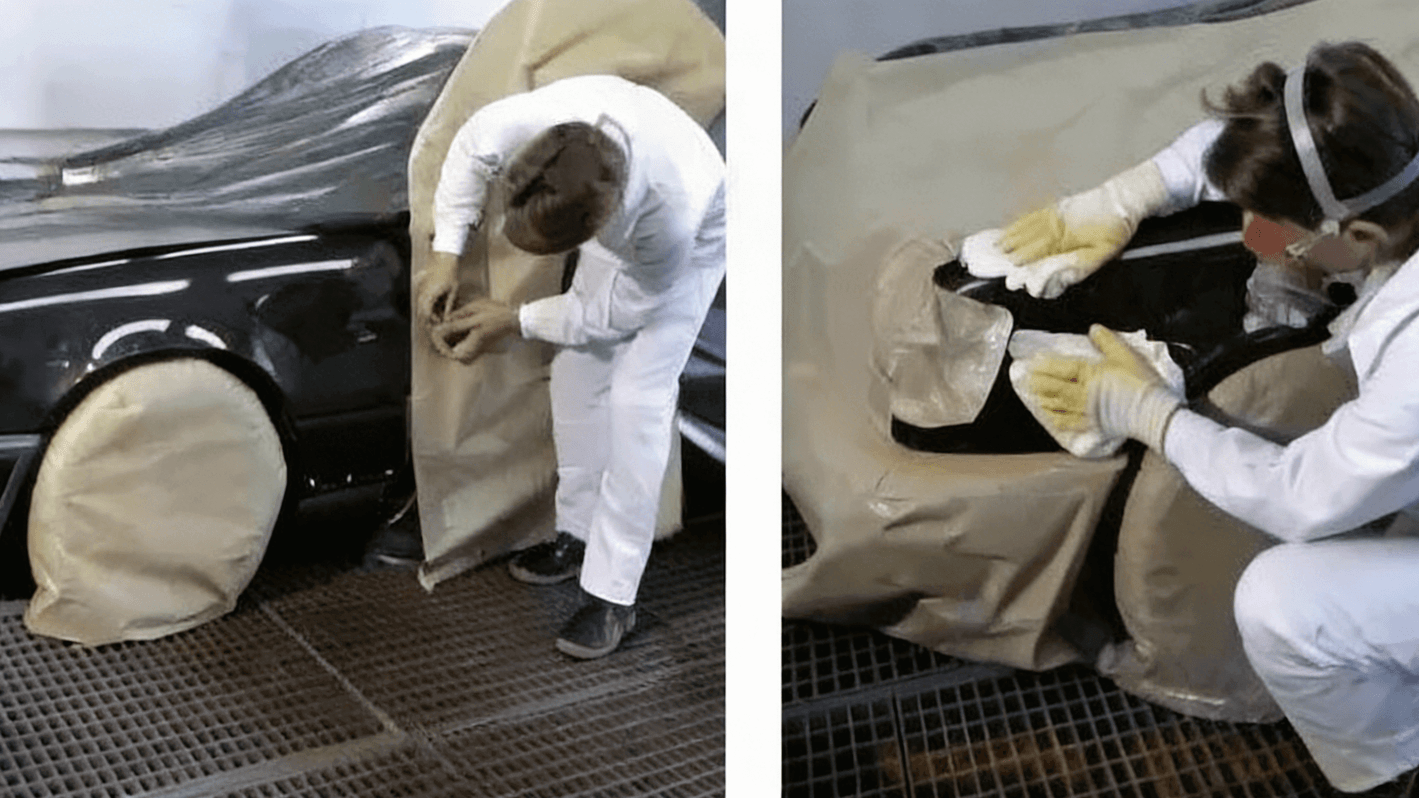
2. Masking and degreasing
Protect areas around the damage with masking paper and degrease the areas that will be sanded.

3. Remove old paint and feather the edges
Use the correct grit sandpaper and sander to remove old paint in the damaged area and feather the edges.
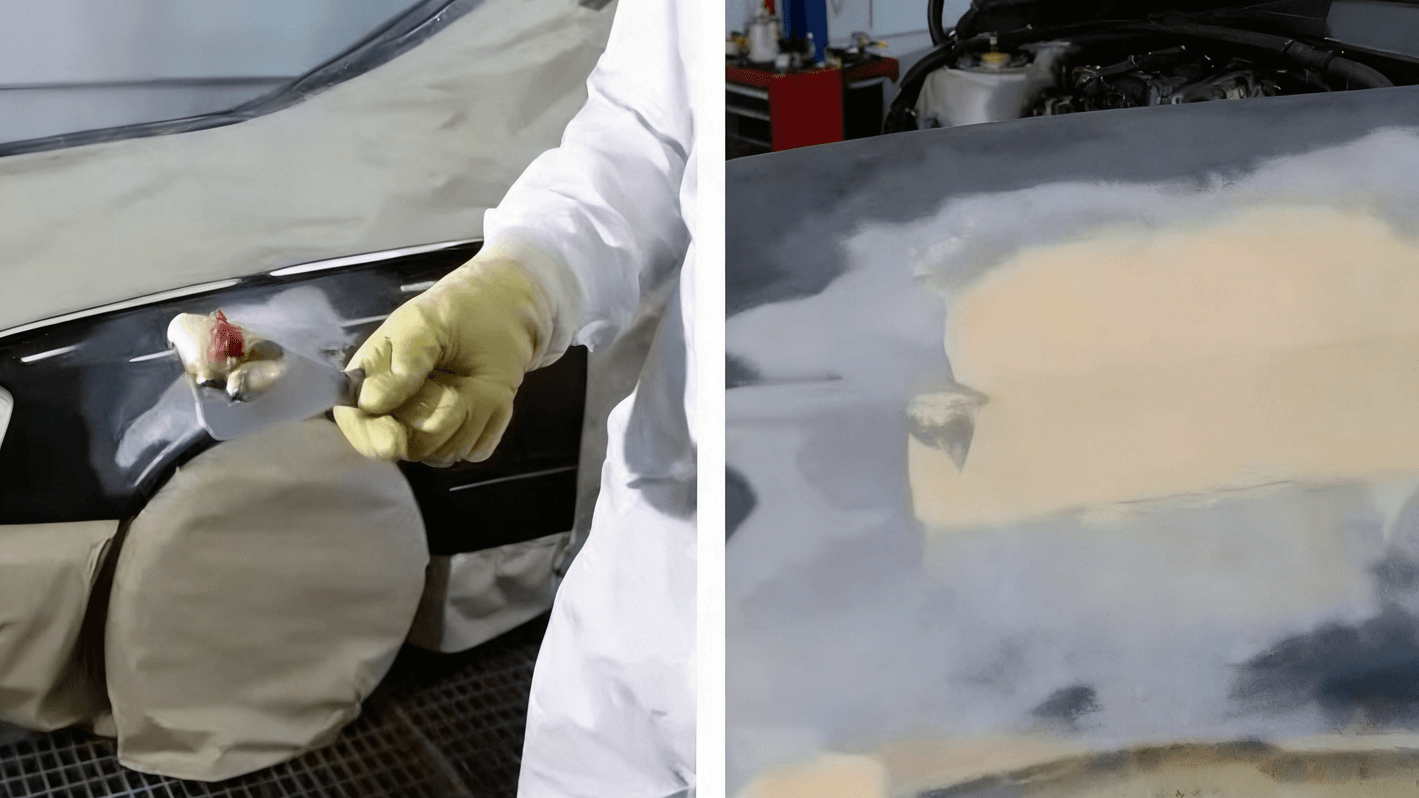
4. Apply body filler (putty)
After cleaning and degreasing, apply an appropriate amount of putty and cure/dry with infrared lamps.

5. Sand putty and old coatings
Use a sander or hand block with suitable sandpaper to level the putty. If more putty is needed, reapply promptly to avoid rework. After putty is smooth, scuff the surrounding old coating with P360 sandpaper using a dual-action sander.
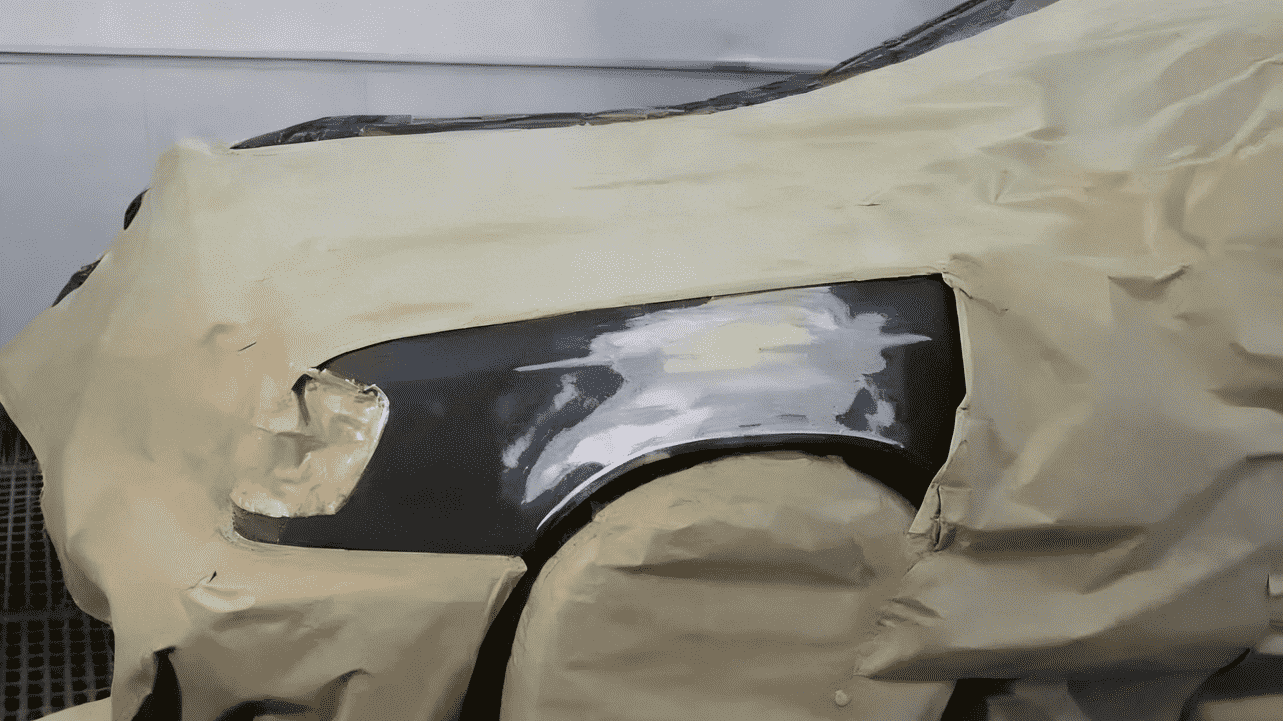
6. Clean, degrease, and mask
Blow dust off with an air gun, wipe the putty-surrounding area with degreaser, and mask areas that will receive the mid-coat primer.
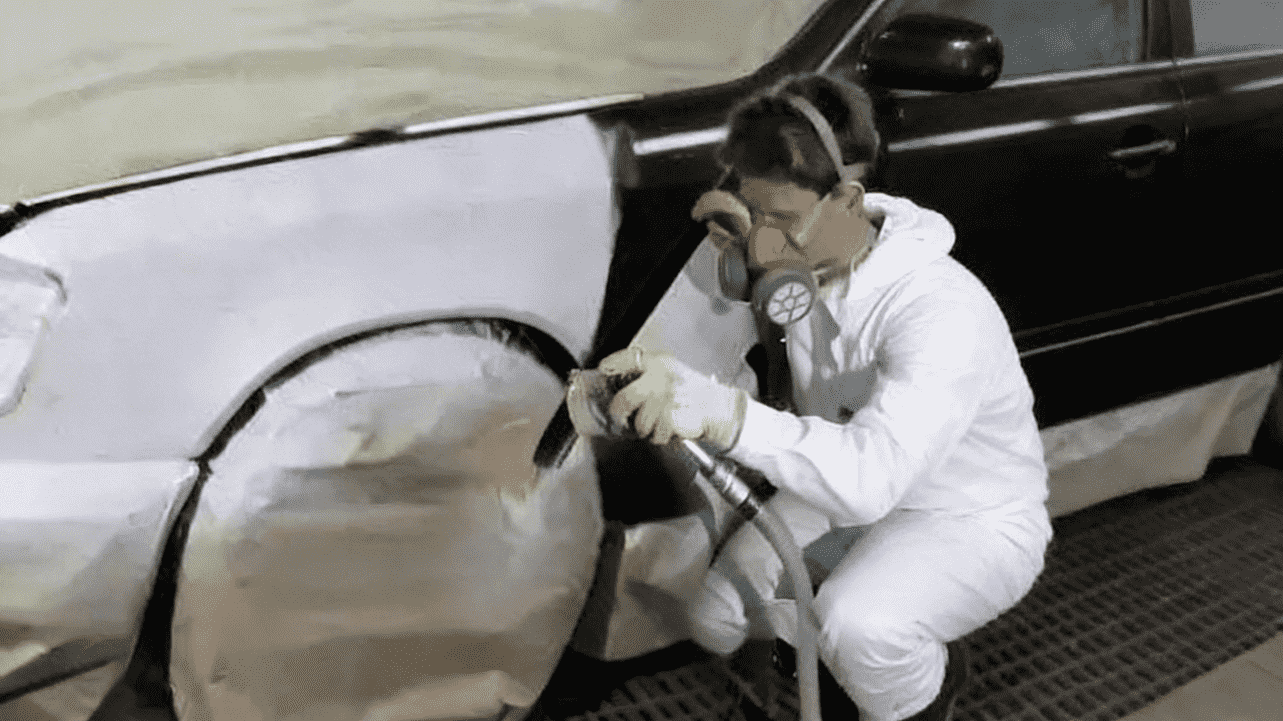
7. Apply mid-coat primer
Treat any bare metal with rust-inhibiting primer first. After the rust primer is surface-dry, spray two to three coats of prepared mid-coat primer, then bake/dry.
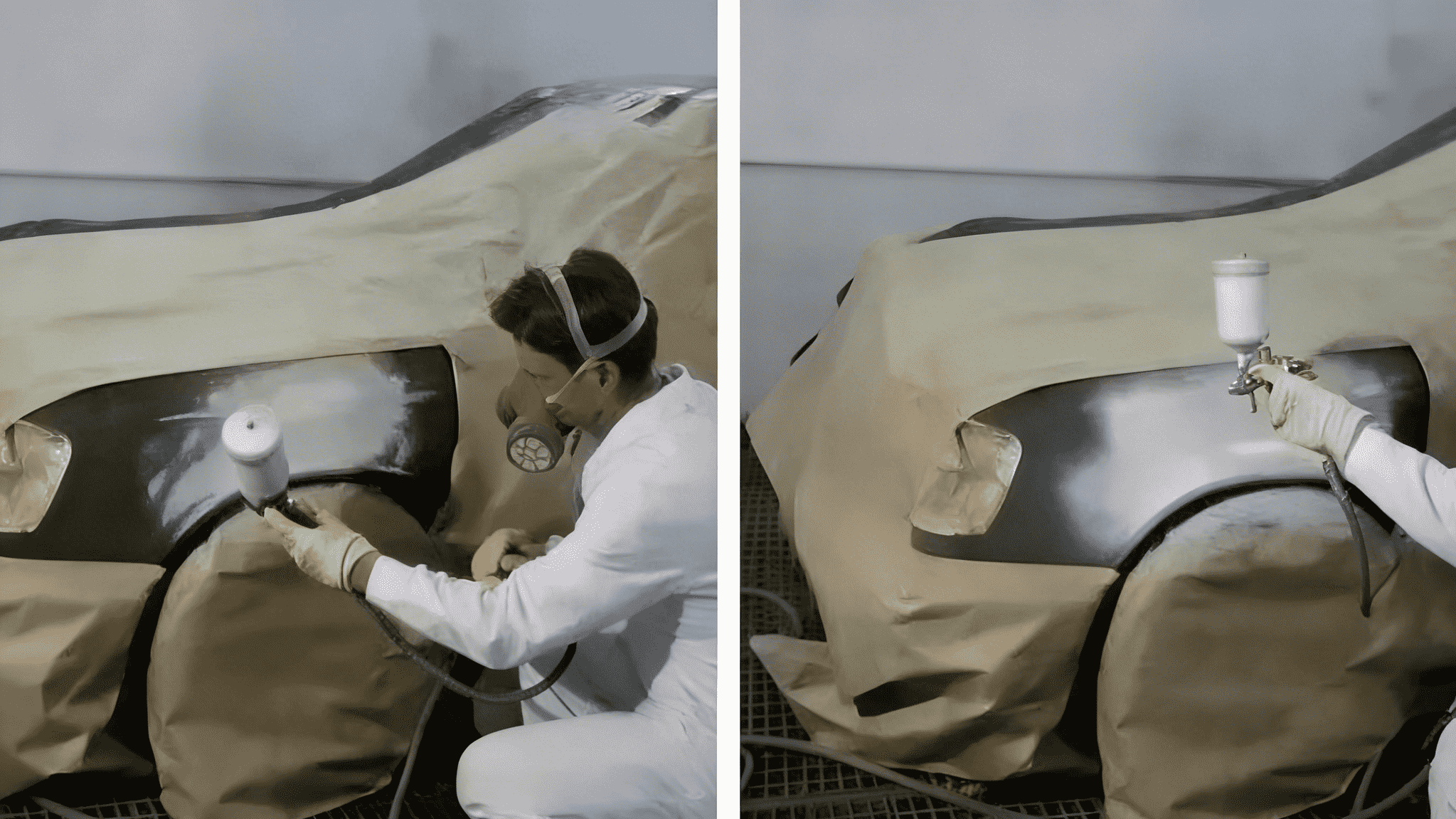
8. Apply guide coat and sand mid-coat primer
After mid-coat is fully dry, apply a guide coat, then sand the mid-coat smooth using suitable sandpaper and sander. Inspect and fill pinholes or fine scratches with fine single-component or two-component putty as needed, then sand smooth.
9. Sand transition areas
For panel repairs, sand adjacent panels (e.g., door next to fender) to create a smooth transition. Wet the other areas (fender, front door) and use a scouring pad with polishing compound equivalent to P1500 to sand until there is no gloss.
10. Clean
Rinse the fender surface with clean water and blow dry after sanding.
11. Masking and degreasing
Mask surrounding panels (fender, front door) with masking paper/tape and thoroughly degrease the fender again.
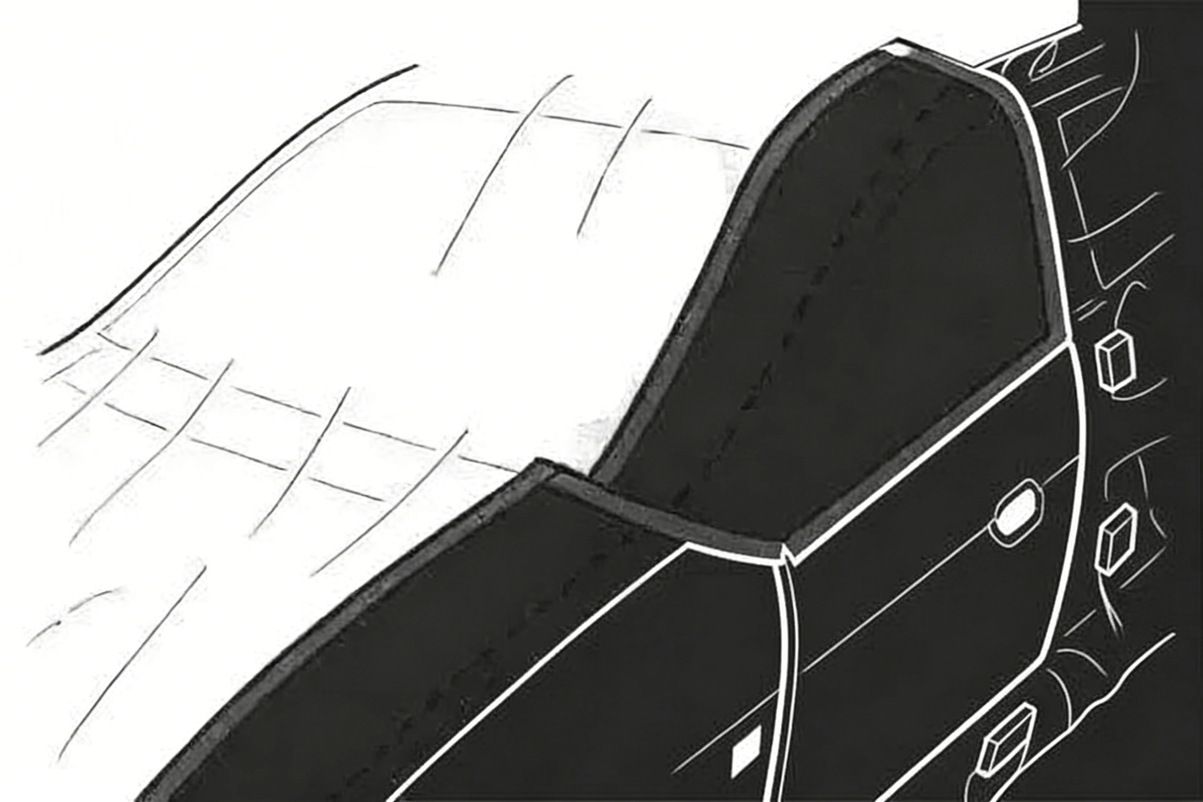
Note: Mid-coat and primer mixing/spraying methods are similar; specifics vary by product and coating requirements.
Start painting
1. Wear personal protective equipment.
2. Mix primer thoroughly
Use a mixing stick to stir primer. Measure required amount, add hardener and reducer per ratio, stir thoroughly, filter the mixed paint into the spray gun using a mesh, and select an appropriate primer gun nozzle.
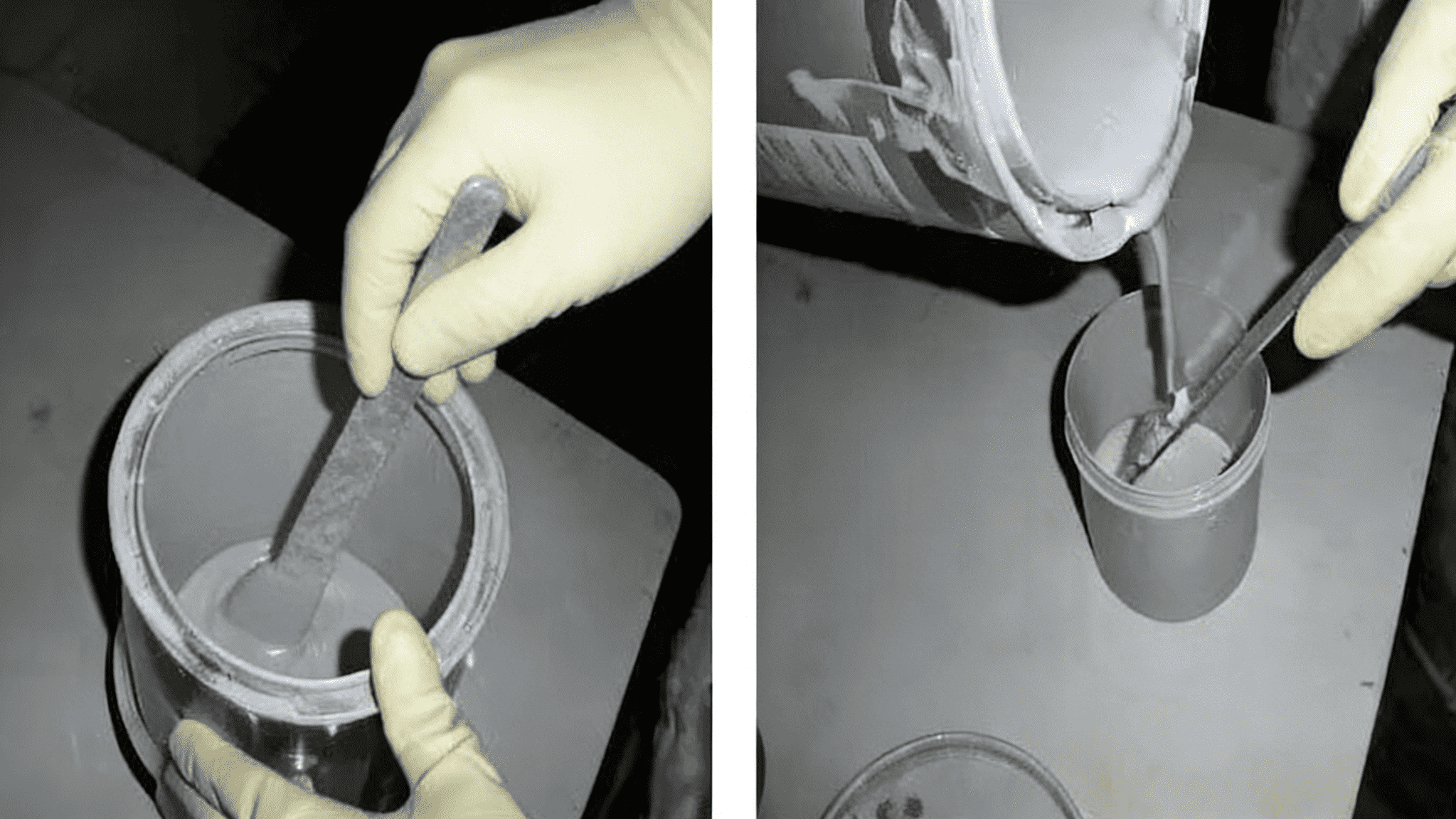
3. Connect air, adjust spray gun
Check spray pattern (spray test) and spray mid-coat primer per product instructions.

4. Typical three-coat mid-coat technique:
- First coat: mist-spray the putty/old-coat interface to improve adhesion and avoid defects.
- Second coat: after flash-off of the first, mist-spray the putty and surrounding area to a semi-gloss level.
- Third coat: after second coat flash-off, expand the spray area and perform a normal wet coat over the damaged area.
After three coats, required film thickness is usually achieved. If insufficient, add 1–2 more wet coats. Ensure the mid-coat is full, smooth, uniform, defect-free, and has smooth edges.
5. After mid-coat flash-off, remove masking paper/tape and force-dry with heat lamps.
6. After full dry and cooling, inspect surface:
- If no defects, proceed to sanding.
- For pinholes or minor scratches, fill with single-component fine putty.
- For larger defects, use two-component fine putty.
- Rework as needed.
After painting (post-mid-coat)
Mid-coat primers generally provide good sealing and prevent moisture, so they can be dry or wet sanded.
1. Dry sanding
Apply carbon powder or guide coat. Use hand block with P320 to level filled areas; P360 to smooth mid-coat; 5 mm dual-action sander with P400 to polish and thin edges. Use 3 mm dual-action with P400–P500 for areas to be top-coated. Avoid sanding through sound old paint—if edges or difficult spots exist, sand manually. Clean and inspect:
- If smooth and consistent, proceed.
- If pinholes/fine defects remain, re-fill and sand.
- If large areas are through-sanded, re-spray mid-coat.
- If surface flatness is inadequate, reapply putty before topcoat.
2. Wet sanding
Spray a thin dark quick-dry single-component coating as a guide coat. Wet the panel and use a hand block with P400 wet sandpaper to blend putty, then P500 to smooth mid-coat, and P600–P1000 to finish the topcoat area. Wipe clean, blow dry, and inspect; repair defects as needed.
Masking for topcoat
After finishing the previous step, mask with tape and specialized automotive masking paper (4S shops commonly use auto-specific masking paper, not newspapers). Masking must be done carefully and professionally. After masking, proceed to topcoat.
Topcoat spraying basics
Spray technique requires practice: keep the spray gun perpendicular to the panel, use moderate air pressure for primer (typically 3–4 bar), and avoid arcing the gun motion. After spraying, clean the gun with solvent and reducer and return it to its place. Remove and dispose of single-use masking paper properly. Bake/cure the primer with infrared lamps or in a paint booth; cool before sanding.
Mid-coat purpose
The mid-coat prepares a smooth, well-bonded surface for the topcoat, increases adhesion of subsequent layers, and provides isolation to protect topcoat quality.
Topcoat
Topcoat may be single-stage or multi-stage; it provides color, decoration, and protection.
Final finishing (mirror polishing)
After topcoat has cured, address surface flaws to achieve the best possible finish—this is “mirror finishing.” First use 1200–2000 grit wet sandpaper (2500 if necessary) to level, then use a coarse cutting compound (clay or pumice-based) to remove sanding marks. Next use a fine cutting polish (silicone-free) to remove coarse polish marks, then a finishing compound to restore shine, and finally a glaze/mirror polish to remove halos and swirl marks. Automotive body painting is a high-skill, multi-step repair process.
Hashtags
#AutoPainting #AutomotiveRefinish #CarPaint #BakingPaint #Primer #MidCoat #Topcoat #Putty #BodyFiller #Sanding #WetSanding #DrySanding #Masking #SprayTechnique #PaintBooth #InfraredCuring #SurfacePreparation #MirrorFinish #CollisionRepair #AutomotiveCoating
Keywords: automotive painting, bake paint, primer, mid-coat, topcoat, putty, feathering, sanding (P320–P1500–P1000), guide coat, masking, degreasing, rust primer, wet sanding, dry sanding, spray gun adjustment, curing, mirror polishing.


