

 English
 Español
 Português
 Русский
 عربي
عربي Türkçe
 Deutsch
 Polski
 Français
 Italiano
 Tiếng Việt
Constant Temperature System in Electrophoretic Coating
ST-EC-TS





Price: USD500~2000
Get Quote PDF
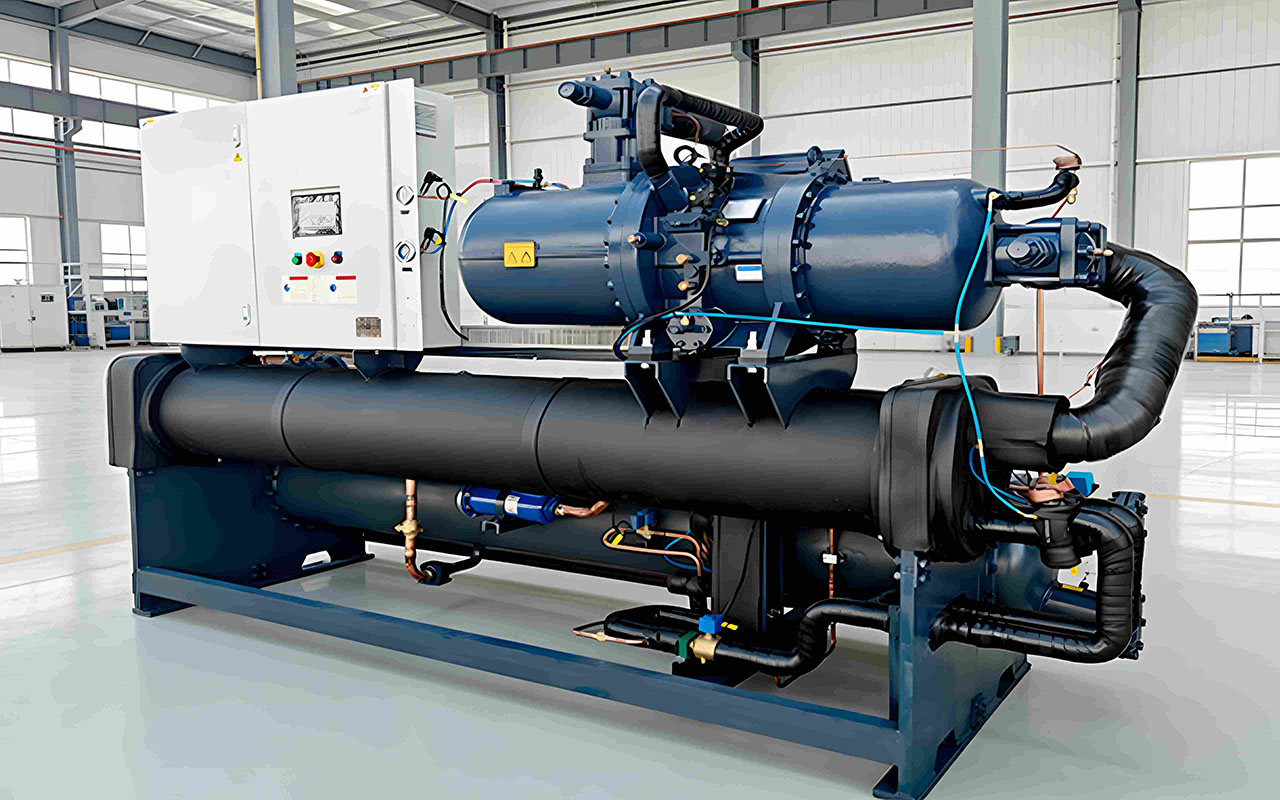
Dual heating and cooling functions:One unit with two functions, capable of bidirectional temperature regulation, reducing overall investment costs.
High efficiency-Performance: Equivalent to conventional systems where 1P equals approximately 3P. Using a high-efficiency heat exchanger, a typical 3-ton bath would normally require a 5P unit, whereas
Fully automated operation: An intelligent control system automatically switches between heating and cooling once the set temperature is reached, achieving over 30% higher efficiency compared with stan
Safe compressor heating: Heating is achieved through the compressor and heat exchanger without electric heating elements, eliminating fire hazards and enhancing operational safety.
The constant temperature system used in electrophoretic coating equipment operates by compressing refrigerant through a compressor into a high-temperature, high-pressure gaseous state. Controlled by a four-way valve, the refrigerant passes through the condenser, capillary tube, and filter, where the flow direction is changed. When the refrigerant transitions from gas to liquid, it releases a large amount of heat; when it changes from liquid to gas, it absorbs a large amount of heat.
Coating solutions for Industry



Constant Temperature System in Electrophoretic Coating
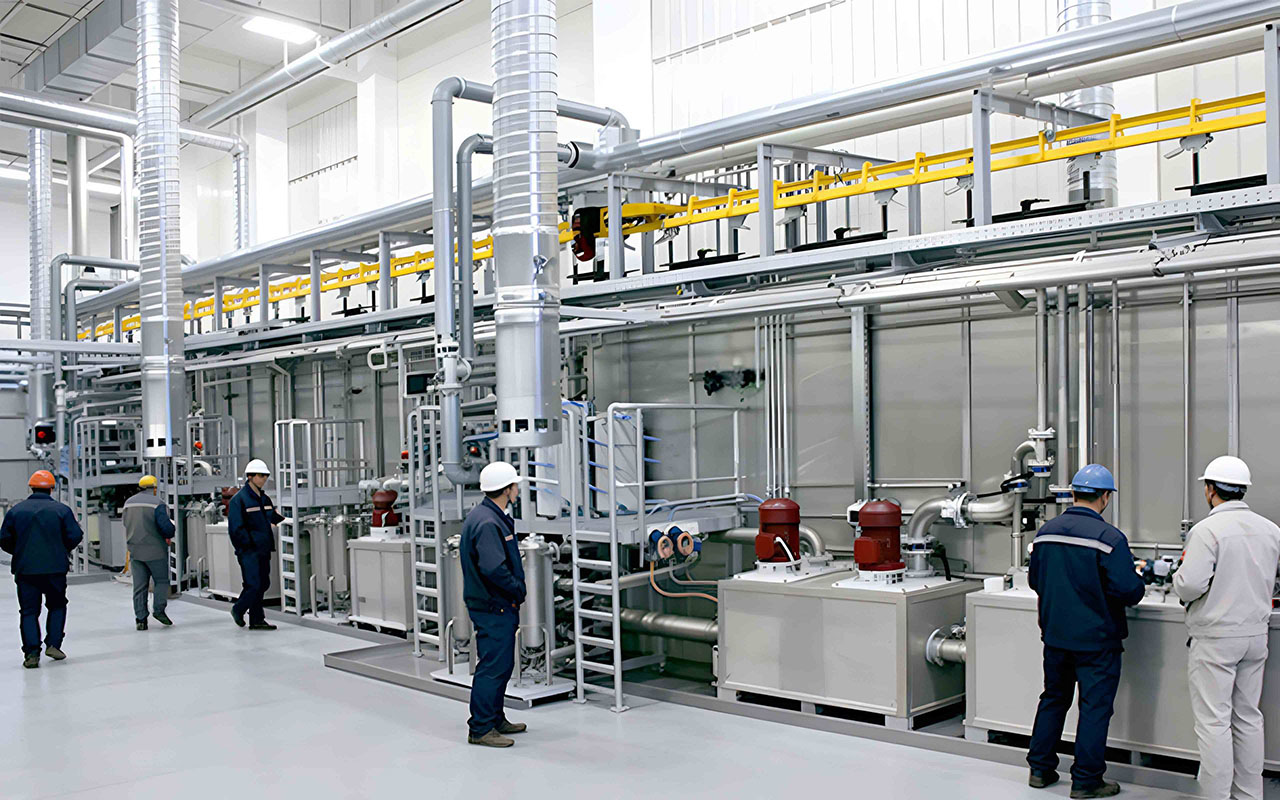
The temperature control system of an electrocoating line exhibits different characteristics and benefits across various application scenarios, such as industrial electrophoretic coating and biological electrophoresis experiments.
Advantages 1. Improved Electrophoresis Performance • In industrial electrocoating, stable temperature ensures proper film formation and reduces coating defects. • In biological experiments, it prevents biomolecule denaturation or degradation caused by temperature fluctuations, improving the accuracy of separation and analysis. 2. Extended Equipment Service Life
Maintaining appropriate temperatures prevents premature aging or corrosion of the electrophoretic solution and tanks, thereby reducing maintenance costs. 3. Higher Production Efficiency
Stable temperature conditions can shorten electrophoresis time and increase production throughput, offering significant advantages in continuous production environments. 4. Ensured Experimental Repeatability
Precise temperature control is a key factor in achieving reproducible results, supporting quality control in both research and industrial production. 5. Energy Saving and Environmental Protection
Some temperature control systems use high-efficiency cooling or heating technologies combined with intelligent control, reducing energy consumption and minimizing environmental impact.
Although specific parameters and functions may vary among different types of electrocoating line temperature control systems, their core objective is the same: to ensure the stability and reliability of the electrophoretic process through precise temperature control.


