

 English
 Español
 Português
 Русский
 عربي
عربي Türkçe
 Deutsch
 Polski
 Français
 Italiano
 Tiếng Việt
E-coating Line Spray pretreatment
ST-EC-SP




Price: USD500~2000
Get Quote PDF
Unlike dip tank systems that require large immersion tanks, spray pre-treatment equipment has a more compact structure.
This reduces floor space requirements, lowers workshop construction costs, and improves space utilization.
For regularly shaped and relatively flat workpieces, spray pre-treatment provides uniform surface coverage and thorough treatment.
Before Electrophoresis coating, it creates an ideal surface condition that enhances paint adhesion and coating durability.
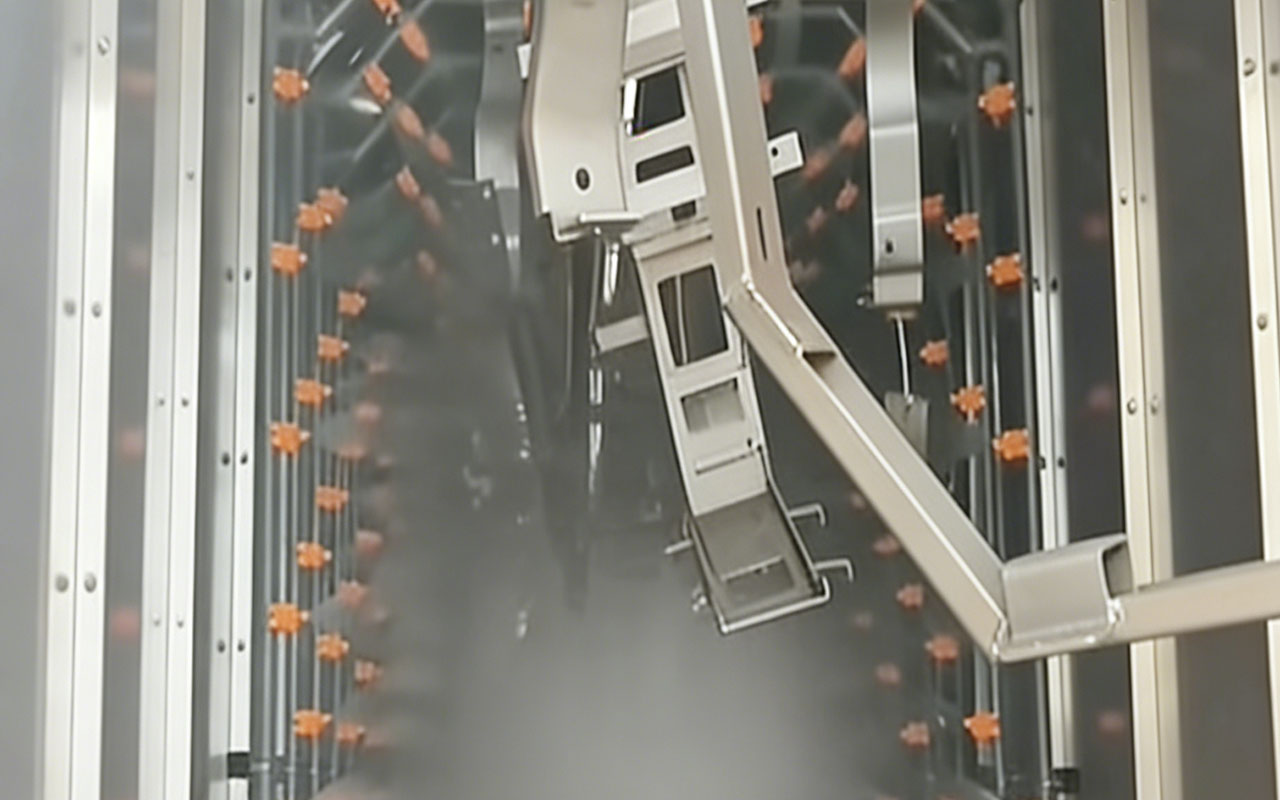
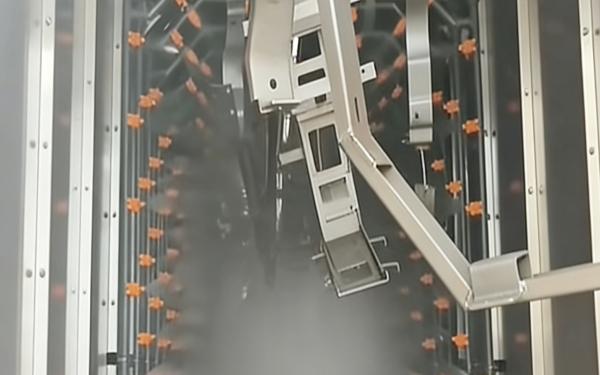
Spray pre-treatment refers to a process in which treatment chemicals are sprayed onto the surface of workpieces through nozzles to achieve rapid cleaning, degreasing, and rust removal. It is especially suitable for parts with complex shapes, holes, or grooves, as the spray can effectively reach and cover all areas of the workpiece. This method offers high processing efficiency and a compact equipment footprint, although it requires precise nozzle arrangement and well-controlled spray pressure. It is widely applied as an upstream process in an E coating line prior to Electrophoresis coating.
Coating solutions for Industry


E-coating Line Spray pretreatment
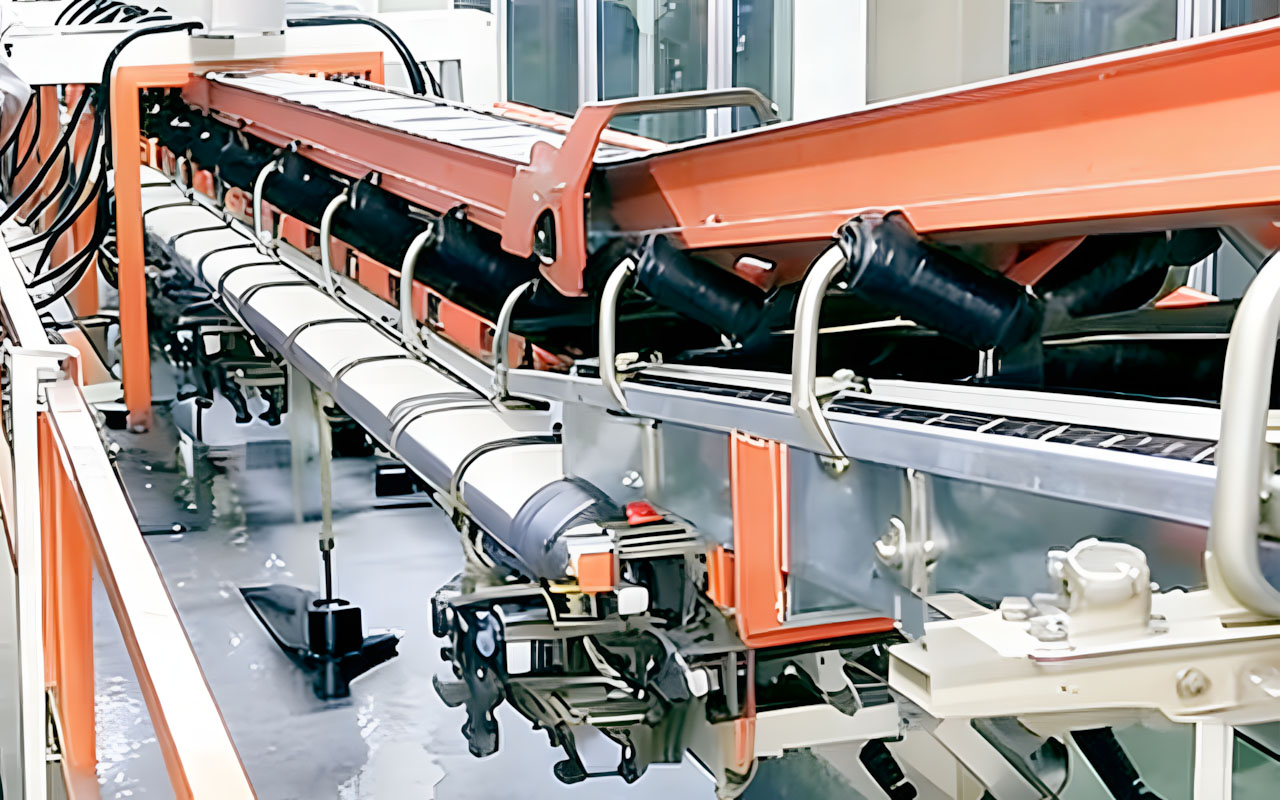
Advantages of spray pre-treatment include:
1. High processing speed:
Through high-pressure spraying, the treatment liquid is atomized and quickly contacts the workpiece surface, enabling fast chemical reactions. Compared with immersion processes, spray pre-treatment significantly shortens processing time and improves overall productivity of the E coating line.
2. Strong mechanical cleaning action:
The impact force generated during spraying provides effective mechanical scrubbing, helping to remove oil, dust, rust, and other contaminants. Even stubborn deposits can be efficiently stripped away, resulting in a higher level of surface cleanliness and better preparation for Electrophoresis coating.
3. Continuous solution renewal:
The spray system continuously circulates fresh treatment liquid, ensuring the workpiece surface always contacts active chemicals. This prevents quality issues caused by local depletion or contamination of the solution and helps maintain stable, consistent pre-treatment results.
4. Compact equipment layout:
Unlike dip tank systems that require large immersion tanks, spray pre-treatment equipment has a more compact structure. This reduces floor space requirements, lowers workshop construction costs, and improves space utilization—an important advantage for modern automated E coating lines.
5. Wide applicability:
For regularly shaped and relatively flat workpieces, spray pre-treatment provides uniform surface coverage and thorough treatment. Before Electrophoresis coating, it creates an ideal surface condition that enhances paint adhesion and coating durability.
6. Easy control and adjustment:
By adjusting spray pressure, treatment time, and chemical concentration, the process can be flexibly optimized to meet the requirements of different workpieces and diverse production needs.
In practical applications, the appropriate pre-treatment method should be selected based on workpiece characteristics and production requirements. As a professional supplier of complete E coating line solutions, ShengTai Painting Equipment provides advanced spray pre-treatment systems that seamlessly integrate with Electrophoresis coating processes, helping manufacturers achieve higher efficiency, stable quality, and long-term production reliability.
| No | Process Section | Process Name | Method | Time(min) | Temperature | Medium/Equipment/Remarks |
| 1 | Loading & Unloading | Loading | Manual | — | RT | Manual operation |
| 2 | Pretreatment | Hot Water Washing | Spray | 1 | 50-60° | Natural gas heating |
| 3 | Pretreatment | Pre-Degreasing | Spray | 1 | 45-55° | Natural gas heating |
| 4 | Pretreatment | Main Degreasing | Spray | 2 | 45-55° | Natural gas heating |
| 5 | Pretreatment | Water Rinse 1 | Spray | 0.8 | RT | Tap water |
| 6 | Pretreatment | Water Rinse 2 | Spray | 0.8 | RT | Tap water |
| 7 | Pretreatment | Ceramic Conversion Coating | Spray | 2 | RT | — |
| 8 | Pretreatment | Water Rinse 3 | Spray | 0.8 | RT | Tap water |
| 9 | Pretreatment | Pure Water Rinse 1 | Spray | 0.8 | RT | Pure water system |
| 10 | E-Coat System | Cathodic E-Coating | Immersion | 3 | 25-35° | Chiller & heater unit |
| 11 | E-Coat System | UF0 Spray Rinse | Spray | 0.1 | RT | Return to E-coating tank |
| 12 | E-Coat System | UF1 Spray Rinse | Spray | 0.8 | RT | Overflow to E-coating tank |
| 13 | E-Coat System | UF2 Spray Rinse | Spray | 0.8 | RT | Overflow to UF1, fresh UF added |
| 14 | Post-Treatment | Pure Water Rinse 2 | Spray | 0.8 | RT | — |
| 15 | Post-Treatment | Dripping | — | 5.0 | RT | — |
| 16 | Drying & Cooling | E-Coat Paint Curing Oven | Hot air circulation | 25.0 | 170°-190° | Direct natural gas firing |
| 17 | Drying & Cooling | Coolling | — | 25.0 | RT | — |
| 18 | Loading & Unloading | Unloading | Manual | — | RT | Manual operation |
Related Product
ST-EC-SP


