

 English
 Español
 Português
 Русский
 عربي
عربي Türkçe
 Deutsch
 Polski
 Français
 Italiano
 Tiếng Việt
Electrophoretic Coating Tank
ST-EC-CT




Price: USD5000~10000
Get Quote PDF
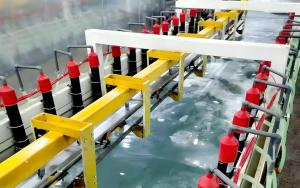
ShengTai electrophoresis tanks are fabricated from standard A-grade PP panels using precision welding.
They offer excellent toughness, strong acid and alkali resistance, and smooth surfaces.
Seamless PP welding ensures durability, resistance to deformation, prevention of weld separation, and complete leak-proof performance.
The tanks can withstand temperatures up to 80 °C.
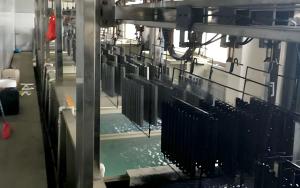
The electrophoresis tank, also known as the electrophoretic deposition tank, is one of the most critical pieces of equipment in an E coating line. It is used to store the electrophoretic paint bath, where coated workpieces undergo the E Coating process to achieve uniform paint deposition.
The electrophoresis tank consists of a main tank and auxiliary tanks.
The tank solution overflows from the main tank into the auxiliary tank through overflow ports, which helps eliminate bubbles generated during the E Coating process and ensures stable coating quality. The circulation and agitation system of the electrophoresis tank is composed of circulation magnetic pumps, circulation pipelines, stainless steel filters, Venturi nozzles, and other components. The circulation nozzles spray the tank solution to create continuous agitation, maintaining uniform paint concentration in the tank and preventing sedimentation or agglomeration of the coating materials.
Coating solutions for Industry




E-coating System Accessories: Electrophoretic Coating Tank
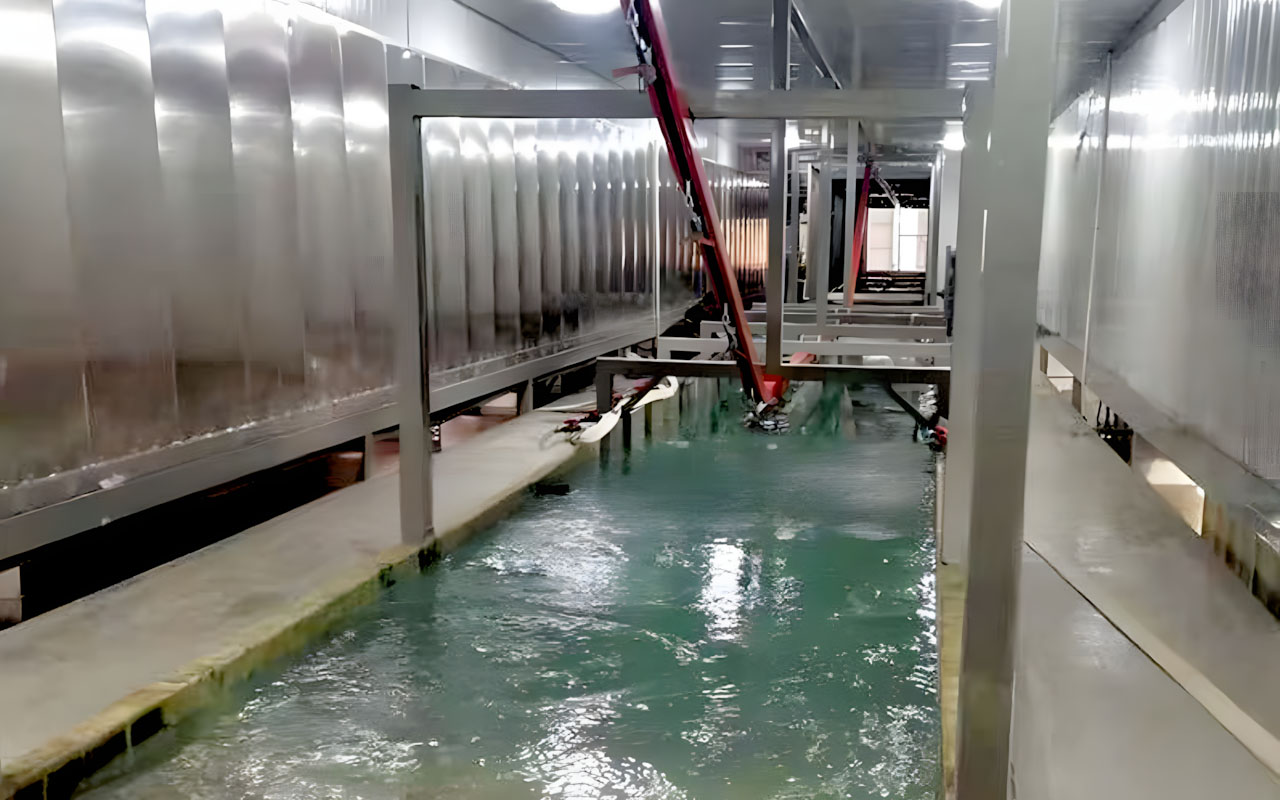
The Importance of the Electrophoresis Tank in an E Coating Line The electrophoresis tank plays a decisive role in the E Coating process, mainly reflected in the following aspects:
1. Providing a Stable Electric Field Environment
The electrophoresis tank is the core vessel for generating the electric field. By connecting to a power supply, it provides directional electric force for charged particles (such as coating particles) to migrate toward the workpiece surface. The strength and direction of the electric field are controlled by electrode arrangement and power parameters, ensuring precise deposition during the E Coating process.
2. Containing the Electrophoretic Medium and Solution
The tank holds the electrophoretic paint solution and related media, which provide both physical support and a stable chemical environment for particle migration. Proper control of pH value and ionic strength ensures coating stability and prevents degradation, enabling consistent and high-quality coating results throughout the E coating line.
3. Ensuring Process Stability
The size, shape, and material of the electrophoresis tank directly affect process stability. A well-designed tank structure minimizes dead zones, sedimentation, and bubble formation, while ensuring uniform circulation and stable temperature. This stability improves coating uniformity, deposition efficiency, and overall reliability of the E Coating process.
4. Enabling Workpiece Coating and Paint Recovery
In an E coating line, the electrophoresis tank is where workpieces complete electrophoretic deposition, ensuring even coating coverage on complex surfaces. In combination with circulation and filtration systems, the tank supports paint purification, recovery, and replenishment, significantly reducing paint loss and operating costs.
5. Ensuring Safety and Operational Convenience
Electrophoresis tanks are typically equipped with safety features such as overcurrent protection and leakage alarms to prevent electrical failures or chemical spills. Transparent materials or inspection windows allow real-time monitoring of the E Coating process, enabling operators to adjust parameters or address abnormalities promptly.
Conclusion In summary, the electrophoresis tank is the core carrier of the E Coating process. Its performance and structural design directly determine coating quality, production efficiency, and process reliability, making it an indispensable key component for both industrial-scale E coating lines and advanced surface finishing applications.
The tank structure is designed according to standard mechanical principles based on tank size, with reinforced square tubing and anti-corrosion tank cladding, effectively eliminating potential safety risks.
Each tank is precisely designed according to workpiece dimensions, maximizing space utilization and significantly reducing production and operating costs. With a premium design philosophy, ShengTai electrophoresis tanks achieve performance levels comparable to similar international products.
Related Product

ST-EC-CT


