

 English
 Español
 Português
 Русский
 عربي
عربي Türkçe
 Deutsch
 Polski
 Français
 Italiano
 Tiếng Việt
How Can Water-Based Air Spray Coating Improve Steel Structure Protection and Quality Control?
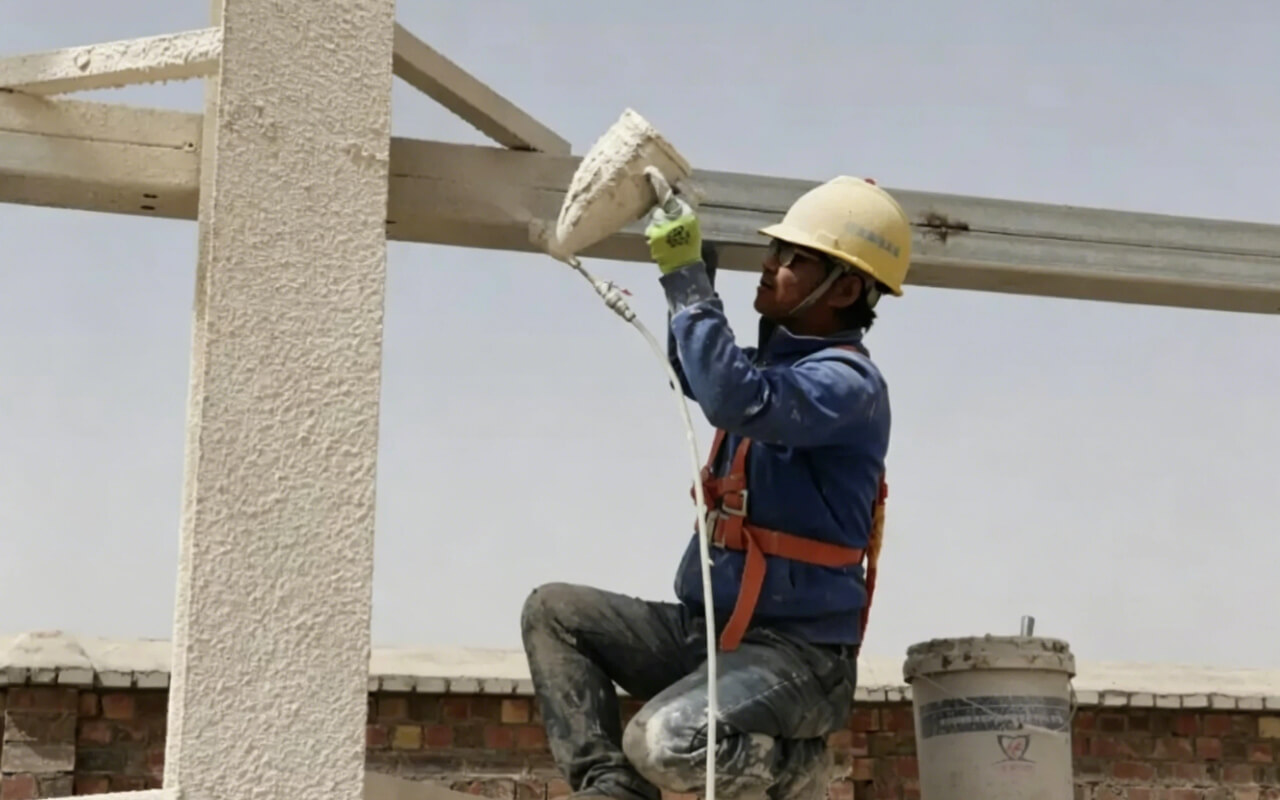
Water-Based Coating Process and Inspection Standards for Steel Structure Air Spray Painting
Water-based coating systems are becoming the preferred solution for modern steel structure protection due to their low VOC emissions, environmental compliance, corrosion resistance, and excellent decorative performance. In industrial steel fabrication, a standardized water-based air spray coating process is essential to ensure coating durability, adhesion, appearance quality, and long-term weather resistance.
This guide explains the complete water-based steel structure spray painting process, from incoming material inspection to final coating acceptance, while highlighting key technical parameters and quality control standards.
STEP 01 – Incoming Material Inspection and Steel Structure Preparation
Before coating begins, inspect all incoming steel components according to project drawings and process documentation. Verify quantities, dimensions, and technical specifications while checking for weld defects, oil contamination, spatter, and severe corrosion.
Organize components in the designated pre-coating area with sufficient working space for handling and spraying operations. Proper stacking and environmental control help prevent deformation, contamination, and secondary rust formation.
Key Requirements
- Ambient relative humidity ≤ 75%
- Dry and clean floor conditions
- Steel components elevated ≥ 150 mm using wooden supports
- Label components according to drawing numbers
- Stacking height ≤ 1.5 m
STEP 02 – Surface Pretreatment and Weld Seam Preparation
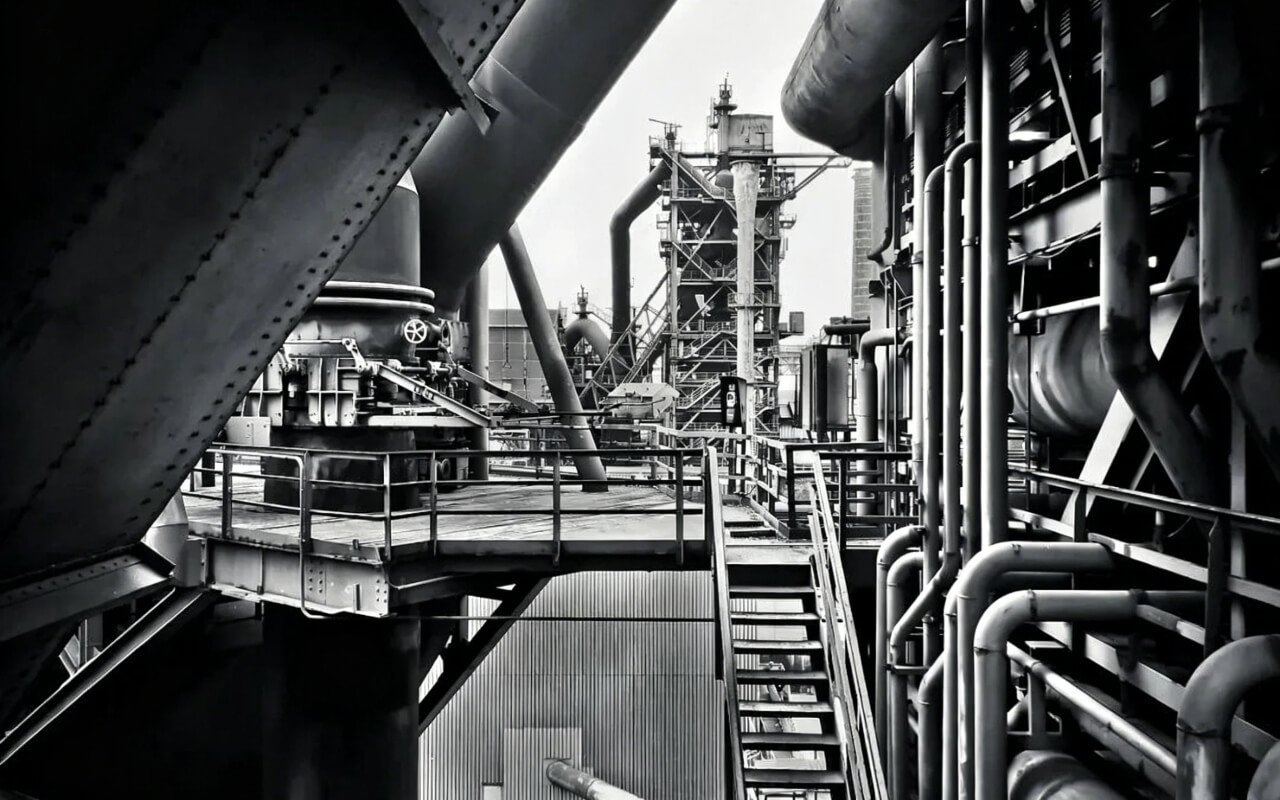
Initial surface preparation focuses on removing welding slag, burrs, spatter, sharp edges, and visible oil contamination. Inspect weld seams carefully for defects such as porosity or slag inclusion.
Use angle grinders, scrapers, and abrasive tools to smooth weld toes and sharp corners. Rounded edges help maintain consistent coating thickness and improve corrosion resistance.
Water-based degreasers or neutral cleaning agents should be used to remove oil contamination while keeping surfaces dry and clean.
Key Requirements
- Edge rounding radius R ≥ 2 mm
- Oil contamination area ≤ 5 cm² per component
- 100% weld inspection according to GB standards
STEP 03 – Rust Removal and Surface Cleaning
Depending on project requirements and component size, use abrasive blasting, shot blasting, or manual/mechanical rust removal methods to eliminate mill scale, rust, and old coatings.
During blasting operations, compressed air must remain dry and oil-free, and abrasive media must be clean. After cleaning, remove residual dust immediately using clean compressed air.
Manual cleaning areas may require wire brushes and grinding discs for detailed surface preparation.
Key Requirements
- Surface preparation grade: Sa2.5
- Surface roughness: 40–75 μm
- Primer application within 4 hours after cleaning
STEP 04 – Water-Based Primer Mixing and Conditioning
Thoroughly mix the water-based anti-corrosion primer according to the manufacturer’s instructions. For two-component systems, accurately measure the base material and curing agent according to the specified ratio.
Adjust spray viscosity using deionized water or approved thinner and filter the coating material to remove particles or gel residues.
Allow the mixed coating to mature before spraying to achieve optimal application performance.
Key Requirements
- Base-to-hardener ratio: 4:1
- Application viscosity: 25 ± 3 s (Ford Cup #4)
- Filter mesh size ≥ 100 mesh
STEP 05 – Air Spray Application of Water-Based Primer
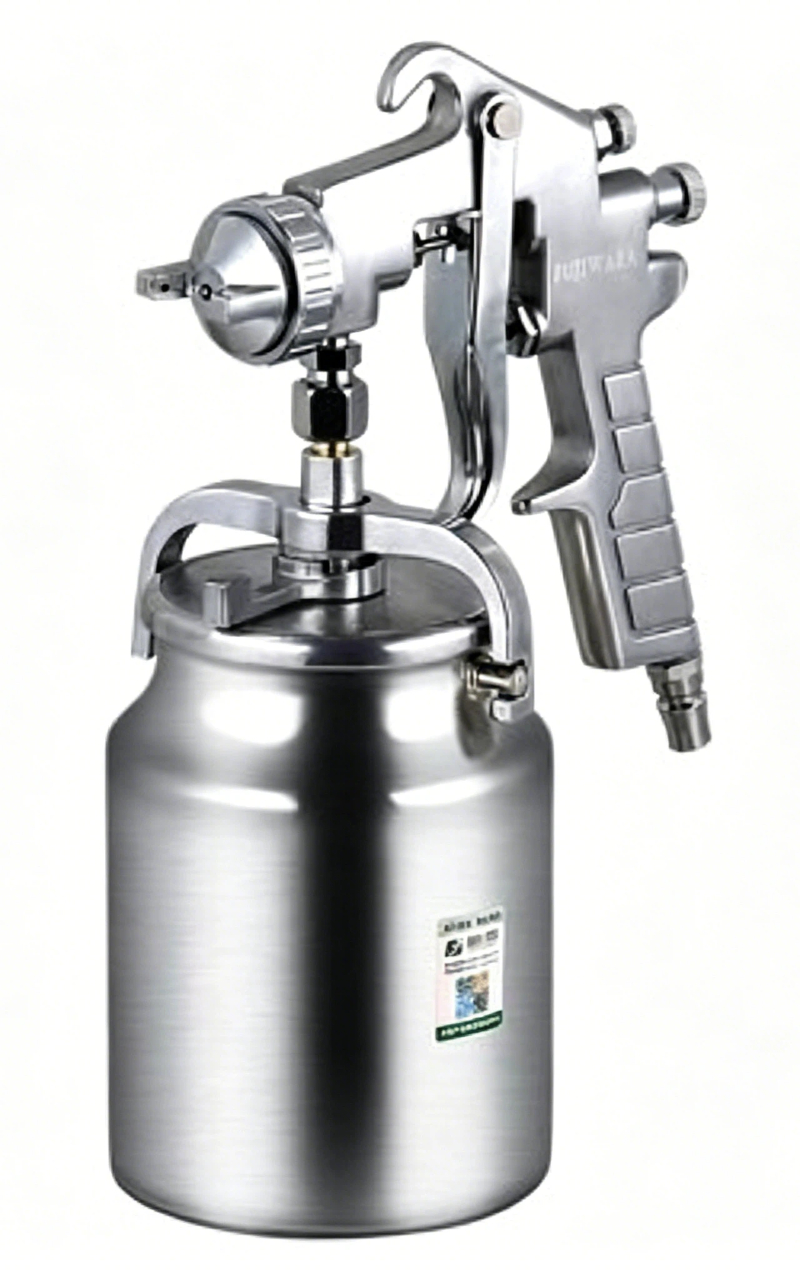
Apply the water-based anti-rust primer using an air spray system to ensure continuous, uniform coating coverage without missed areas.
Maintain a consistent spray distance, spray angle, and gun movement speed. Cross-coating techniques are recommended for improved film uniformity.
Spray edges and weld seams first before coating larger flat surfaces to minimize sagging.
Key Requirements
- Spray gun pressure: 0.3–0.5 MPa
- Wet primer film thickness: 80–120 μm
- Spray distance: 200–250 mm
STEP 06 – Primer Drying, Leveling, and Film Thickness Inspection
After primer application, move components to the drying area for natural drying or low-temperature baking.
Proper environmental control ensures coating leveling, surface curing, and adequate adhesion for subsequent topcoat application.
Avoid stacking or covering coated surfaces during drying to prevent imprinting or contamination.
Key Requirements
- Drying temperature: 20–35°C
- Primer curing time: 8–24 hours
- Dry film thickness: 40–60 μm
STEP 07 – Water-Based Topcoat Mixing and Filtration
Select the appropriate water-based topcoat according to required color, gloss level, and weather resistance performance.
Mix the base material, curing agent, and color paste thoroughly to ensure uniform pigment dispersion. Adjust viscosity and solids content based on spray conditions.
Filter all coating materials before application to prevent nozzle blockage and coating defects.
Key Requirements
- Base-to-hardener ratio: 3:1
- Application viscosity: 23–28 s (Ford Cup #4)
- Maturation time: 15–30 minutes
STEP 08 – Air Spray Application of Water-Based Topcoat
Apply the water-based topcoat over the fully cured primer surface using segmented and cross-spray techniques.
The finished coating should provide:
- Uniform color consistency
- No exposed substrate
- No visible color difference
- No sagging or pinholes
Control spray overlap ratio, gun speed, and coating thickness carefully to achieve a smooth and durable finish.
Key Requirements
- Topcoat dry film thickness: 40–60 μm per coat
- Spray overlap ratio: approximately 50%
- Spray booth airflow speed: 0.3–0.5 m/s
STEP 09 – Final Drying and Coating Curing
After topcoat application, move coated steel structures into a clean drying zone for natural curing or low-temperature forced drying.
Proper temperature and humidity control are critical for coating film formation, hardness development, and adhesion performance.
Protect coated surfaces from dust, insects, water, and mechanical damage during the curing process.
Key Requirements
- Drying temperature: 20–35°C
- Relative humidity: 45–75%
- Full curing time: 24–72 hours
STEP 10 – Defect Repair and Non-Coating Area Protection
Inspect the fully cured coating for defects such as:
- Sagging
- Pinholes
- Exposed substrate
- Mechanical damage
Repair defective areas by sanding feather edges and reapplying coating locally through spray or brush touch-up methods.
Protect non-coated areas such as bolt holes, connection surfaces, and nameplates using masking tape or protective covers.
Key Requirements
- Repair sanding diameter ≥ 2× defect size
- Total repair film thickness: 60–120 μm
- Masking width for non-coated surfaces ≥ 10 mm
STEP 11 – Final Inspection and Coating Acceptance
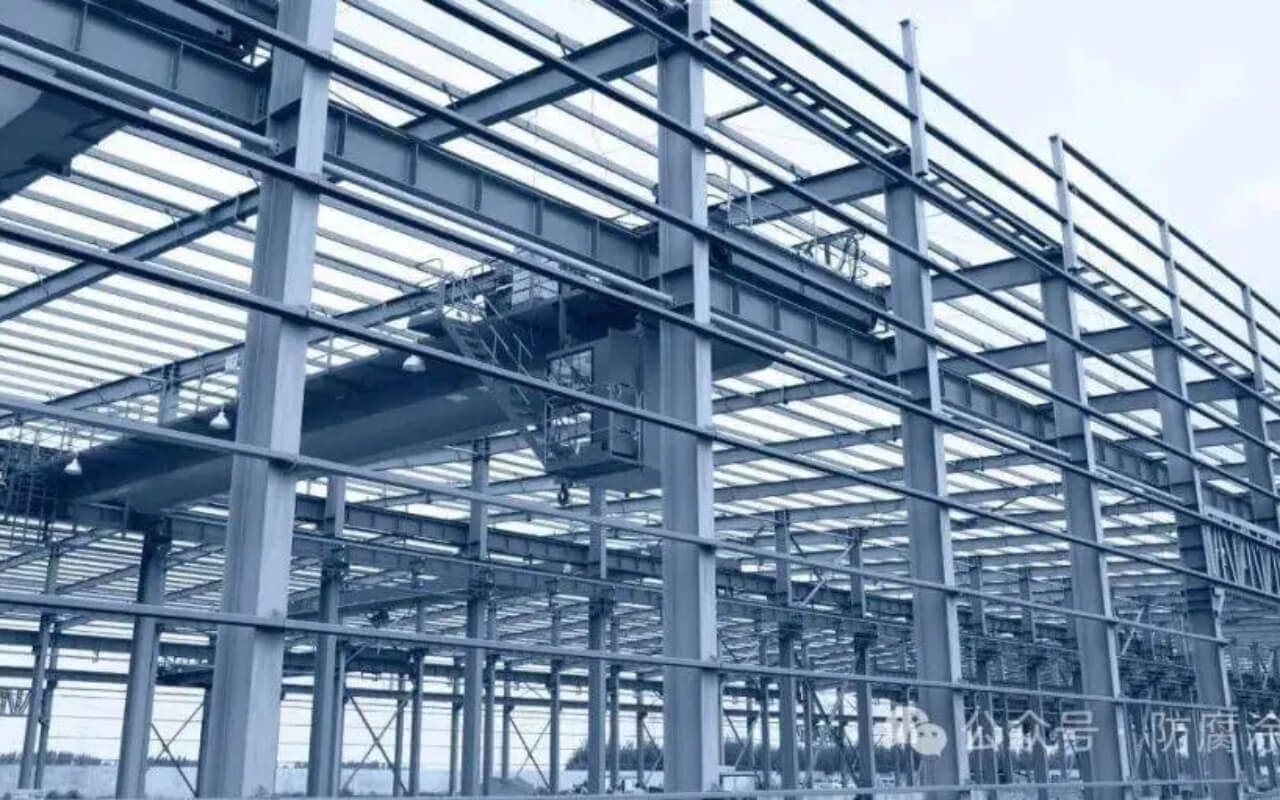
Perform a complete final inspection of the water-based coating system, including:
- Dry film thickness
- Adhesion strength
- Hardness
- Gloss level
- Color difference
- Surface appearance defects
Use a dry film thickness gauge to measure multiple inspection points on each component. Adhesion and hardness tests may include cross-cut testing and pencil hardness evaluation.
All inspection results should be documented in the final quality inspection report before shipment or installation approval.
Key Requirements
- Minimum 5 film thickness inspection points per component
- Adhesion rating: Grade 1 or better
- Appearance defect standard: AQL 1.0
Why Water-Based Steel Structure Coating Is the Future
Compared with solvent-based coatings, water-based spray painting systems offer several major advantages:
- Lower VOC emissions and environmental impact
- Improved workplace safety
- Excellent corrosion resistance
- Strong adhesion and weatherability
- Compliance with modern environmental regulations
- Reduced fire hazards during production
For steel structure manufacturers, construction contractors, and industrial coating companies, adopting a standardized water-based air spray coating process improves product quality, operational efficiency, and long-term coating performance.
By combining proper surface preparation, controlled spraying parameters, and strict inspection standards, manufacturers can achieve high-quality, durable, and environmentally friendly steel structure coatings suitable for industrial, commercial, and infrastructure applications.


