

 English
 Español
 Português
 Русский
 عربي
عربي Türkçe
 Deutsch
 Polski
 Français
 Italiano
 Tiếng Việt
How to Control Investment Costs for a Home Appliance Powder Coating Line?

Abstract
This guide explores the layout, process flow, equipment configuration, and pre-treatment parameter controls for home appliance powder coating production lines. By analyzing cost estimation and equipment optimization, this article serves as a practical blueprint for budgeting and constructing an efficient, cost-effective powder coating line in the home appliance sector.
Introduction: Trends in Home Appliance Powder Coating
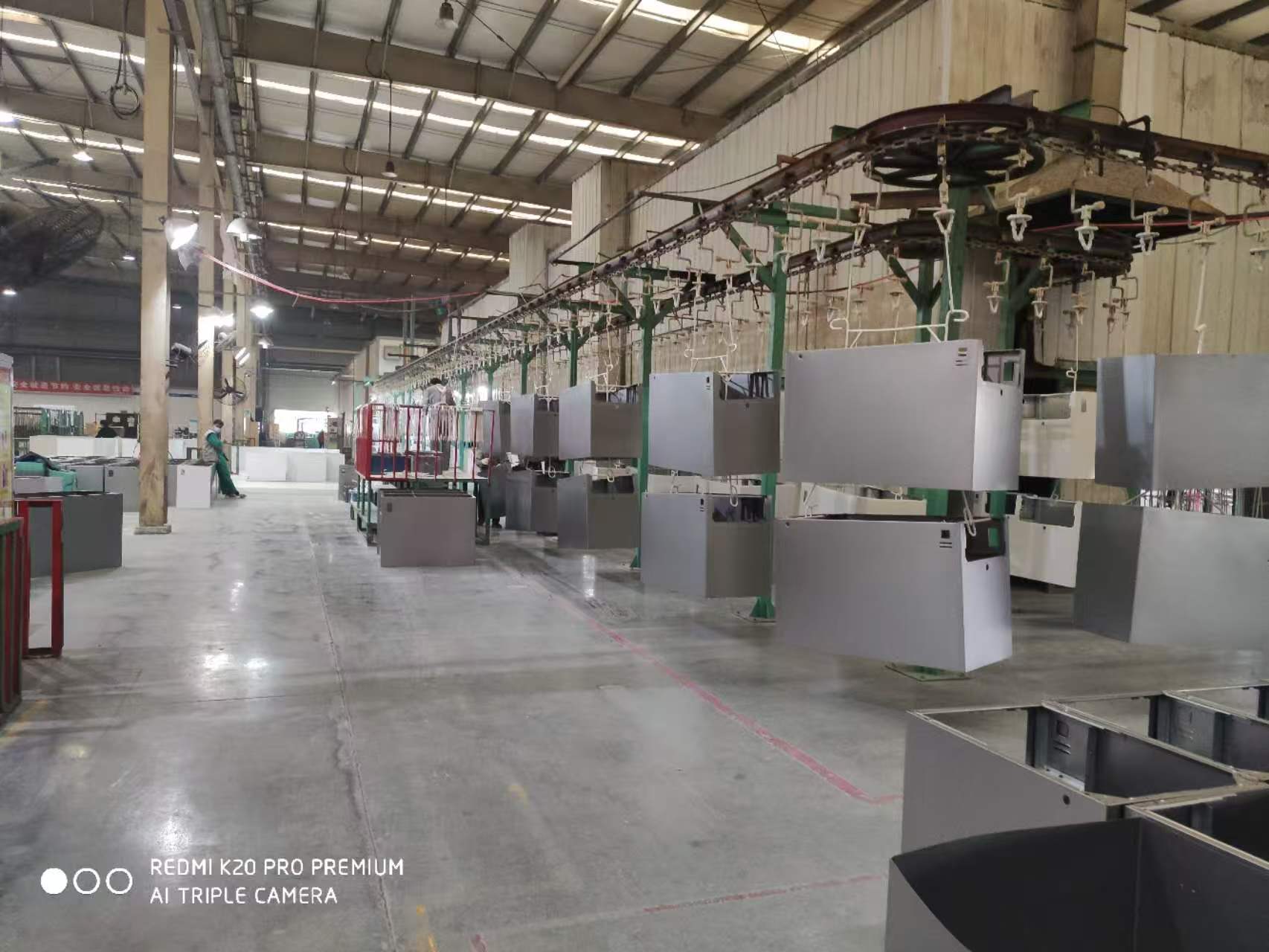
The home appliance industry is the largest market for powder coatings in China, backed by highly mature application technologies. A standard appliance powder coating production line consists of four core equipment units:
Pre-treatment equipment
Moisture drying ovens
Powder spraying systems
Powder curing ovens
Key Characteristics of Appliance Coating Lines:
High Output: Predominantly continuous, automated production.
Lightweight Workpieces: Typically utilizes overhead conveyor systems.
Compact Dimensions: Most parts use single-point suspension.
Simple Geometry: Pre-treatment heavily relies on spray-type structures.
Low Rust Risk: Workpieces are mostly cold-rolled steel sheets with minimal rust, eliminating the need for an online rust-removal stage.
Streamlined Management: The production lines are relatively straightforward, making operation and maintenance easier.
1. Pre-Treatment Equipment & Process Parameters
1.1 Purpose and Function
Pre-treatment removes oil, scale, and dust from the workpiece surface to create an ideal substrate for coating. Its main benefits include:
Enhancing coating film adhesion.
Improving the corrosion resistance and protective performance of the film.
Ensuring a smooth, defect-free base surface.
1.2 Pre-Treatment Methods
Mechanical Treatment: Sandblasting, shot blasting.
Chemical Treatment: Dipping tank systems, spray systems.
1.3 Process Workflows and Customization
When designing a pre-treatment line to optimize ROI, consider these 5 factors:
Substrate composition.
Shape, structure, and surface condition of the workpiece.
Contaminant types and required cleanliness standards.
Production volume and quality targets.
Compatibility with downstream processes.
A typical workflow includes degreasing, water rinsing, surface conditioning, phosphating, and deionized (DI) water rinsing.
Cost-Saving Tip for Home Appliance Powder Coating Line: Because home appliance sheets are generally clean, cold-rolled steel, a dual-stage degreasing process followed by zinc-series phosphating is standard. However, switching to modern silane treatment processes is highly recommended to significantly reduce environmental costs and energy consumption.
2. Electrostatic Powder Spraying Systems
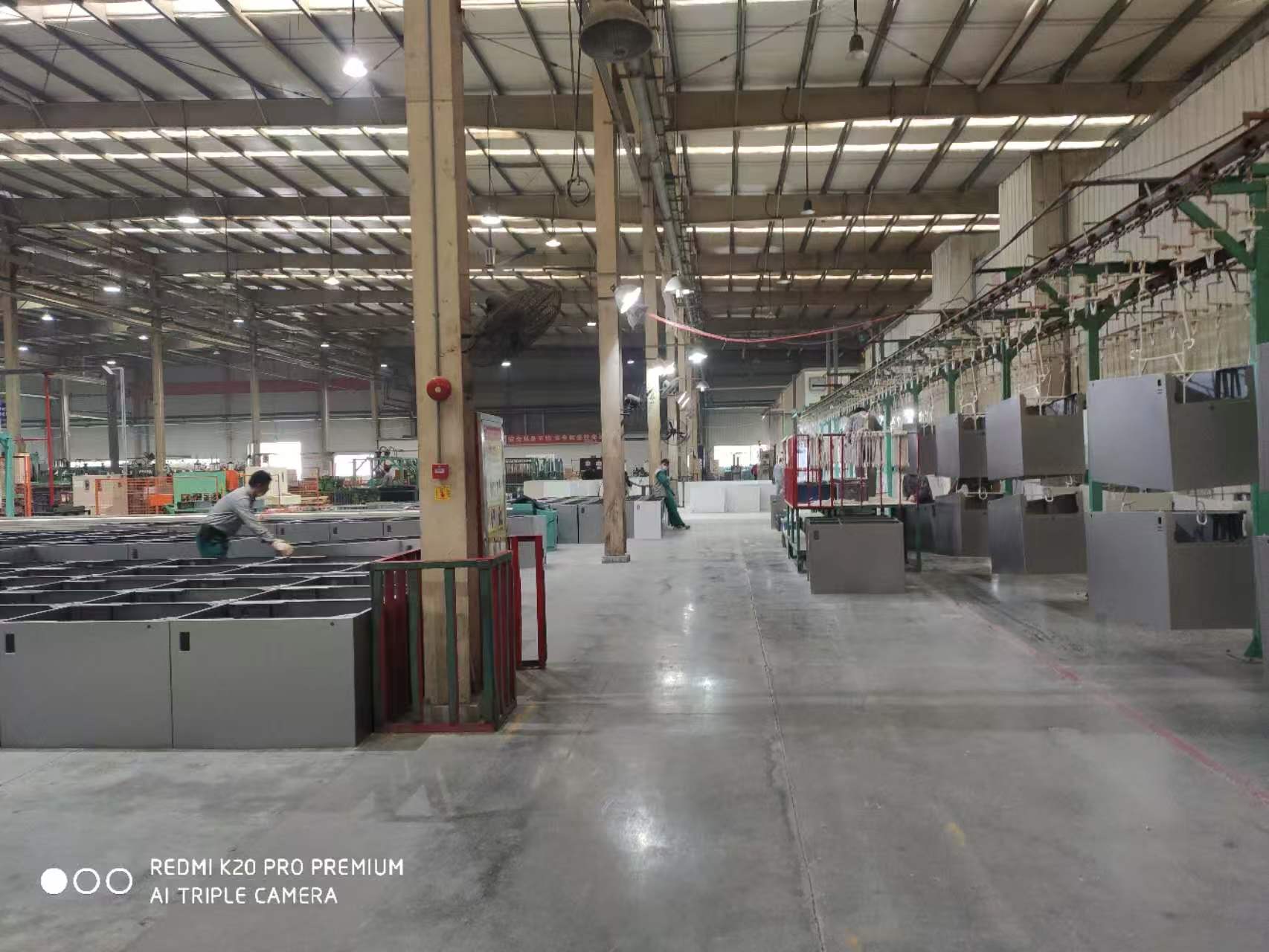
Electrostatic powder coating is highly favored in the home appliance industry due to its high powder utilization rate, eco-friendliness, and uniform film thickness.
An optimized spraying system comprises 5 core elements:
2.1 Powder Spray Booth
The spray booth manages airflow to ensure high powder transfer efficiency while preventing powder escape.
Material Choice: Can be constructed from metal or plastic sheets, each with unique cost-to-benefit ratios.
Operational Checklist for Cost Control:
Air Velocity: Must be tightly regulated so it does not blow uncured powder off the workpieces.
Containment: Openings must prevent powder spillover to protect the shop environment.
Safety: Maintain powder concentration well below the Lower Explosion Limit (LEL).
Housekeeping: Minimize powder accumulation inside the booth to simplify reclamation.
2.2 Powder Recovery Systems (The Key to Material Savings)
The efficiency of the recovery system directly impacts material costs. Choosing the right system depends on your color-change frequency and budget:
| Recovery System Type | Best Used For | Cost & Efficiency Characteristics |
| Cartridge Filter Recovery | Single/Few Colors | Highest filtration efficiency, low initial cost, harder to clean for color changes. |
| Multi-Cyclone Recovery | Moderate Color Changes | Good separation efficiency, balanced cost. |
| Large Cyclone Recovery | Frequent Color Changes | Fastest color changes, high powder recovery rates for recycling, higher initial investment but lower operational cost long-term. |
Pro-Tip: Reclaimed powder should be mixed with virgin powder at a strict, controlled ratio. Excess recycled powder will degrade the final surface finish.
2.3 Spraying & Powder Supply Units
Reciprocators and Guns: Gun count is determined by the coating surface area per unit of time. The reciprocator stroke, speed, conveyor speed, and gun overlap must be perfectly synchronized to avoid wasting powder.
Powder Centers vs. Hoppers: For frequent color changes, automated Powder Supply Centers drastically reduce downtime. For manual lines, fluidizing powder hoppers are more cost-effective.
Wear Components: Powder pumps, venturi tubes, and hoses wear down quickly. Investing in high-quality wear parts prevents frequent line shutdowns and maintains consistent film thickness.
2.4 Environmental Enclosures (Cleanrooms)
Housing the spray booth in a climate-controlled enclosure serves three vital cost-saving functions:
Controls temperature and humidity (crucial for humid regions to prevent powder clumping).
Keeps ambient dust out, drastically reducing reject and rework rates.
Shields the booth from cross-drafts (maintain cross-draft speeds at $< 0.1 text{ m/s}$).
3. Curing Ovens and Moisture Drying Ovens
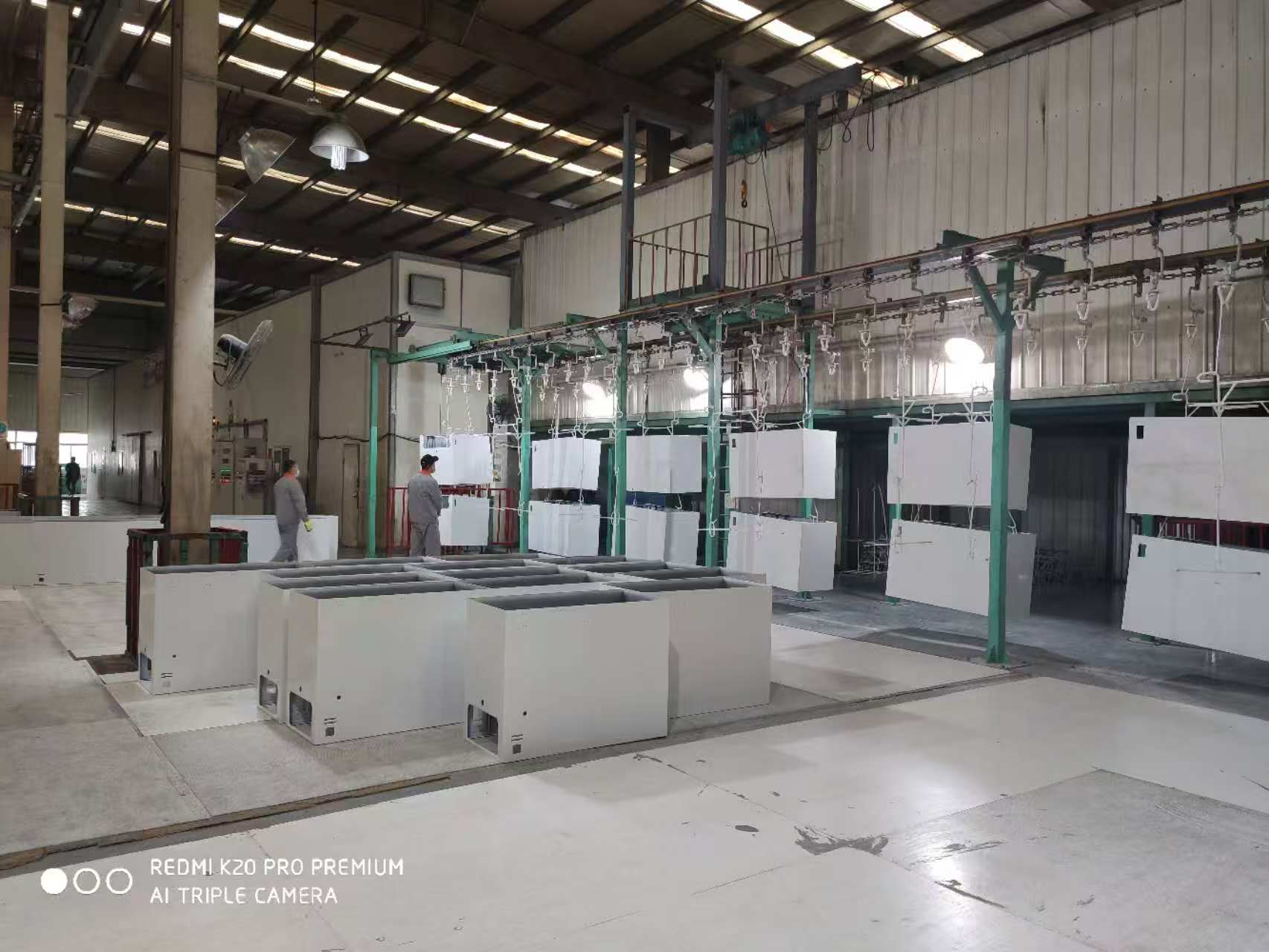
While both systems require precise temperature control and insulation, they differ in execution:
Moisture Ovens: Operate at lower temperatures strictly to dry the parts post-washing.
Curing Ovens: Require higher temperatures and exceptional thermal uniformity to cross-link the powder.
3.1 Maximizing Oven Energy Efficiency
Oven design heavily dictates daily operational costs.
Heat Transfer: While direct radiation works for simple parts, forced hot air convection is preferred for appliances to guarantee uniform heating.
Structural Layout: Ovens are built as elevated bridge types (full-bridge or half-bridge) or straight-through types. Full-bridge structures are highly recommended because they naturally trap heat, preventing energy loss from the entry and exit portals.
Conveyor Passes: Depending on plant space, layouts can range from single-pass to multi-pass. Dual-pass (U-turn) configurations offer the best balance of space efficiency and thermal retention.
3.2 Fuel and Energy ROI
Energy selection impacts both initial capital expenditure (CAPEX) and ongoing operational expenditure (OPEX). Common options include electricity, fuel oil, natural gas, and coal.
SEO Cost Analysis Verdict: Currently, natural gas or Liquefied Petroleum Gas (LPG) represents the most economical, clean, and highly controllable energy form for automated curing lines.
3.3 Critical Quality Parameters for Reducing Rework Costs for Home Appliance Powder Coating Line
To avoid the added costs of stripping and reworking rejected parts, the oven must meet two strict criteria:
Heating-up Time: Workpieces should reach the target curing temperature within 5 to 8 minutes to ensure optimal powder leveling and smoothness.
Temperature Uniformity: The temperature variance across the cross-section of the curing zone must be kept within ±5°. Minimal temperature drift ensures consistent color and adhesion across all batches.


