

 English
 Español
 Português
 Русский
 عربي
عربي Türkçe
 Deutsch
 Polski
 Français
 Italiano
 Tiếng Việt
How to Plan and Design a Coating Workshop for Maximum Efficiency and Quality?
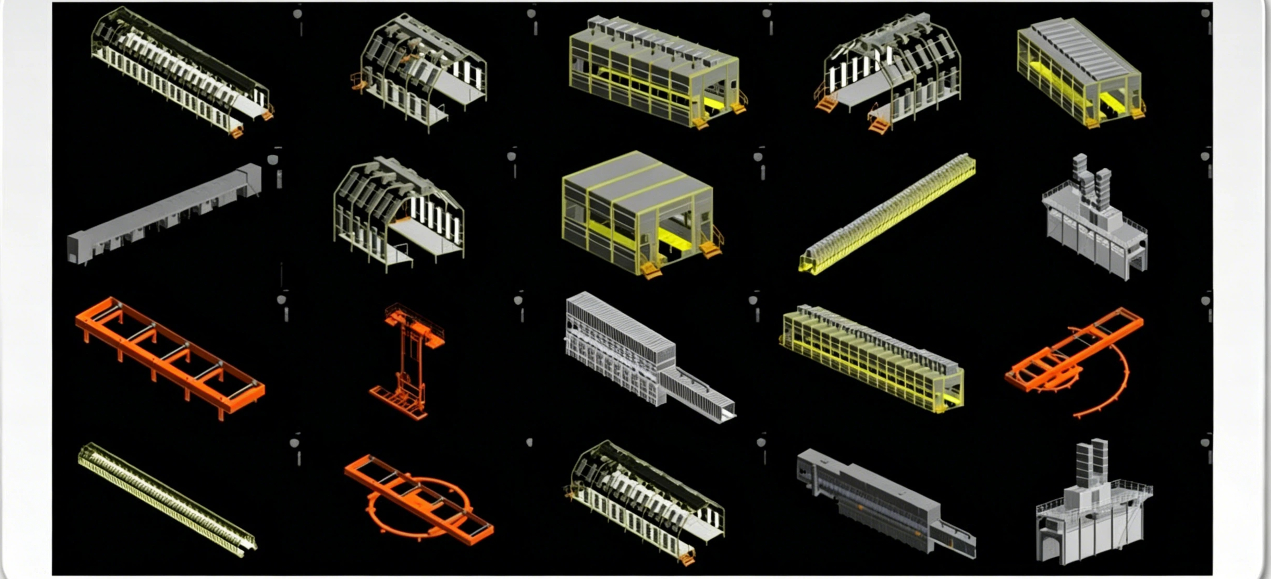
01. Overview of Coating Workshop Planning
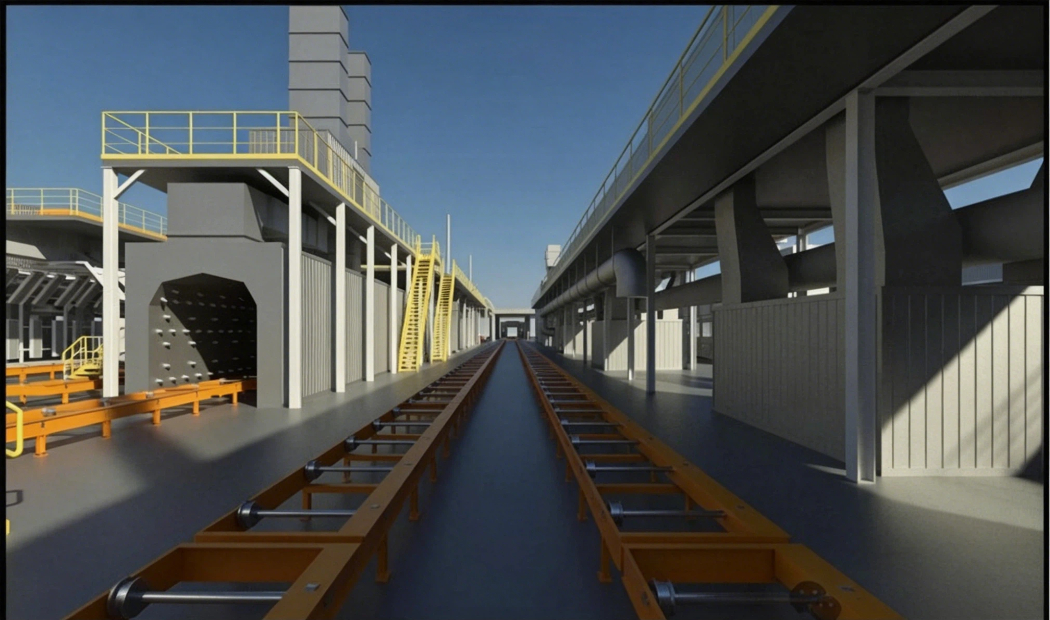
1.1 Objectives and Principles
Planning Objectives:
Ensure high production efficiency and consistent coating quality while enhancing overall business competitiveness.
Planning Principles:
Rational layout
Efficient production flow
Safety and environmental compliance
Sustainable development
1.2 Key Factors Influencing Planning
| Factor | Key Consideration |
|---|---|
| Market Demand | Adjust production scale and process capabilities based on market needs |
| Technological Development | Adopt advanced coating technologies and stay updated with industry trends |
| Environmental Regulations | Comply with national and local environmental standards |
| Investment Budget | Allocate funds effectively to balance quality and economic returns |
1.3 Planning Scope and Workflow
Planning Scope:
Includes process design, equipment selection, production line layout, and logistics systems.
Planning Workflow:
Demand Analysis → Concept Design → Preliminary Design → Detailed Engineering Design → Construction & Acceptance
02. Coating Workshop Layout Design
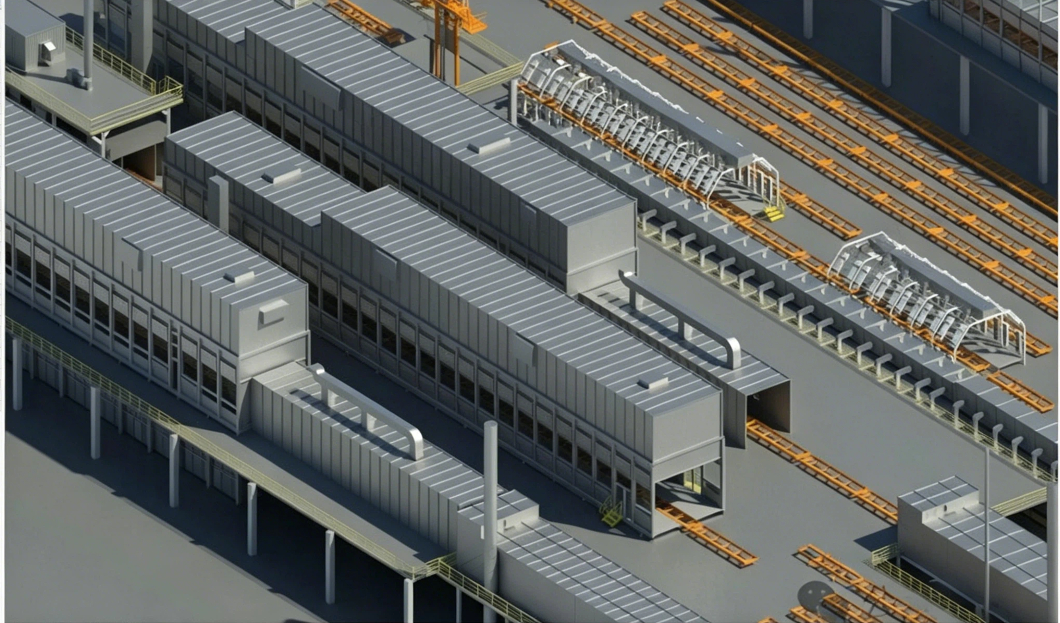
2.1 Layout Design Principles
Process-Oriented Flow
Ensure seamless connection between each coating process stage.Production Efficiency
Optimize layout to reduce operational costs and increase throughput.Operational Safety
Design the workshop to meet safety standards and minimize accident risks.Environmental Compliance
Plan proper treatment systems for exhaust gas, wastewater, and solid waste.
2.2 Logistics and Pathway Planning
Personnel Pathways: Wide, clearly defined walkways for safe employee movement
Material Flow Routes: Efficient logistics channels to ensure smooth material handling
Forklift Lanes: Dedicated space for forklift operations
Buffer Zones: Prevent cross-contamination and workflow interference
2.3 Equipment and Facility Layout
Coating Equipment: Strategically positioned to support process continuity
Ventilation Systems: Ensure proper air circulation and pollutant control
Lighting Systems: Adequate lighting for quality inspection and safe operations
Fire Protection Systems: Installed according to fire safety regulations
2.4 Production Line Layout Types
Linear Layout
Ideal for single-product, high-volume production with streamlined operationsLoop (Circular) Layout
Suitable for multi-product, low-volume production with flexible changeoversHybrid Layout
Combines advantages of both linear and loop layouts for customized applications
03. Coating Process Flow Design
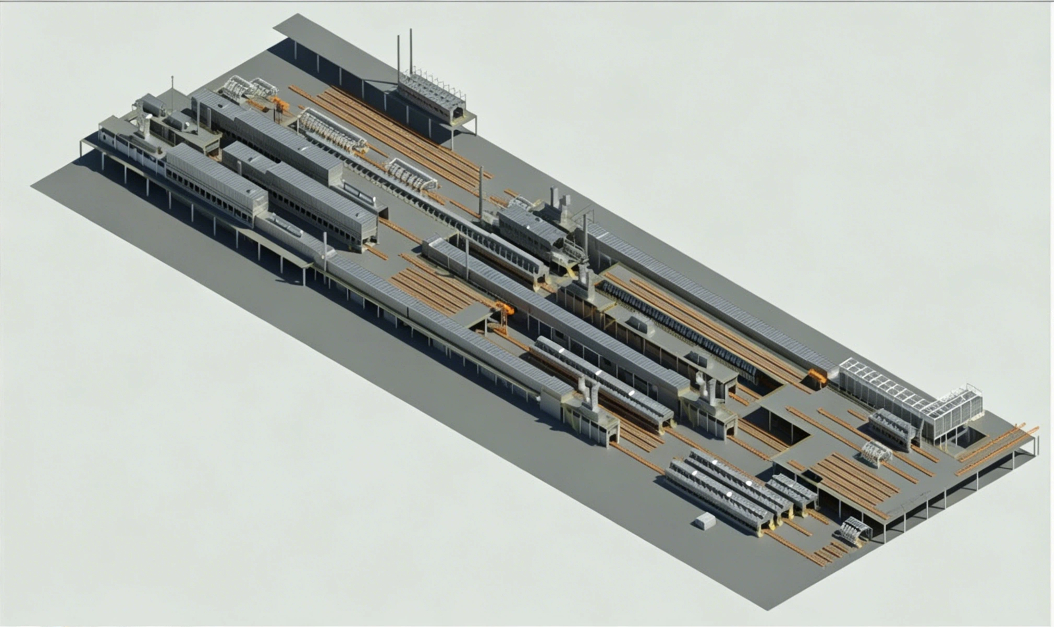
This section builds upon layout design and focuses on the complete coating process workflow.
3.1 Pretreatment Process
| Process | Function |
|---|---|
| Pre-cleaning | Removes dirt and grease from the surface |
| Degreasing | Eliminates residual oils and contaminants |
| Pickling | Removes oxides and rust |
| Phosphating | Forms a protective layer to improve coating adhesion |
3.2 Electrophoretic Coating (E-Coating) Process
Paint Preparation
Mix electrophoretic coating materials with solvents and water in precise ratiosTank Setup
Control parameters such as temperature and pH valueElectrophoretic Deposition
Submerge the workpiece in the coating bath; use an electric field to deposit paint uniformlyPost-Treatment
Baking, curing, cooling, and rinsing of the coated surface
3.3 Topcoat Process
Primer/Intermediate Coating
Enhances coating thickness, smoothness, and visual qualityTopcoat Application
Includes basecoat (color paint) and clear coatCuring Process
Baking to achieve full coating adhesion and durability
3.4 Quality Inspection and Control
| Inspection Item | Method & Purpose |
|---|---|
| Appearance Inspection (A) | Visual check for defects, color differences |
| Thickness Measurement (B) | Ensure coating thickness meets specifications |
| Gloss Measurement (C) | Verify surface finish quality |
| Weather Resistance Test (D) | Evaluate long-term durability under simulated conditions |
04. Safety and Environmental Planning
4.1 Safety Management
Establish Safety Systems
Define responsibilities and enforce operational proceduresRegular Training
Improve employee awareness and emergency response capabilitiesSafety Facilities
Install guardrails, protective covers, and warning signageRoutine Inspections
Identify and eliminate potential hazards
4.2 Environmental Protection Measures
| Module | Key Measures |
|---|---|
| Exhaust Gas Treatment | Use activated carbon adsorption, catalytic combustion, etc. |
| Wastewater Treatment | Classified collection and compliant discharge |
| Noise Control | Install silencers and soundproofing systems |
| Waste Management | Sorting, recycling, and proper disposal |
4.3 Energy Saving and Emission Reduction
Energy Monitoring
Real-time tracking to identify inefficienciesEnergy-Efficient Equipment
Use advanced ovens, spray guns, and coating systemsWaste Heat Recovery
Reuse heat for air preheating or liquid heatingResource Recycling
Promote reuse and reduce environmental impact
Conclusion
A well-planned coating workshop is not just about equipment—it's about integrating process design, layout optimization, environmental compliance, and intelligent management into a unified system.
By following these best practices, manufacturers can significantly improve production efficiency, coating quality, and long-term sustainability, gaining a strong competitive edge in the global market.


