

 English
 Español
 Português
 Русский
 عربي
عربي Türkçe
 Deutsch
 Polski
 Français
 Italiano
 Tiếng Việt
How Are Intelligent and Green Technologies Transforming Modern Industrial Paint Shops?

Driven by strict global environmental regulations and the push for low-carbon manufacturing, the "green coating" concept has become an industry consensus. Led by the "Industry 4.0" trends—particularly in sectors like industrial barrel and drum manufacturing—smart manufacturing technologies are seeing widespread adoption.
Today, the future of surface finishing lies in integrating new materials, advanced processes, state-of-the-art equipment, and smart technologies to build highly efficient, eco-friendly, and intelligent paint shops.
Here is a deep dive into the technologies and layouts driving this transformation.
1. Standardizing the Paint Shop Process Layout
The coating process is a critical manufacturing step designed to ensure optimal corrosion resistance and aesthetic appeal. While traditional layouts have evolved with new materials, the mainstream process flow across modern paint shops remains highly standardized:
Surface Pretreatment: Degreasing, rust removal, phosphating/conversion coating, water rinsing, and drying.
Spraying: Airless spraying, electrostatic powder/liquid coating.
Curing/Drying: Gas, oil, steam, or far-infrared baking.
Printing: Silk-screen or thermal transfer printing.
Quality Inspection: Film thickness and adhesion testing.
Storage & Logistics: Automated warehousing.
2. Advanced Green Coating Technologies
To meet modern sustainability standards, facilities are upgrading their core chemical and mechanical processes.
2.1 Green Thin-Film Pretreatment
Traditional zinc-manganese-nickel phosphating requires high temperatures (50~60°C) and generates heavy metal waste (sludge and wastewater). Today, Green Thin-Film Technology is replacing phosphating. Operating at room temperature, it creates a nano-scale conversion layer on the substrate.
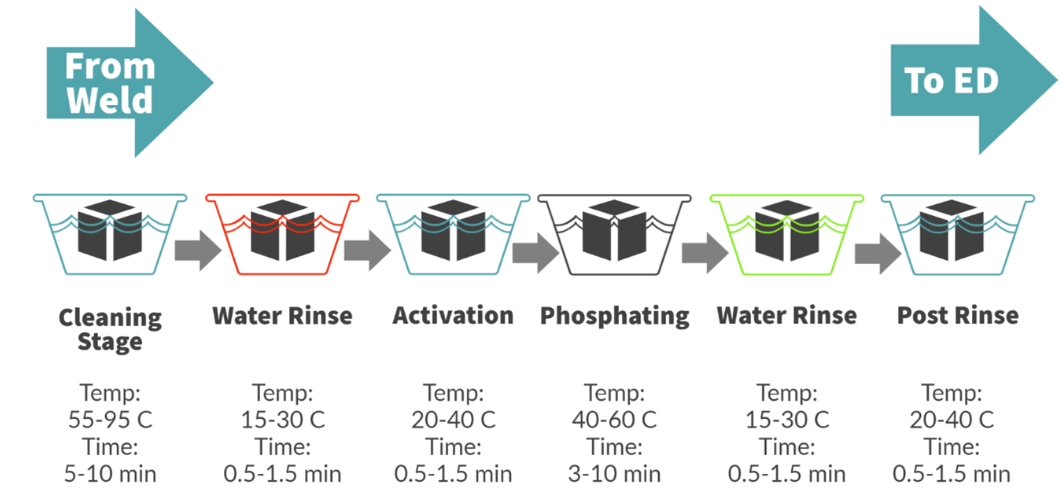
Types of Thin-Film Tech:
Zirconium-Based Films: Forms a zirconium oxide (ZrO2) layer. Applicable to galvanized, cold-rolled, and high-aluminum substrates.
Silane-Based Films: Similar to Zirconium but incorporates silicon elements for enhanced adhesion. Currently the preferred choice due to being fluorine-free and highly eco-friendly.
Pros of Thin-Film Processing:
Fewer process steps, smaller equipment footprint.
Lower energy consumption (operates at room temperature).
Highly eco-friendly (no surface conditioning/passivation required, generating fewer hazardous wastes).
Challenges to Manage:
Higher material costs requiring compatible paints.
Highly sensitive to substrate conditions (e.g., stamping marks).
Requires strict equipment stability; line stoppage tolerances are lower than traditional phosphating.
2.2 Real-Time Online Chemical Analysis
Relying on manual chemical testing every two hours is inefficient and prone to human error. Modern paint shops use Automated Online Monitoring Systems that offer:
Automation: Real-time sampling and automatic dosing.
Consistency: Maintains exact chemical parameters for flawless quality.
Smart Alerts: Remote monitoring via PCs and smartphones with predictive warnings.
Cost-Efficiency: AI-assisted data analysis optimizes chemical usage and reduces labor costs.
2.3 Energy-Efficient Spray Lines
The spray booth accounts for the highest energy consumption in a paint shop—with 80% of that energy used by the HVAC (Air Handling Units). Optimization strategies include:
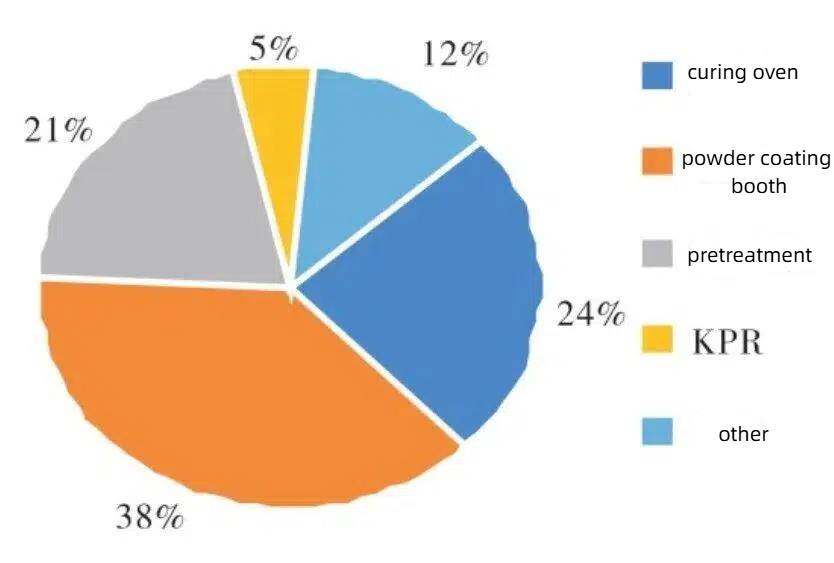
Energy Management: Transitioning from wet to dry scrubbers and utilizing highly recirculated air (up to 80% recirculation). By optimizing the work envelope and air velocity, facilities significantly reduce HVAC energy loads.
Exhaust Treatment: Reducing total airflow and using low-VOC materials lowers exhaust treatment costs. Capturing waste heat from exhaust emissions is also a standard energy-saving practice.
Waste Solvent Reduction: Upgrading to advanced robotic color-changing systems, optimizing cleaning programs, utilizing color-batching lines, and substituting chemical solvents with pure water cleaning.
2.4 Automated Surface Defect Detection
Relying on human visual inspection for defects like dust particles, shrinkage cavities, and bubbles is slow and subjective. Machine Vision Technology is now utilizing intelligent algorithms to analyze light reflection disparities on product surfaces.
Current Capability: Achieves a defect detection rate exceeding 95%.
Future Outlook: Integrating automated robotic polishing and repair systems based on AI defect mapping.
3. The Shift Toward Smart Manufacturing (Industry 4.0)
Smart manufacturing relies on deep data perception, automated decision-making, and precise execution. By standardizing data interfaces early in project planning, facilities can unlock powerful Big Data applications:
Machine Vision & Robotics: Beyond quality control, vision systems guide robotic arms for automated part handling, targeted defect repair, and precision printing.
Predictive Maintenance: IoT sensors monitor motor loads, currents, and temperatures to predict machine failures before they happen, eliminating costly unplanned downtime.
Inline Film Appearance Testing: Integrating sensors to measure film thickness, long/short wave (orange peel), gloss, and color difference in real-time, feeding data directly back to the spray booth to automatically adjust parameters.
Digital Twin Technology: Creating a 3D virtual replica of the paint shop. This allows engineers to simulate workflows, monitor real-time equipment health, and use machine learning for continuous process optimization.
Smart Conveyor Systems: Moving away from rigid "monorail" chains. Facilities are adopting high-density Automated Storage and Retrieval Systems (AS/RS) and Automated Guided Vehicles (AGVs) to create highly flexible, non-stop production loops with dynamic queuing capabilities.
4. The Four Pillars of Eco-Friendly Coating
Achieving a truly green paint shop requires a synchronized approach across four domains:
New Materials: Low-VOC paints, powder coatings, and low-temperature/air-dry curing materials.
New Processes: Advanced pretreatments and "wet-on-wet" or interior/exterior simultaneous spraying techniques.
New Equipment: Digital printing tech and rapid color-change powder booths.
New Technologies: Smart thermal load control systems for curing ovens that adjust fresh air intake based on real-time production volume, saving massive amounts of natural gas.
Conclusion
There is no "one-size-fits-all" approach to building an intelligent paint shop. Facilities must evaluate their specific production volumes, substrate requirements, and local environmental laws to choose the right mix of smart and green technologies. Through the continued collaboration of equipment manufacturers, chemical suppliers, and coating facilities, the future of the industrial paint shop is undoubtedly smarter, greener, and highly efficient.


