 English
 Español
 Português
 Русский
 عربي
عربي Türkçe
 Deutsch
 Polski
 Français
 Italiano
 Tiếng Việt
Powder Coating vs. Liquid Painting: Which Surface Finishing Process is Right for Your Project?
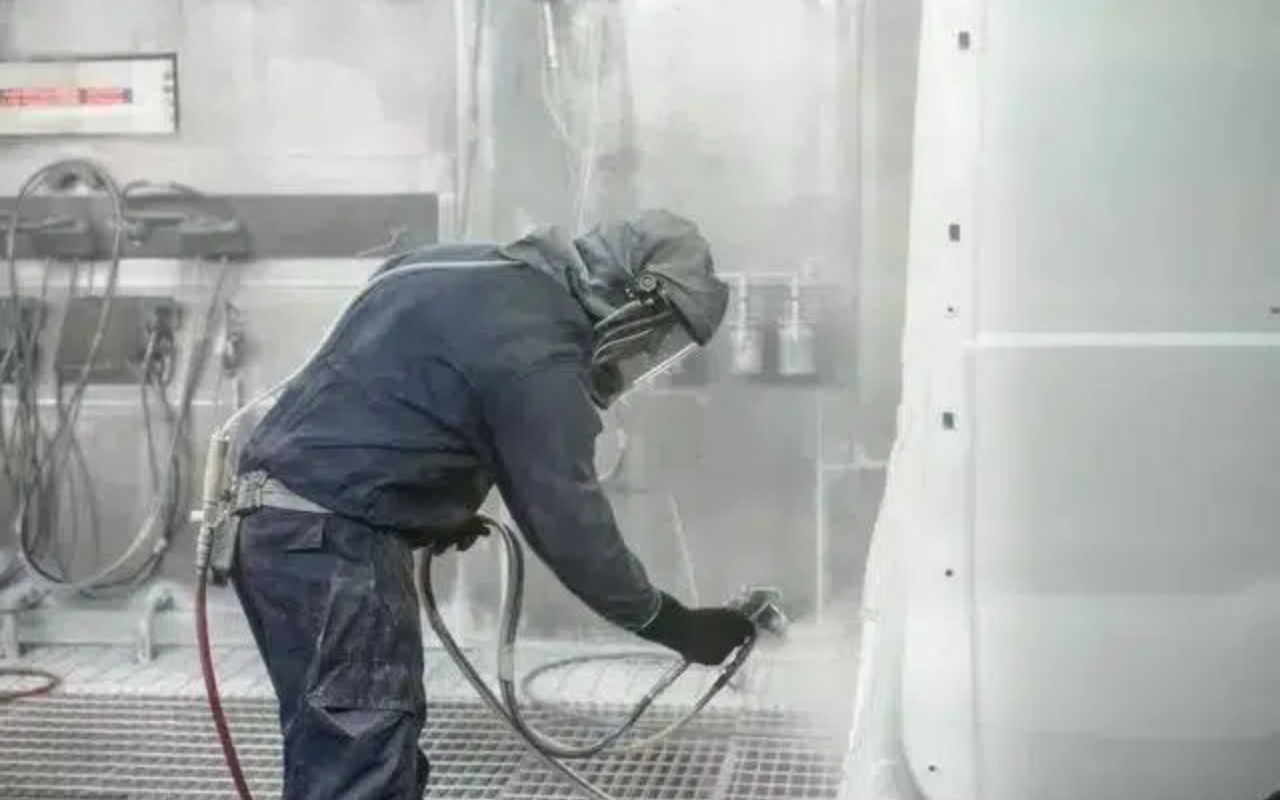
Quick Answer: Both powder coating and liquid painting are essential industrial surface finishing processes. Powder coating is a 100% solid, solvent-free method that offers exceptional durability, eco-friendliness, and high material efficiency, but it requires high curing temperatures and is generally limited to metal substrates. Liquid painting, on the other hand, is a traditional process offering unmatched versatility in color, applicability to almost any material, and lower initial equipment costs, though it is less environmentally friendly and requires longer drying times.
Introduction: The Importance of Surface Finishing
In industrial manufacturing and daily life, steel and metal components dominate. However, if these metal surfaces are left exposed to the atmosphere, oxidation will quickly cause corrosion, rendering the equipment useless and wasting valuable resources.
To prevent this, surface treatment technologies—specifically surface coating—are essential. While traditional liquid painting has been the standard for centuries, the 1980s saw the rapid rise of powder coating. Today, modern industrial coating primarily consists of these two dominant methods. Below, we break down the characteristics, advantages, and limitations of each to help you make an informed decision.
What is Powder Coating?
Powder coating (often referred to industrially as plastic spraying) is a modern surface treatment process that utilizes a 100% solid, solvent-free powder. Available in thermoplastic and thermosetting varieties, this powder is formulated from specialized resins, pigments, fillers, curing agents, and additives.
The powder remains stable at room temperature. During application, it is applied via electrostatic spraying or a fluidized bed, then baked in an oven. The heat causes the powder to melt, flow, and cure into a smooth, highly durable, and corrosion-resistant permanent film. It is widely used for shelving, cabinetry, workbenches, and logistics equipment.
Advantages of Powder Coating
Eco-Friendly & Safe (Zero Solvents): Because it is a 100% solid material, it emits zero Volatile Organic Compounds (VOCs). This eliminates solvent-induced pollution, vastly improves worker health conditions, and simplifies waste disposal.
High Efficiency & Simplified Process: Traditional painting often requires a dozen steps (primer, putty, sanding, topcoats, clear coats) and up to 7-10 days. Powder coating requires only three: spray, cure, and cool. Products can be finished on the same day.
95%+ Material Utilization: Oversprayed powder can be collected and recycled back into the supply hopper. Liquid paint overspray is lost forever, meaning paint utilization usually hovers around only 50%.
Superior Durability: Without evaporating solvents, powder coatings do not develop micro-pinholes. The resulting finish is incredibly dense, tough, and highly resistant to wear and corrosion.
Thick One-Pass Application: Powder coating easily achieves a thickness of 50–300μm in a single pass without dripping, sagging, or edge-coverage issues.
Disadvantages of Powder Coating
Difficult Color Matching & Switching: You cannot mix powder on-site like liquid paint. Custom colors require a new factory formula. Furthermore, changing colors in the spray booth requires meticulous cleaning of the guns, hoppers, and hoses to prevent cross-contamination.
Hard to Achieve Ultra-Thin Coats: Due to the electrostatic process, it is extremely difficult to achieve a coating thinner than 40μm.
Slight "Orange Peel" Effect: Because the powder relies on melting to level out, its high melt-viscosity can sometimes result in a slight "orange peel" texture, making it slightly less physically smooth than high-end liquid paint.
Material & Size Limitations: The powder must be baked at 160°C (320°F) or higher, ruling out heat-sensitive materials like most plastics. Additionally, the electrostatic process requires a conductive substrate (metal). Finally, the size of the project is strictly limited by the size of the curing oven—you cannot easily powder coat a bridge or a massive crane.
What is Liquid Painting?
Liquid painting is the traditional method of applying a liquid coating to a surface for protection and decoration. With thousands of years of history, the technology is incredibly mature, offering thousands of specific formulations across dozens of categories—from aerospace coatings and marine deck paints to standard household emulsions.
Advantages of Liquid Painting
Unmatched Variety and Versatility: There is a specific liquid paint for virtually every environment, performance requirement, and material.
Flexible Application Methods: Paint can be applied via brushing, dipping, rolling, air spraying, airless spraying, or electrophoretic deposition (e-coating). It scales perfectly from a DIY brush touch-up to automated automotive assembly lines.
Low Initial Equipment Investment: Setting up an air-spraying station requires minimal investment (a spray gun, an air compressor, and an oil-water separator). Unlike powder coating lines, which can cost hundreds of thousands of dollars, liquid painting offers a fast ROI for small-to-medium operations.
Simplified Pre-Treatment: High-quality anti-rust primers bond exceptionally well to substrates. While powder coating requires meticulous cleaning, degreasing, and chemical phosphating to prevent peeling, liquid paint often only requires basic degreasing and rust removal before primer application.
Disadvantages of Liquid Painting
Requires Highly Skilled Operators: Because application is often manual, the quality of the finish depends heavily on the technician's skill, knowledge of paint viscosity, drying times, and color theory.
Longer Production Cycles & Higher Costs: The multi-step process (primer, putty, sanding, topcoat, drying/baking times) takes much longer. The consumption of materials (including thinners and hardeners) and labor drives up the comprehensive cost.
Poor Environmental & Health Profile: Liquid paints rely on organic solvents. During application and curing, these evaporate, creating VOC emissions and toxic paint mist. This poses severe risks to human respiratory and nervous systems and requires strict environmental controls.
Higher Fire Hazard: Due to the volatile organic solvents, the flashpoint and ignition energy of liquid paint are much lower than powder. The risk of fire during application is significantly higher. (Note: While paint catches fire more easily, it is worth noting that if an airborne powder coating cloud does ignite, the resulting dust explosion can be more destructive).
Conclusion: How to Choose?
When comparing powder coating vs. liquid painting, it is important to understand that these processes are complementary, not mutually exclusive replacements.
Choose Powder Coating if: You are manufacturing high volumes of metal parts (like automotive parts, appliances, or metal furniture) and need a highly durable, eco-friendly, and cost-efficient finish with a fast turnaround.
Choose Liquid Painting if: You are working with non-metals, heat-sensitive materials, massive structures (like bridges or heavy machinery), or require highly customized color matching and ultra-thin, glass-smooth finishes.
By analyzing both the technical feasibility and economic logic of your specific project, you can select the optimal surface finishing process that maximizes quality while minimizing costs.