 English
 Español
 Português
 Русский
 عربي
عربي Türkçe
 Deutsch
 Polski
 Français
 Italiano
 Tiếng Việt
Robotic vs. Manual Painting: What Are the Pros and Cons of Each Method?
Both robotic painting and manual painting are foundational processes in the industrial coating industry. While the primary distinction lies in automation versus human operation, these two methods require entirely different operating conditions and are suited for different types of products.
If you are evaluating manufacturing processes for your production line, understanding the capabilities of each method is crucial. Below is a comprehensive comparison of the principles, workflows, pros, and cons of robotic and manual painting.
1. How Does Robotic Painting Work? (The Principle)
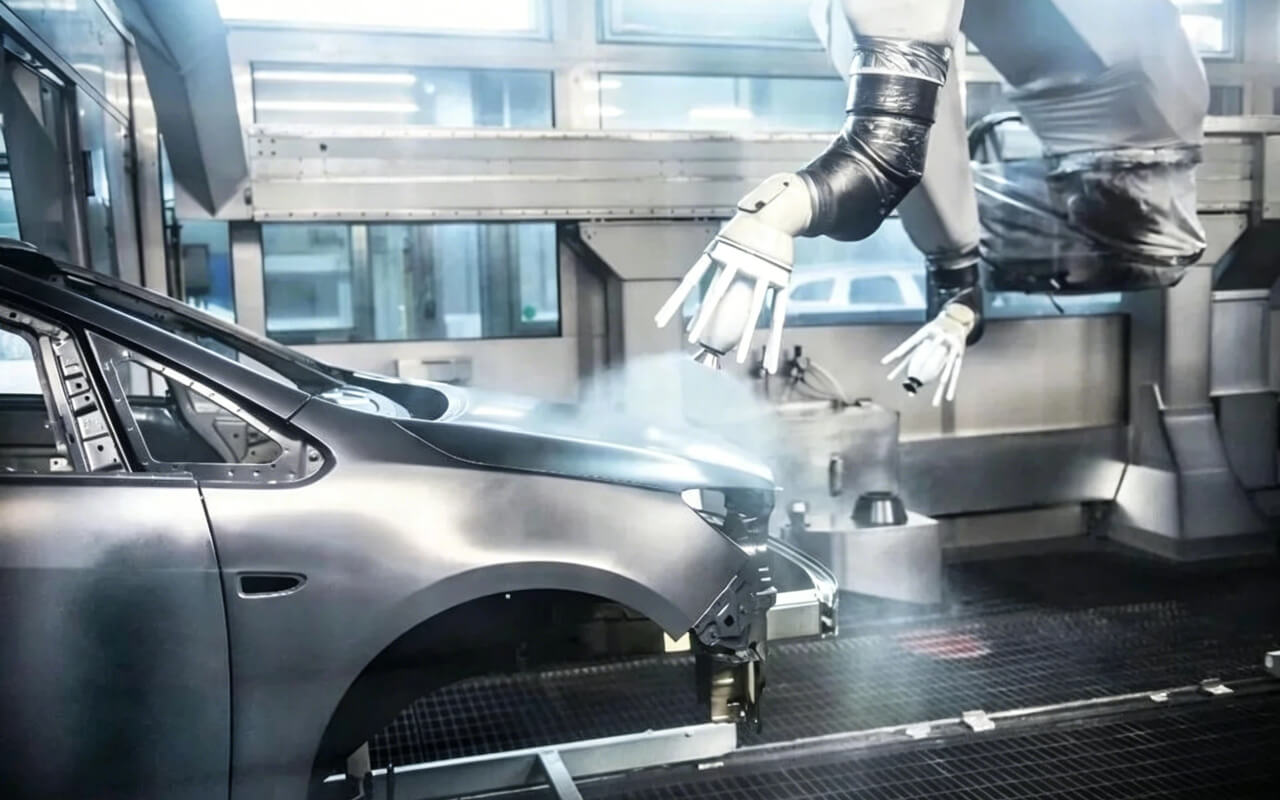
A painting robot is a highly automated system primarily consisting of the robot body, a computer, and a control system. Hydraulically driven robots also include a hydraulic power source, such as an oil pump, tank, and motor.
Advanced Articulation: Most painting robots utilize a 5- or 6-axis joint structure. This provides a massive range of motion, allowing the robot arm to execute highly complex trajectory movements.
Flexible Wrists: The robot's wrist typically features 2 to 3 degrees of freedom. Advanced flexible wrists can bend and rotate in all directions, mimicking human movement. This allows the robot to easily reach through small openings to coat internal surfaces.
The Process: During operation, the product is secured to a rotating bracket on a moving conveyor line. As the conveyor advances and the bracket continuously rotates, the robot applies paint uniformly across the entire surface of the product.
2. The Robotic Painting Workflow
The standard operating procedure for automated robotic spraying includes:
Paint Dilution
Spray Gun Adjustment
Conveyor Speed Calibration
Test Spraying
Coating Quality Inspection
Final Approval (OK)
3. Top Advantages of Robotic Painting
High Flexibility & Versatility:
Features a large working envelope, maximizing design possibilities.
Capable of coating both internal and external surfaces.
Supports mixed-line production (e.g., seamlessly alternating between sedans, station wagons, and pickup trucks on the same automotive assembly line).
Superior Quality & Material Efficiency:
Follows precise profiling trajectories, vastly improving film uniformity and overall finish quality.
Reduces overspray and cleaning solvent usage, maximizing material utilization.
Ease of Operation & Maintenance:
Supports offline programming, dramatically reducing on-site setup and debugging time.
Utilizes plug-and-play modular designs for rapid installation and component replacement.
Designed for high accessibility, making routine maintenance hassle-free.
Exceptional Equipment Utilization:
While traditional reciprocating automatic sprayers max out at 40%–60% utilization, robotic painting systems can achieve an impressive 90%–95% utilization rate.
Enhanced Health, Safety, and Eco-Friendliness:
Replaces human workers in hazardous environments, eliminating exposure to toxic fumes and preventing occupational diseases.
Cost-Effective & Highly Productive:
Operates at 1 to 3 times the speed of manual painters. It reduces long-term reliance on manual labor, effectively lowering overall labor costs.
4. Disadvantages of Robotic Painting
Size Limitations: Less ideal for extremely large or oversized products.
Color Constraints: Cannot simultaneously spray multiple different colors on a single product without complex changeovers.
5. How Does Manual Painting Work?
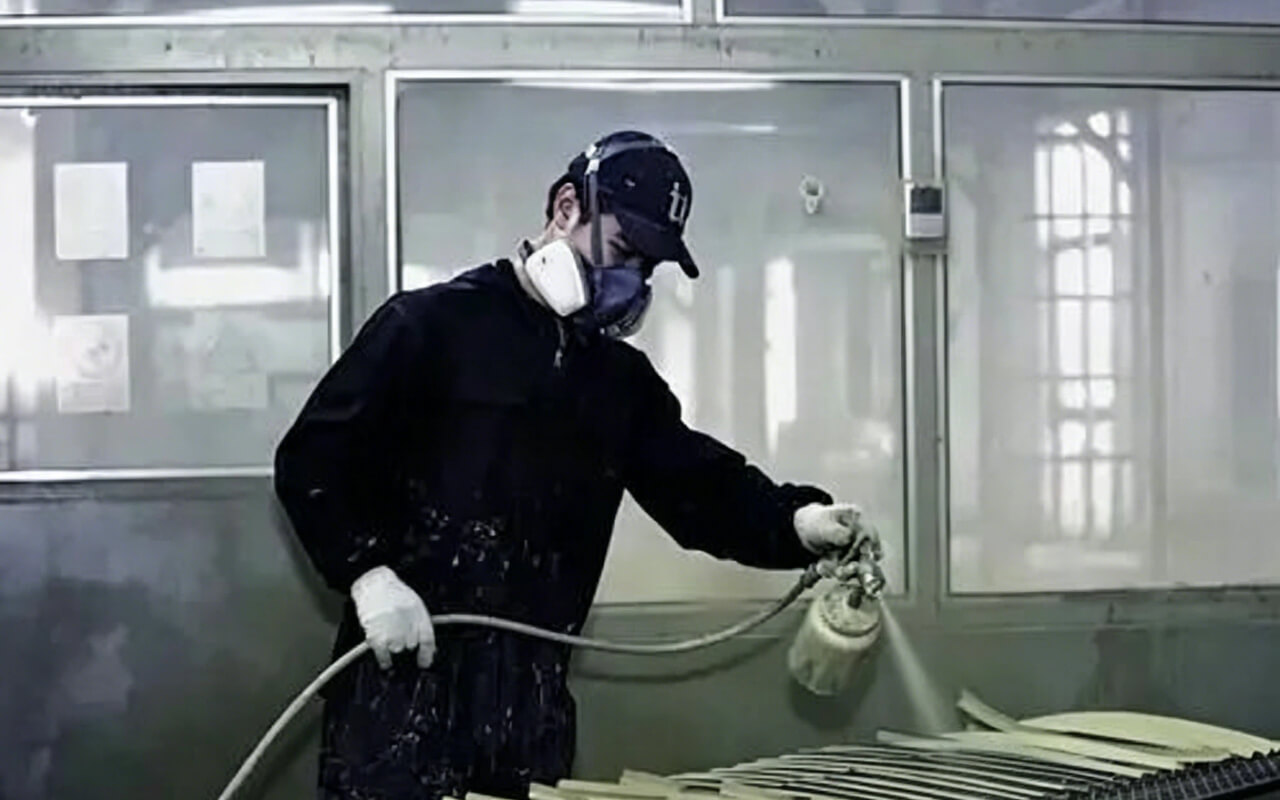
The Principle: Manual painting relies entirely on a human operator who directly applies paint to the product's surface using a handheld spray gun.
The Workflow:
Paint Dilution
Spray Gun Adjustment
Test Spraying
Coating Quality Inspection
Final Approval (OK)
6. Advantages of Manual Painting
Size Versatility: Easily accommodates massive or oversized products that cannot fit on an automated conveyor.
Surface Adaptability: Highly effective for coating heavily textured, uneven, or irregularly shaped surfaces.
Multi-Color Application: Ideal for products requiring multiple colors, color blocking, or intricate color-registration (overprinting) processes.
7. Disadvantages of Manual Painting
Low Production Output: Manual spraying is significantly slower. For standard mass-market consumer products, manual painting is largely being phased out in favor of automation.
Inconsistent Coating Thickness: Especially in plastic coating applications, manual operation makes it nearly impossible to guarantee uniform film thickness across every single unit.
Poor Color Consistency: Human error inevitably leads to weaker color control, resulting in slight color variations and discrepancies from batch to batch.
The Bottom Line
Choosing between robotic and manual painting depends entirely on your production volume, product size, and quality requirements. Robotic painting is the undisputed champion for high-volume, uniform, single-color mass production, offering superior ROI and safety. Manual painting, however, remains relevant for oversized, highly textured, or multi-colored specialty items where human adaptability is required.