

 English
 Español
 Português
 Русский
 عربي
عربي Türkçe
 Deutsch
 Polski
 Français
 Italiano
 Tiếng Việt
Self-Propelled Hoist Conveyor E-Coating Line
ST-EC-HC
Price: USD5000~10000
Get Quote PDF
Hoist-Type Electrocoating Line: Workpiece conveying system for electrophoretic coating processes
Vertical Lifting & Movement: Vertical entry/exit of tanks; flexible rail travel; reduced tank size and costs
Independent Control: Each hoist individually controlled; precise positioning, speed, and dwell time
Complex Workpiece Handling: Adaptable fixtures; mixed production of large and small parts
In the automotive electrophoretic coating manufacturing process, the pretreatment of the vehicle body—including E-coating and electrostatic spraying—consumes a significant amount of resources. Therefore, the introduction of advanced conveying systems for automotive E coating lines not only helps vehicle manufacturers enhance their competitiveness, but also contributes to energy saving and emission reduction.
Hoist-type electrocoating lines are well suited for intermittent production or applications with high requirements for flexibility and coating quality. They are widely used in industries such as automotive components and construction machinery.
Coating solutions for Industry
Self-Propelled Hoist Conveyor E-Coating Line
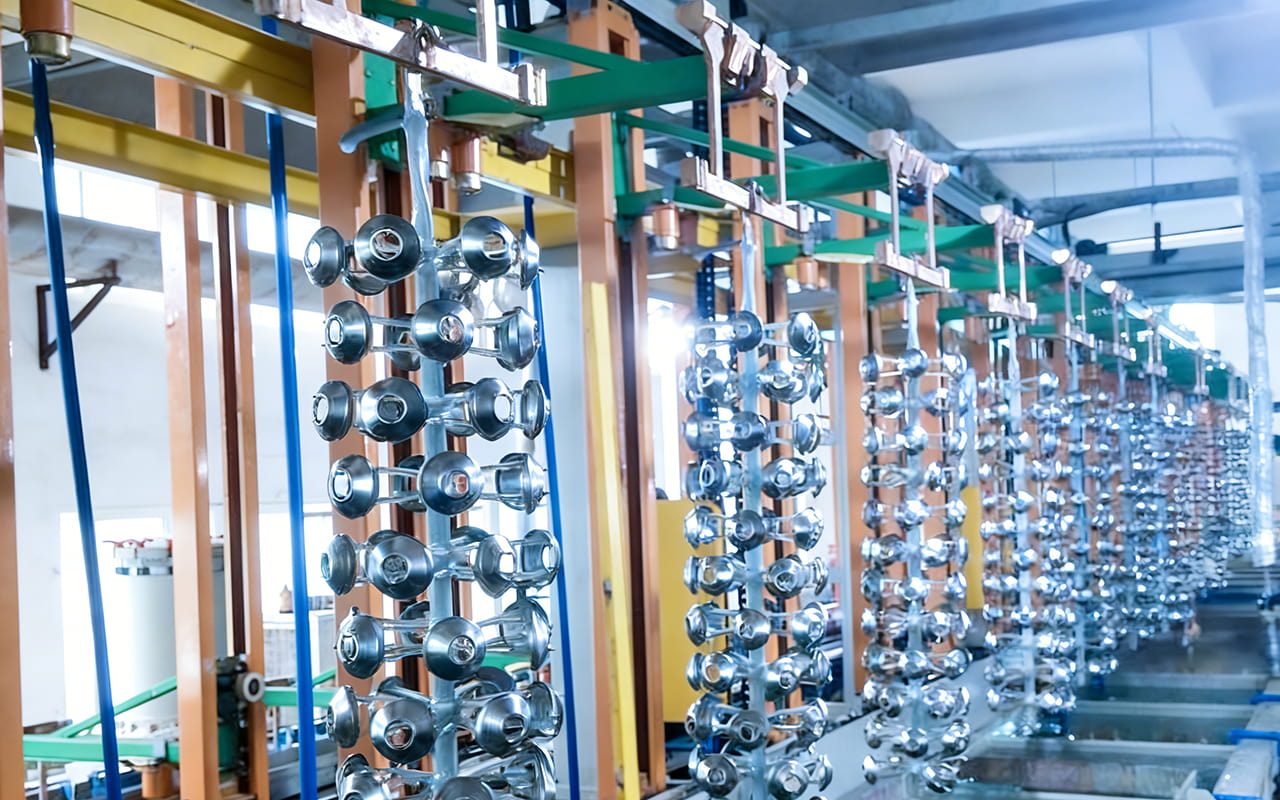
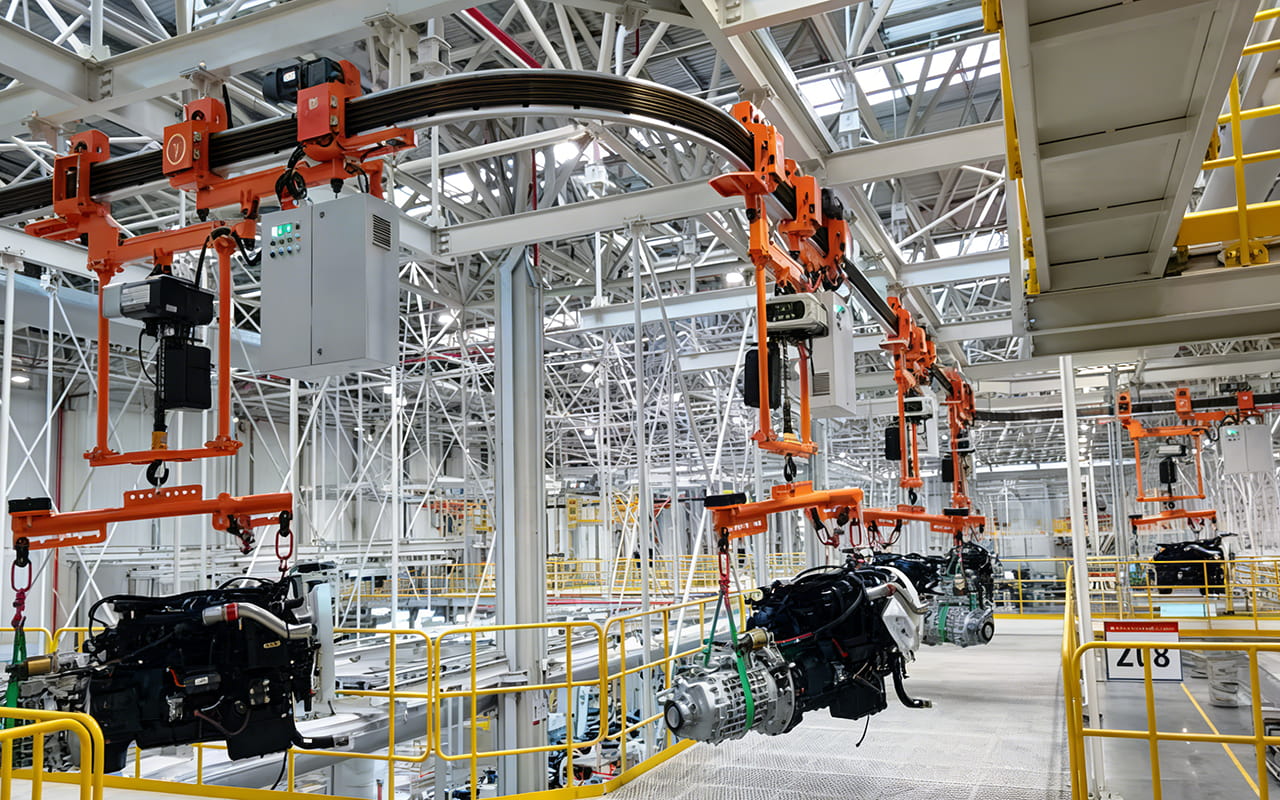
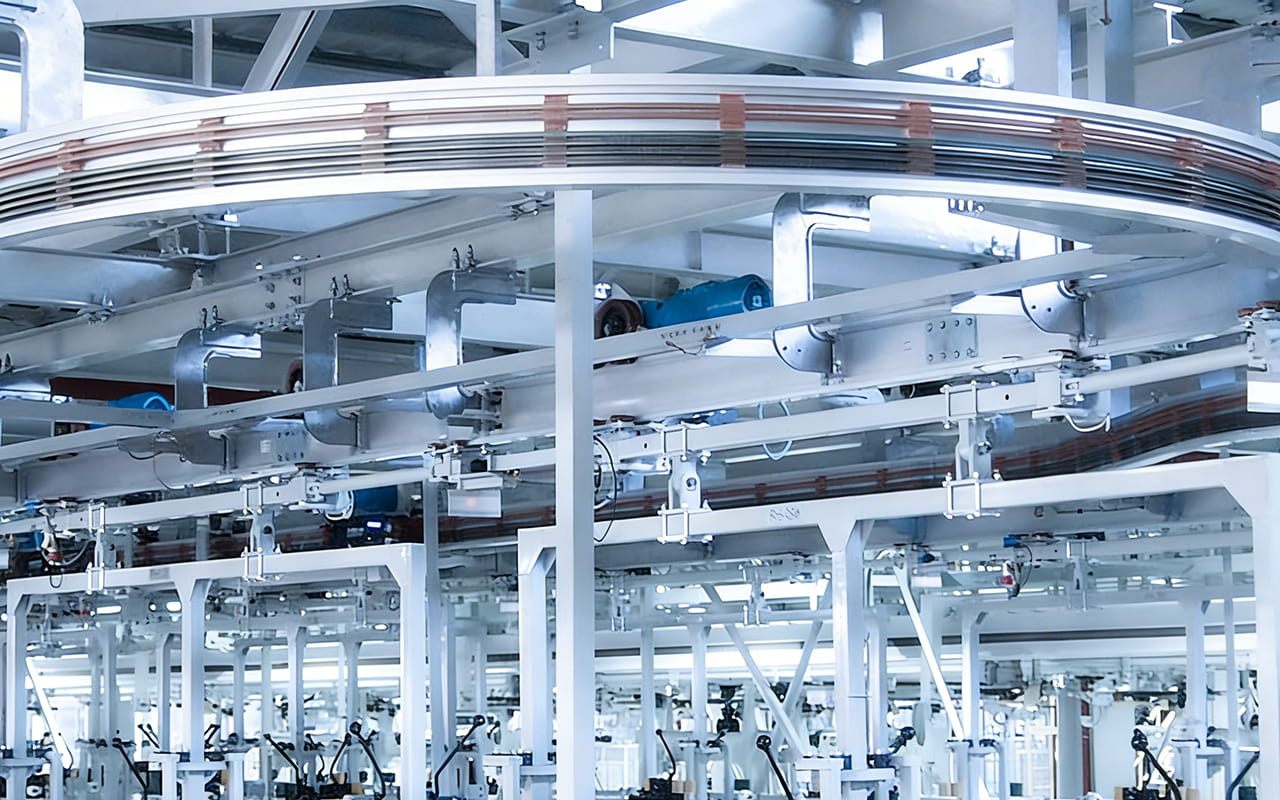
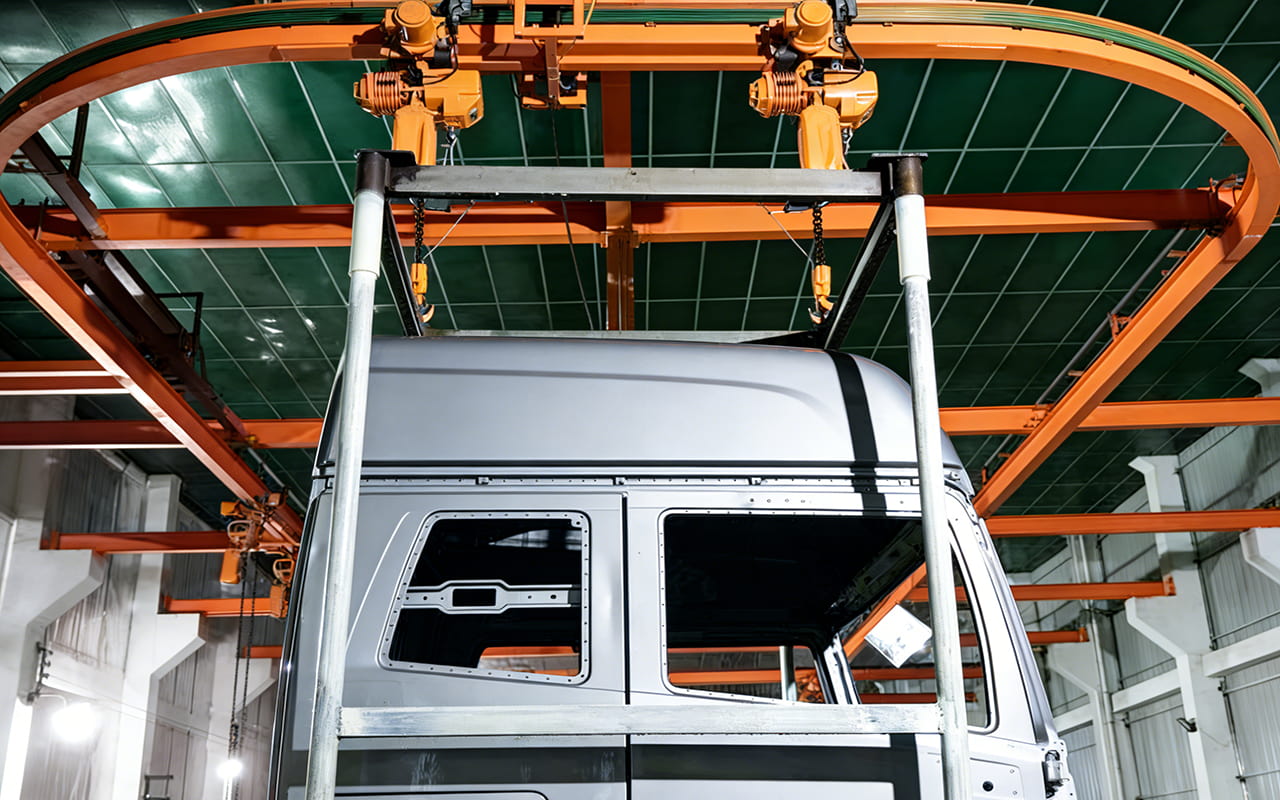
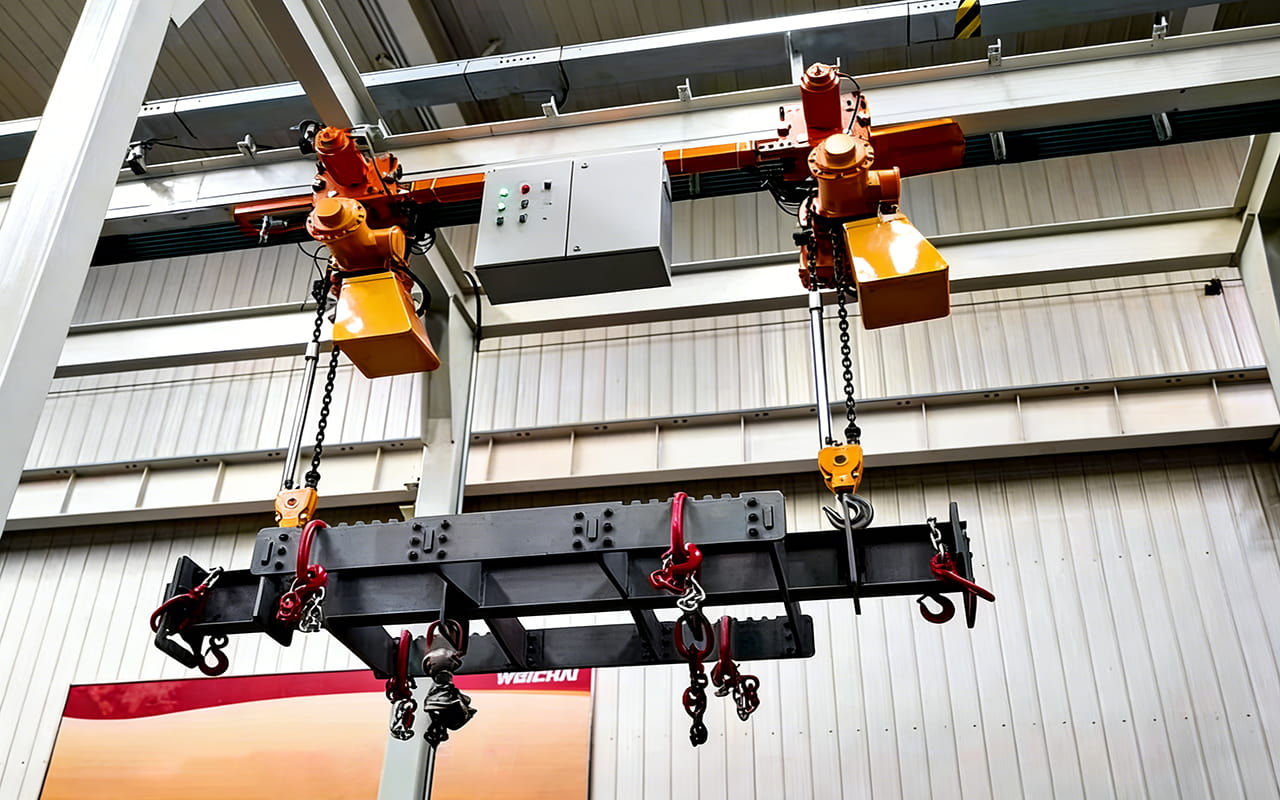
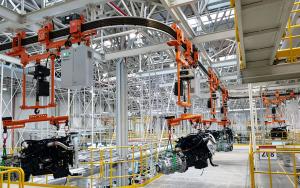
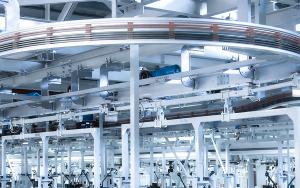
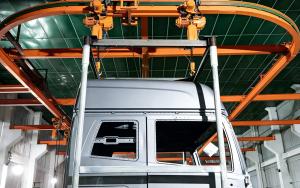
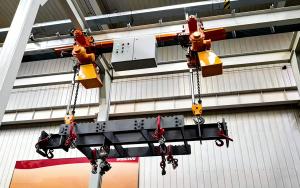
The self-propelled hoist conveyor used in E-coating lines has undergone more than a decade of development and is now widely applied in industries such as automotive manufacturing, home appliances, agricultural machinery, and light industry. Especially for small-batch automotive body coating production, it has become the preferred conveying solution for E coating equipment. The self-propelled hoist conveying system mainly consists of self-driven trolley units, hangers, aluminum alloy rails, switches, steel structures, protective mesh, sliding power supply systems, guiding devices, conductive copper busbars, current collectors, and a control system. The driving power of each hoist trolley is provided by a traveling motor and a lifting motor installed on the aluminum alloy rail. The self-propelled hoist system is controlled by a PLC. After a workpiece is hung at the loading station, each trolley automatically completes a series of E-coating operations according to a preset program, including lowering the workpiece into the tank, stopping at the designated position for a specified process time, controlled oscillation during immersion, lifting the workpiece, and moving forward to the next station.
Its main features and advantages are as follows:
Features
1. Vertical Lifting and Flexible Movement
The hoist enables vertical lifting of workpieces via an electric hoist, allowing them to enter and exit the electrocoating tank vertically. This reduces the required tank size and lowers equipment investment and operating costs. At the same time, the hoist can move flexibly along rails to meet the positioning requirements of different process stations.
2. Independent Control and Precise Positioning
Each hoist unit can be controlled independently. Power and control signals are transmitted via conductor rails or wireless communication, enabling accurate positioning and motion control. Speed and dwell time can be adjusted according to process requirements.
3. Adaptability to Complex Workpieces
By using combined hanging fixtures, the system can accommodate workpieces of different shapes, sizes, and weights. It supports mixed production of large and small parts, such as coating vehicle frame assemblies together with small chassis components.
4. Modular Design
Components such as rails, hoist units, and fixtures are modular in design, making expansion and maintenance convenient. The system layout can be flexibly adjusted according to production scale and process requirements.
5. Limited Compatibility with Drying Systems
In general, hoist-type electrocoating lines have limited adaptability to high-temperature drying environments. Before entering the curing oven, workpieces usually need to be transferred to other conveying equipment.
Advantages
1. Reduced Floor Space
Vertical entry and exit of workpieces allow for smaller tank dimensions, resulting in a more compact production line layout and significant savings in plant space.
2. Lower Energy Consumption and Costs
Smaller tanks reduce the consumption of coatings and chemicals, lowering both initial investment and operating costs. In addition, hoist systems typically consume less energy, especially in intermittent production scenarios.
3. Improved Coating Quality
Vertical immersion minimizes tilting or swinging that can occur during horizontal conveying, resulting in more uniform coatings and fewer defects such as bubbles or sagging, thereby enhancing corrosion resistance.
4. Convenient Fault Handling
If a hoist unit malfunctions, it can be moved to an offline maintenance area without affecting the production of other workpieces, ensuring high system reliability.
5. High Level of Automation
The system can be integrated with PLC control to achieve automatic loading, unloading, and re-hanging operations, reducing manual intervention and improving production efficiency and consistency.
6. Strong Environmental Adaptability
Hoists operate overhead, avoiding interference with floor-mounted conveying equipment. This makes them suitable for harsh environments such as humid or corrosive conditions.


