 English
 Español
 Português
 Русский
 عربي
عربي Türkçe
 Deutsch
 Polski
 Français
 Italiano
 Tiếng Việt
What are the most efficient automated methods for coating irregularly shaped furniture?
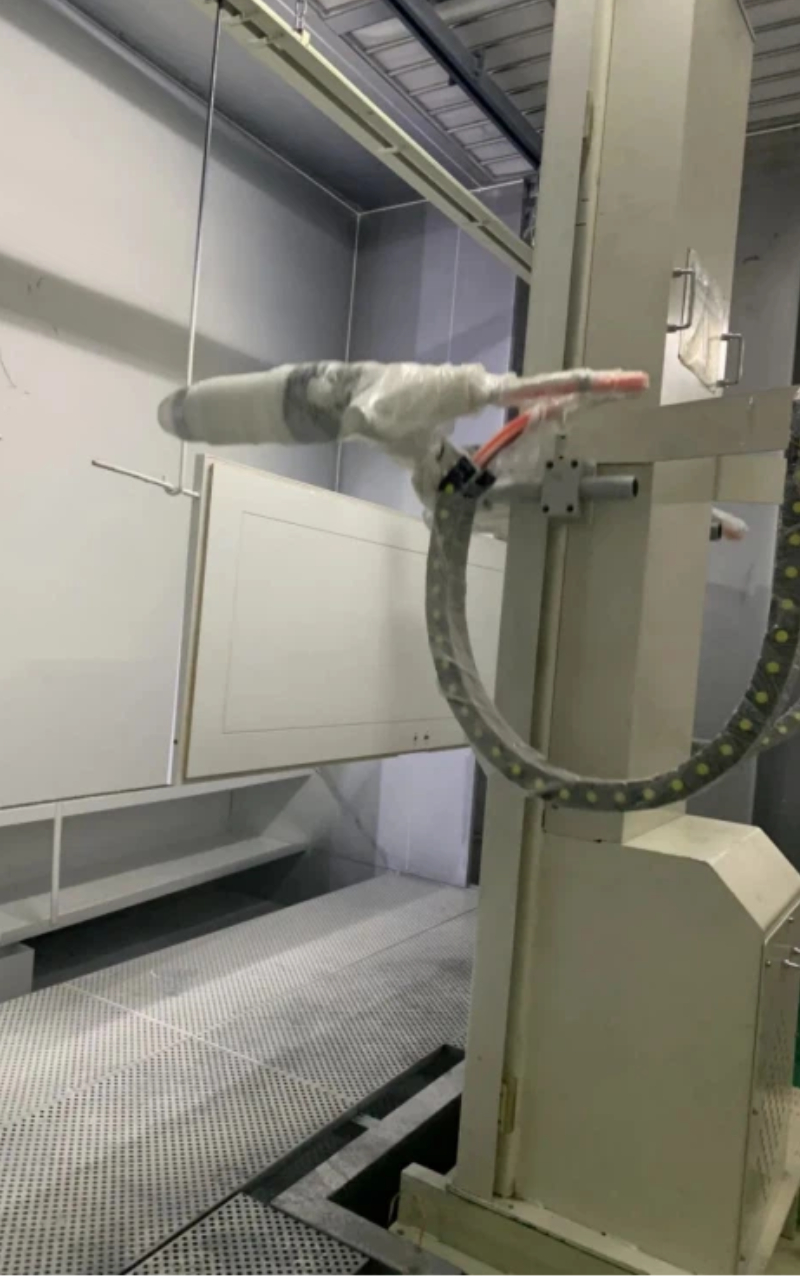
A Tool for High-Efficiency Coating—The Automatic Reciprocating Electrostatic Rotary Cup Spraying Machine
With the advancement of science and technology, "replacing humans with machines" has become an irreversible trend in industrial development, and more manufacturing processes will rely on automated equipment. In the field of furniture coating, manual spraying is gradually being replaced by automated coating. Currently, common coating methods include reciprocating spraying, electrostatic spraying, roller coating, curtain coating, and vacuum coating.
For flat workpieces, roller coating or curtain coating is mostly preferred, with single-component water-based paints and UV paints mainly applied via roller coating. For irregularly shaped pieces, spraying is mostly used because it can accommodate all types of paint. Spraying methods can be further divided into overhead hanging spraying, robotic spraying, and reciprocating spraying. During field visits, LubanYard discovered an automatic reciprocating electrostatic rotary cup spraying machine that uses single-component solvent-based coatings. Hailed as the "poster child" for high-efficiency spraying, it is gaining increasing attention from factories.
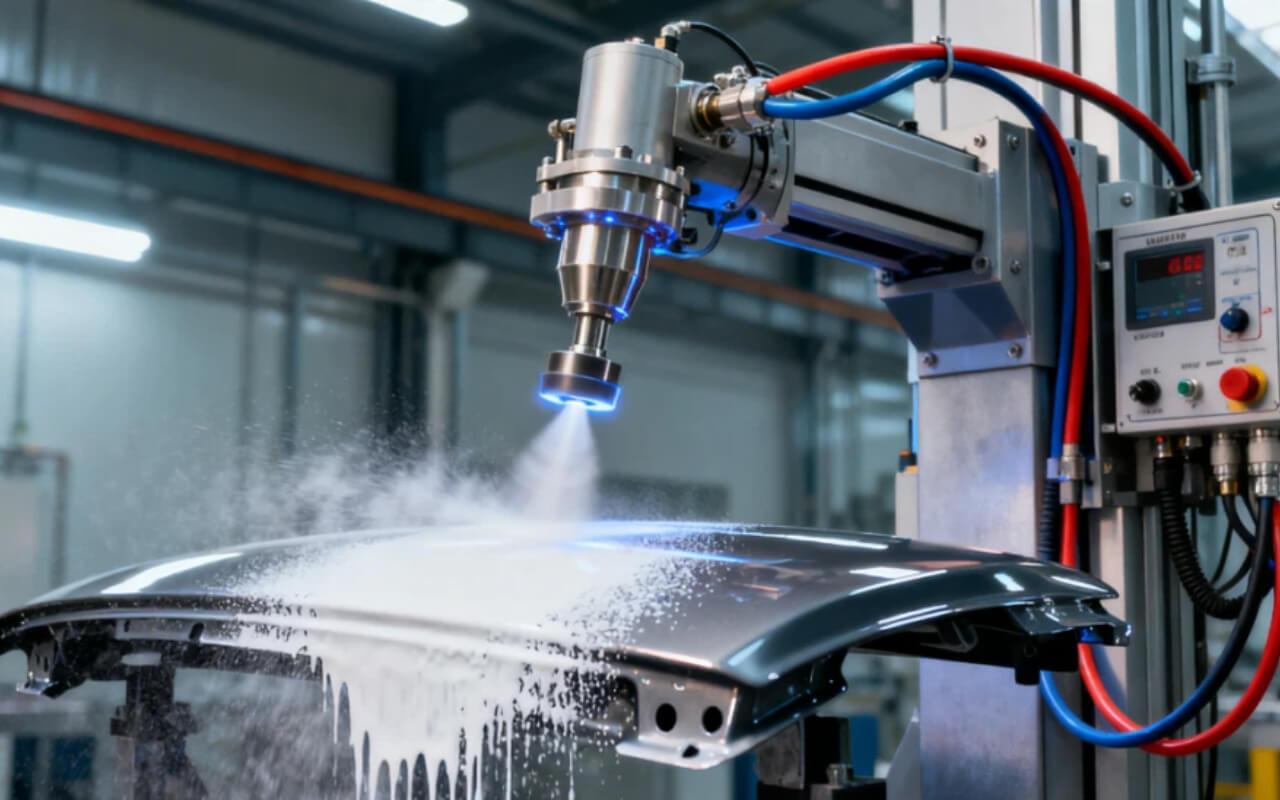
01 Electrostatic Rotary Cup Spraying Technology
In rotary cup electrostatic spraying, the rotary cup is connected to a negative electrode, and the workpiece to be coated is grounded, creating a high-voltage electrostatic field between them. When paint is delivered into the rotary cup, the high-speed rotation and centrifugal force cause it to spread outward into uniform, charged micro-particles with sufficient electrical charge. Under the force of the electric field, these particles move rapidly toward the surface of the oppositely charged workpiece, achieving exceptionally high transfer efficiency. Thanks to this technology, furniture coating workshops can effectively increase paint transfer rates and reduce VOC emissions.
Compared to conventional spraying, electrostatic rotary cup spraying significantly improves paint transfer rates, saving substantial coating costs and easing environmental pressures. The resulting surface quality of the sprayed furniture is superior, significantly enhancing product quality while reducing cleaning and maintenance costs in continuous applications. Furthermore, because the rotary cup delivers more stable performance, its safety coefficient during operation is also higher.
02 Electrostatic Rotary Cup Spraying Equipment
2.1 Equipment Introduction
Automatic rotary cup spraying utilizes high-speed rotary cup spray guns to coat products or workpieces. This achieves coating effects such as labor savings, uniform thickness, stable quality, and paint conservation, visibly improving the product's appearance.
Reciprocating automatic spraying equipment is suitable for continuous, high-quality, and high-efficiency painting operations on various workpieces. Nowadays, whether in furniture enterprises, wooden door enterprises, or custom manufacturing enterprises, the recognition of and demand for reciprocating spraying equipment are growing day by day.
2.2 Working Principle
During furniture coating, when the system detects that a workpiece has moved to the corresponding position of each group of spray guns, the guns trigger on or off. This ensures that the workpiece is sprayed while the empty gaps receive no paint.
Each group consists of an upper and a lower spray gun. During spraying, care must be taken not to spray into empty gaps. Therefore, when passing an inner gap, only the upper spray gun fires—turning on and off based on the height of the air window—while the middle and lower spray guns do not spray.
On the other hand, when a door frame is relatively low, the lower spray gun does not spray in the empty gaps. During spraying, the system fires based on a designated starting point and stops at an ending point. The lead distance for the gun's start action and the lag distance for its stop action are both adjustable.
2.3 Control System
The control cabinet system serves as the master control center for the entire painting system. High-voltage control, discharge volume control, elevator speed control, air pressure control, gun cleaning control, and gun switch control are all automatically integrated into the cabinet. All system parameter adjustments, displays, and alarm lights are implemented on the panel. It also connects interlocks with peripheral equipment, such as conveyor chain switch signals, fire alarm signals, safety alarm signals, and more.
(1) Working Principle and Features of the Elevator
The elevator utilizes universal slider direction-changing technology for full-stroke spraying without return points, offering smooth operation, low noise, and a long motor lifespan. One reciprocating elevator corresponds to one control cabinet. The operating system of each coating machine concentrates all functions in the control cabinet, allowing for seamless switching between automatic and manual spraying functions.
The high-speed, full-stroke, precision reciprocating machine is easy to speed-adjust, driven by an electric variable-frequency servo motor for precise control and convenient adjustment. The reciprocating machine adopts dust-proof, industrial-standard, heat-treated slide rails and slide sleeves. Regularly adding lubricating grease eliminates the need for periodic tension adjustments of clamp wheels or the replacement of worn plastic-steel clamp wheels. The structure is simple, though manufacturing costs are higher, and the chain requires periodic inspection and tensioning.
At the same time, the system can be configured with an arbitrary number of wave segments, and the operating speed and paint volume of each segment can be adjusted according to the workpiece. This ensures uniform spray film thickness. No paint is sprayed in areas where the workpiece has not arrived, and the spray gun does not discharge paint in the waiting zone. The film thickness variance across the top, middle, and bottom of the coated object is minimal, saving paint usage.
(2) Precision Flow Oil/Paint Supply System
This system utilizes a variable-frequency, core-driven motor with AC variable-frequency technology to deliver the appropriate coating flow rate based on actual spraying needs. It features a digital flow display, human-machine adjustment, and real-time monitoring, allowing the paint volume to be adjusted at any time. Its unique design makes installation convenient, saving labor costs. The system is simple to operate, easy to maintain, and convenient to service.
2.4 Spray Gun
The spray gun shell is crafted from special plastic-steel and has been streamlined for high rigidity, reducing the gun's weight by approximately 40%. The weight of a single gun has dropped from the original 7.8 kg to no more than 5 kg. It is lightweight and offers excellent insulation. At the same time, the use of external high-voltage electrostatics effectively reduces the spray gun's weight by about 0.2 kg, making maintenance less difficult.
03 Comprehensive Benefits of Electrostatic Rotary Cup Spraying Equipment
(1) Excellent Spraying Quality
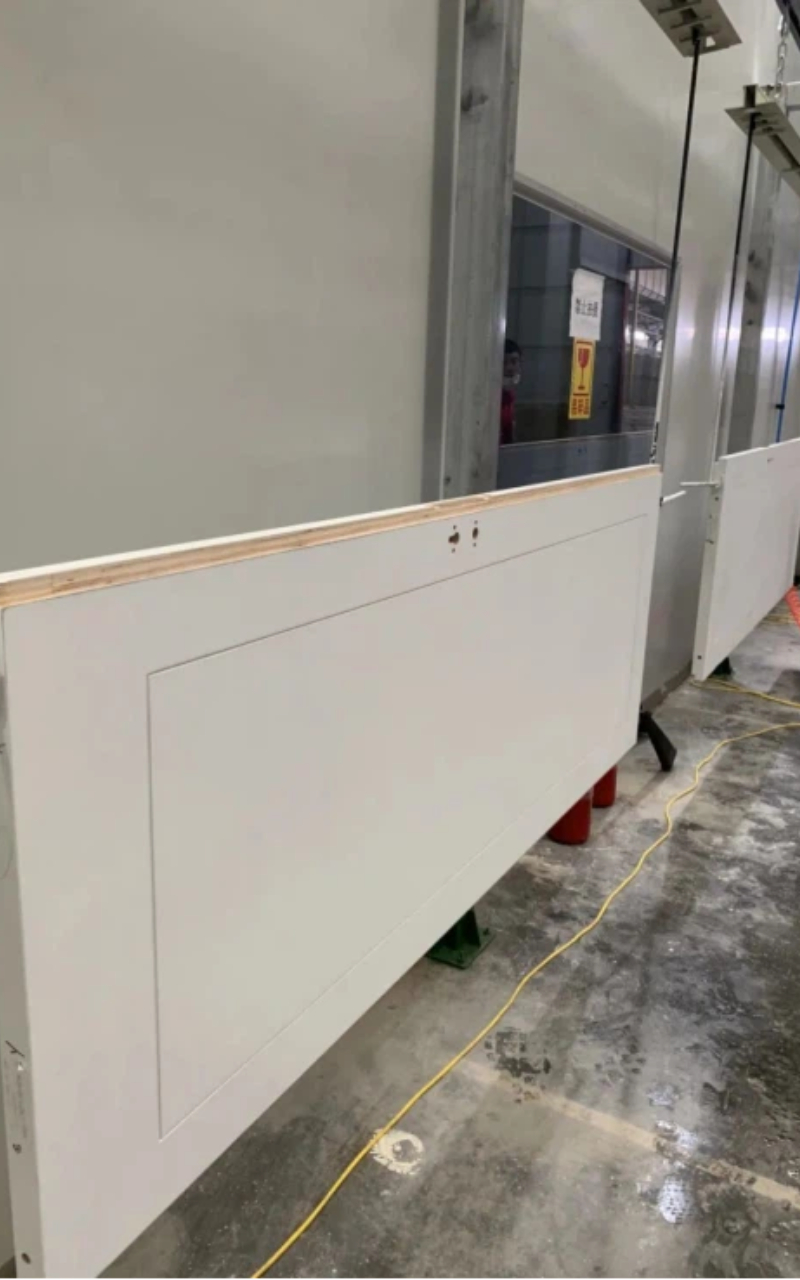
The automatic electrostatic paint spraying machine performs repeated, overlapping spraying on every single point of the workpiece's working surface, ensuring a uniform thickness of the paint film and achieving premium coating quality. The product surface is flat and smooth with a uniform film thickness, firm adhesion, and is free of runs, particles, bubbles, thin spots (exposed substrate), or scratches.
(2) Reduced Spraying Costs
Compared to current air spray gun costs, it can save at least 20%. The reduction in weight of the spray guns and counterweights effectively lowers the elevator load, extending the operational lifespan of the elevator, servo motors, and servo drives.
Under the same motor power, the reciprocating frequency of the elevator can be increased. With the enhancement of reciprocating speed, the effective coverage area of the spray gun within the same timeframe increases significantly. As spraying coverage goes up, the workpiece spraying effect is optimized on one hand, and production efficiency is improved on the other.
(3) Safe Spraying Environment
The electrostatic rotary cup spraying equipment is equipped with smoke detectors. The spray booth features automatic alarm functions for sparks, smoke, and open flames when the spray guns generate high-voltage electromagnetic fields. It will automatically alarm if the static electricity becomes excessively high, and the paint/oil supply will automatically shut off if the electrostatic rotary cup generates a spark.
The gun nozzle can automatically adjust the voltage level based on its distance from the workpiece: the closer the workpiece, the lower the voltage. If the gun nozzle makes contact with the workpiece, the voltage at the nozzle drops to zero.
Additionally, depending on the type of paint and requirements, the linear speed of the sanding belts on the two sanding heads, the linear speed of the polishing rollers, and the speed of the conveyor belt can all be adjusted via inverters to achieve the ideal sanding effect.
04 Conclusion
While guaranteeing premium paint film quality, electrostatic rotary cup spraying equipment reduces spraying costs and vastly improves production efficiency. Furthermore, the operating system design features a Chinese touch-screen control interface that is intuitive and concise, making it better suited for front-line workers. It is highly applicable for coating operations in large-scale customization or personalized furniture products.