 English
 Español
 Português
 Русский
 عربي
عربي Türkçe
 Deutsch
 Polski
 Français
 Italiano
 Tiếng Việt
What Is the Low-Temperature Curing Automatic Coating Process for Aluminum Profiles?
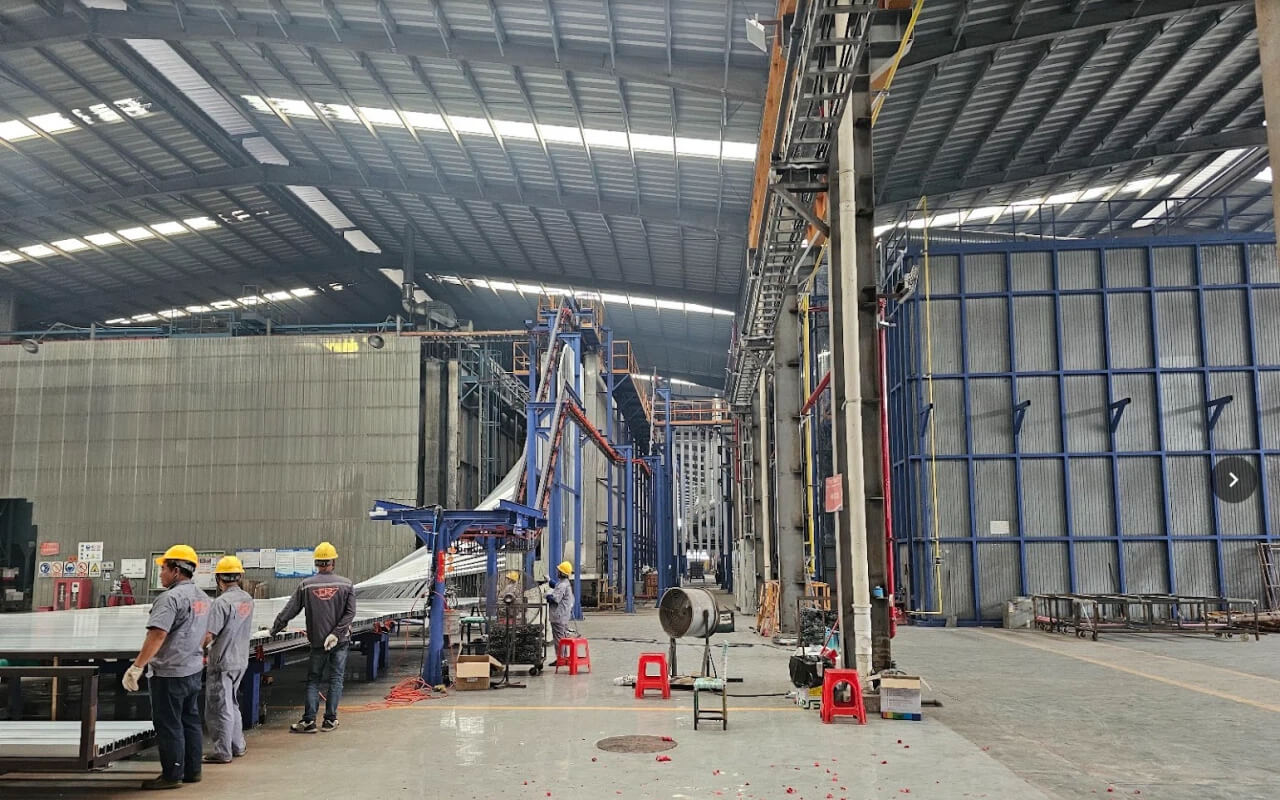
This guide outlines a complete low-temperature aluminum profile coating line, optimized for energy efficiency and heat-sensitive materials. The process uses specialized low-temperature curing powder to achieve high-quality film formation while protecting thin-walled or dimensionally sensitive aluminum profiles.
Key Stages of the Low-Temperature Coating Line
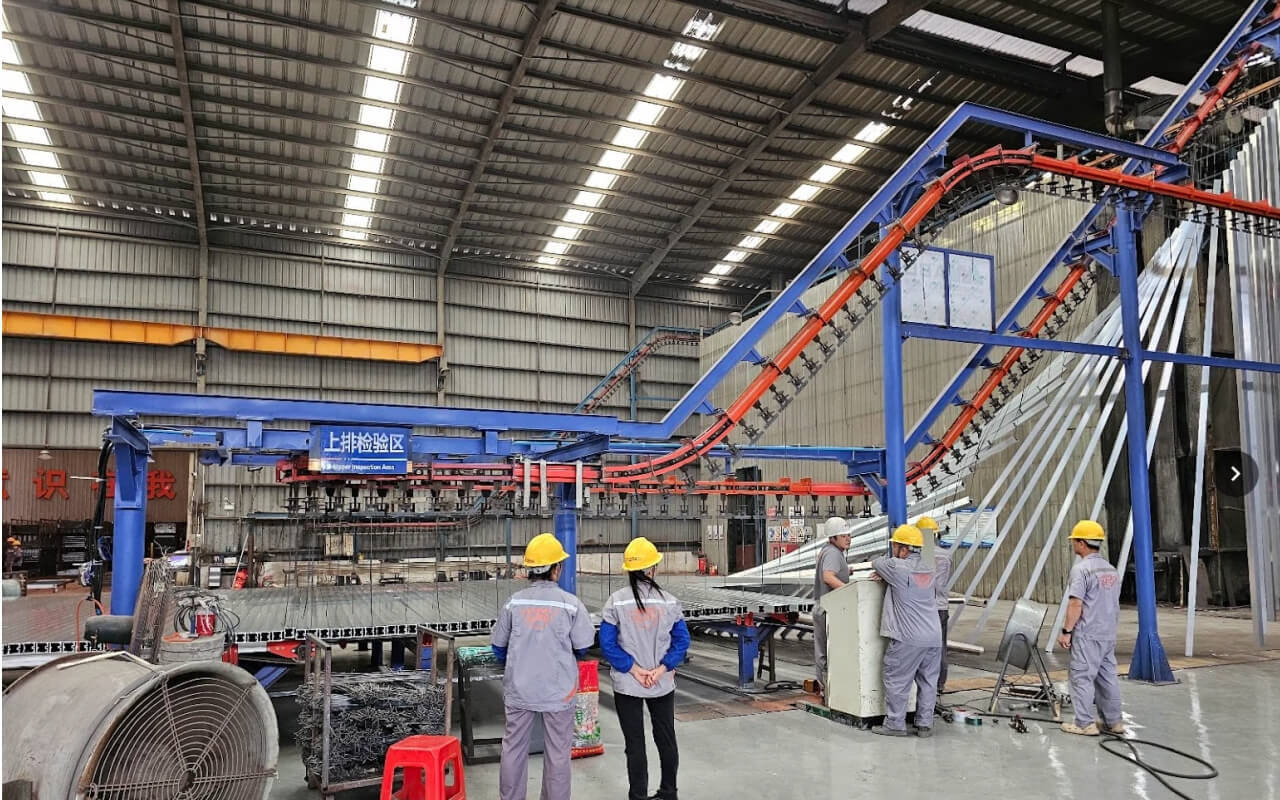
01 Loading & Inspection
Workpieces are hung orderly on the conveyor line’s tooling. Ensure reliable grounding, proper spacing, and stable positioning for downstream pretreatment and coating. Operators check for dents, oil stains, residual protective film, and confirm hanger conductivity. Prevent overloading, over-length, and cross-placement to avoid swinging collisions. Loading rhythm matches line speed.
▸ Max load: 25kg/hanger | Max length: 7m | Spacing: ≥80mm | Ground resistance: ≤1Ω
02 Alkaline Spray Degreasing
Removes stamping oils, hand grease, and light contaminants via alkaline aqueous degreaser. Critical control: solution concentration, temperature, and spray pressure to ensure emulsification without substrate corrosion. Monitor pH and alkalinity. Avoid overheating that grays the base. Clean nozzles regularly.
▸ Temperature: 45–55°C | Pressure: 0.8–1.2 bar | Duration: 3–5 min
03 Multi-Stage Rinsing
1–2 tap water rinses + 1 overflow rinse to eliminate residual degreasing agents. Maintain overflow, monitor conductivity, and replenish water. Prevent cross-contamination. Regular tank cleaning prevents nozzle blockage. Swing profiles to drain water.
▸ Tap water conductivity: ≤500 μS/cm | Rinse time: 1.5–3 min | Temp: ≤35°C
04 Chrome-Free Chemical Conversion (Zirconium/Titanium)
Forms a dense nanoscale conversion film, improving adhesion and corrosion resistance. Control bath concentration, pH, and temperature for uniform film (light yellow or colorless). Avoid over-treatment leading to powdering. Ensure ventilation.
▸ Temperature: 25–35°C | Duration: 1–3 min | pH range: 4.0–5.5
05 Final DI Water Rinse
Deionized water final rinse removes residual salts and chemicals, preventing spots under low-temperature curing. Monitor conductivity, maintain mild overflow, and protect pipes from algae. Avoid high pressure that damages the conversion film.
▸ DI water conductivity: ≤30 μS/cm | Pressure: 0.6–1.0 bar | Duration: 1–2 min
06 Pre-Drying (Low-Temperature)
Hot air circulation oven removes surface moisture, providing a dry base for powder coating. Control temperature and time to prevent film aging or profile deformation. Uniform airflow avoids moisture shadows. Outgoing profiles: dry and warm (not hot).
▸ Oven temperature: 80–110°C | Duration: 10–15 min | Exit part temp: 40–60°C
07 Electrostatic Powder Spraying (Low-Temperature Powder)
Enclosed booth. Apply uniform powder layer with electrostatic voltage, flow rate, and gun distance properly set. Avoid bare spots and runs. For complex sections: automatic + manual touch-up. Maintain powder recovery and control dust concentration, humidity, temperature.
▸ Voltage: 60–90 kV | Film thickness: 60–80 μm | Relative humidity: 45–65%
08 Low-Temperature Curing
Specialized low-temperature powder cures at lower than conventional temperatures, suitable for thin-walled or sensitive profiles. Accurately control oven temperature profile and holding time to ensure full leveling, curing, and mechanical performance. Uniform heating prevents over-baking, pinholes, or orange peel. Calibrate temperature trackers regularly. Avoid frequent oven door opening.
▸ Metal temperature: 140–160°C | Holding time: 15–20 min | Oven uniformity: ±5°C
09 Cooling & Resting
Natural air cooling prevents internal stress or coating cracks from sudden temperature drops. Maintain airflow but avoid strong drafts that cause color differences. Prevent part collisions and dust contamination. Cool to near ambient temperature.
▸ Exit surface temp: ≤40°C | Cooling time: ≥15 min | Air velocity: ≤0.5 m/s
10 Visual & Film Thickness Inspection
Use film thickness gauge to check coating within process range. Visual inspection for runs, pinholes, craters, color difference, mechanical damage. Optional: pencil hardness, cross-cut adhesion test. Mark and isolate non-conforming parts. Lighting: adequate and color-accurate.
▸ Film thickness: 60–80 μm | Sampling rate: ≥10% | Illuminance: ≥750 lx
11 Unloading & Protective Packaging
Carefully remove qualified profiles from hangers. Sort by order and specifications. Apply protective packaging: film or anti-collision foam. Avoid scratches and friction. Use soft spacers, control stacking height. Label each batch with batch number, color, and date.
▸ Stack height: ≤1.5 m | Max pallet weight: ≤800 kg | Elevated from floor: ≥80 mm