

 English
 Español
 Português
 Русский
 عربي
عربي Türkçe
 Deutsch
 Polski
 Français
 Italiano
 Tiếng Việt
What Makes Eco-Friendly Automated Spray Painting Equipment a Smart Choice for Modern Manufacturing?
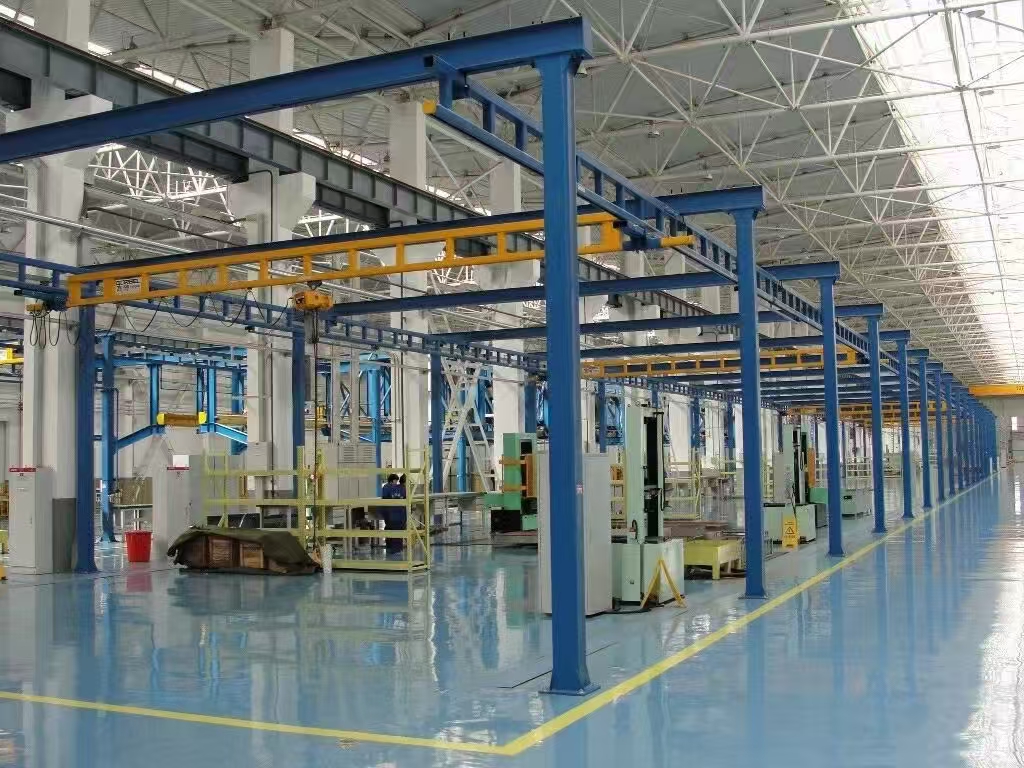
In today's era of rapidly advancing automation, the level of automation in spray painting equipment directly determines both product quality and production efficiency. Modern industrial manufacturing often requires precise, quantitative coating processes. Relying on manual labor for these repetitive and complex tasks is not only inefficient but also labor-intensive, making it unsuitable for large-scale, modern production environments.
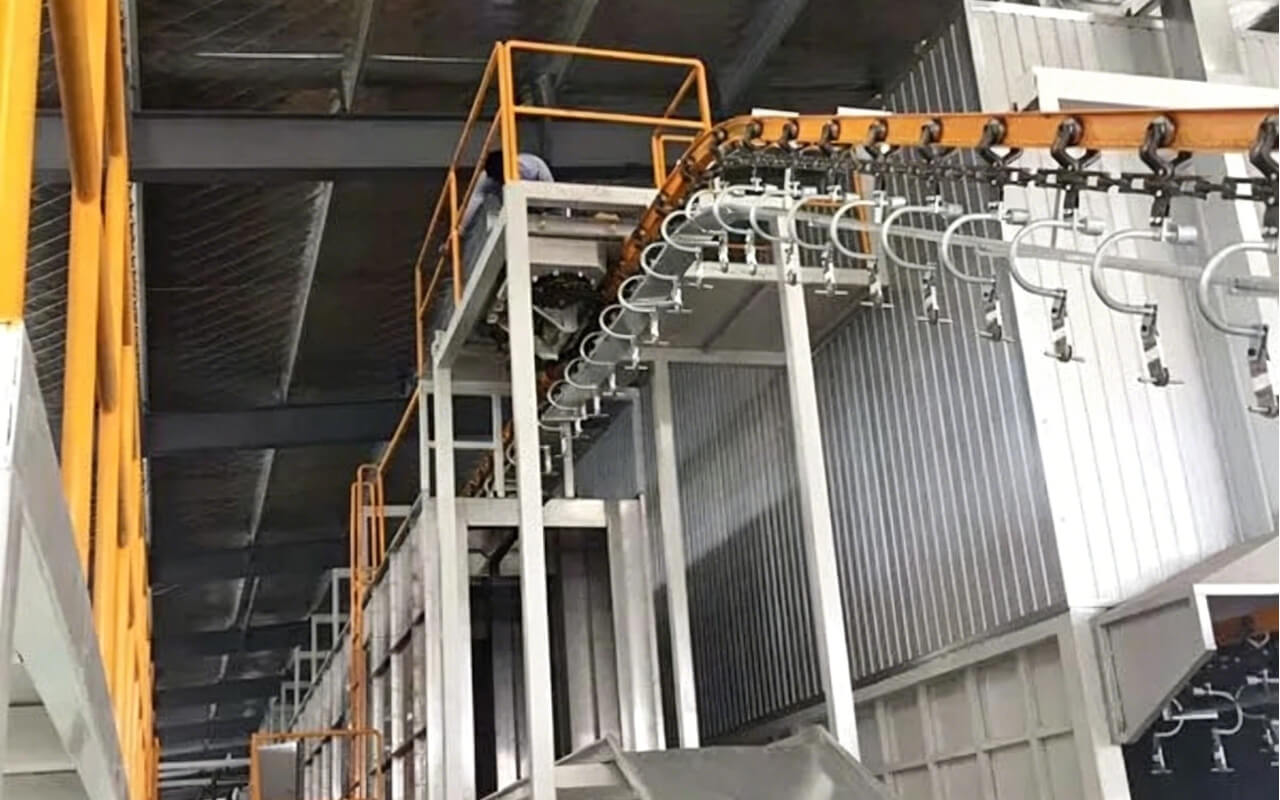
Convenience and Cost Efficiency in Automated Coating
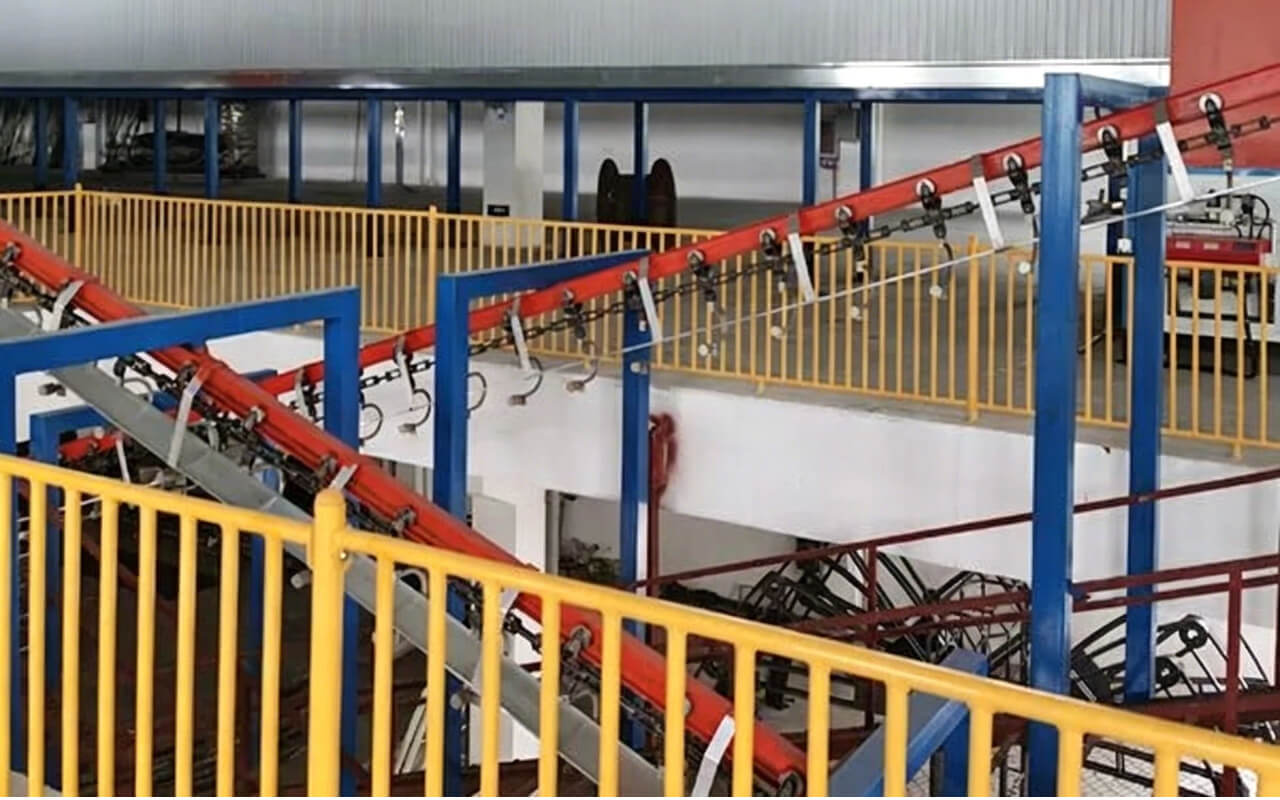
To meet the demands of mass production, a fully integrated automated production line is essential. Automated spray painting systems can effectively replace manual operations, significantly simplifying workflows.
With continuous improvements in fully automated spray coating line technology, manufacturers can achieve substantial economic benefits. This is especially evident in the coating industry, where automation dramatically reduces labor costs while increasing throughput and consistency.
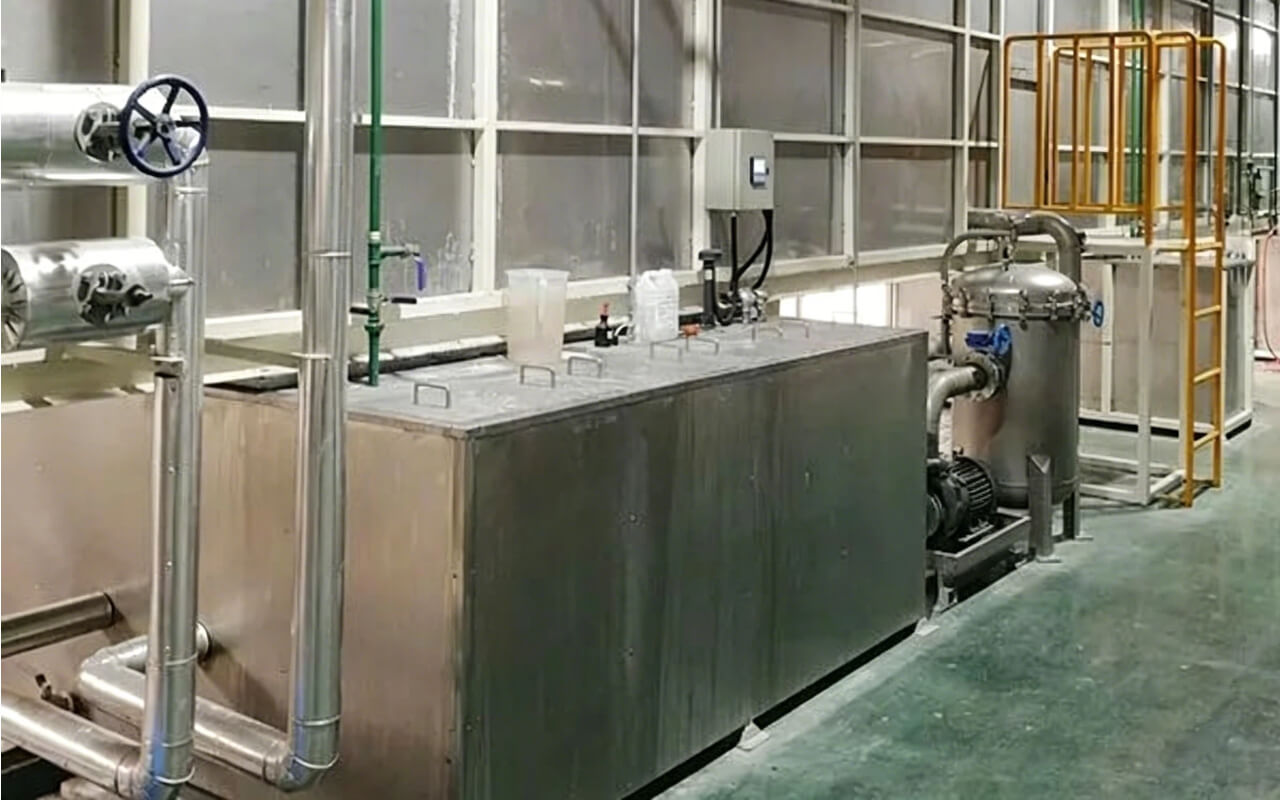
How Modern Technology Is Transforming the Coating Industry
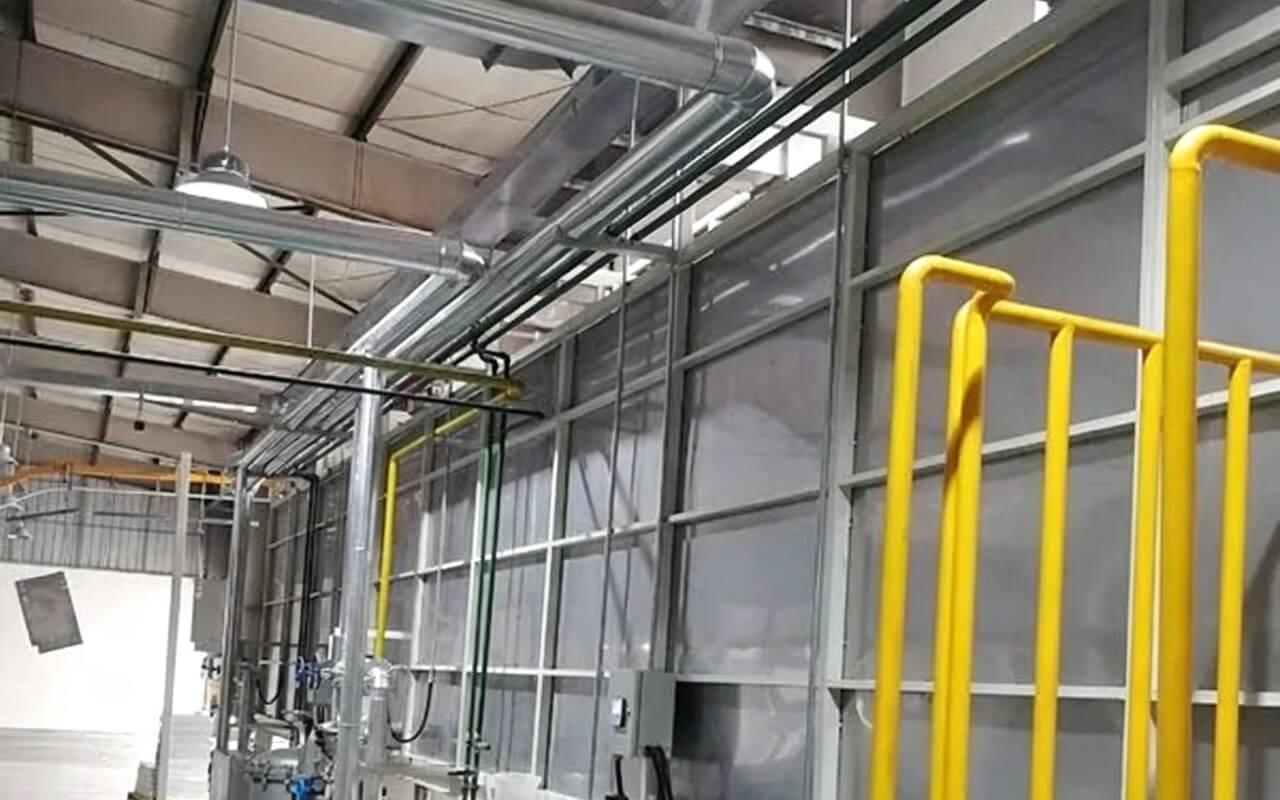
In recent years, advancements in automation, electronic inspection, and control systems have revolutionized spray painting production lines. These innovations enable:
High-speed production with minimal downtime
Reduced coating defects and material waste
Lower workplace injuries and occupational health risks
Improved overall product consistency
Compared to traditional methods, automated spray painting lines can reduce paint consumption by 30% to 60%. When combined with water curtain spray booths, cleaning becomes easier, and environmental pollution is significantly minimized.
Step-by-Step Automated Spray Painting Process
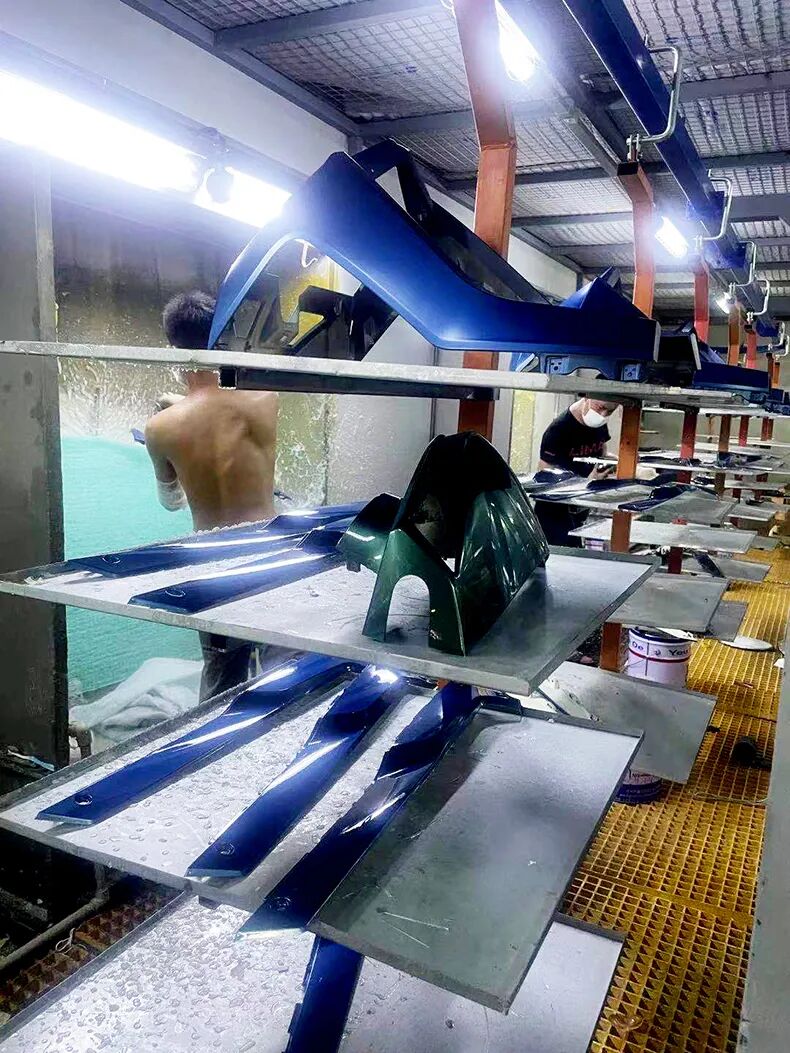
A typical automated spray coating workflow includes:
Loading – Place the workpiece onto the conveyor system
Electrostatic Dust Removal – Eliminate oil residues and dust from molding
Preheating – Improve coating adhesion by warming the surface
Primer Coating – Apply base color to cover substrate tone
Drying (IR Tunnel) – Semi-dry preparation for the next stage
Topcoat Application – Apply the required finish color
Leveling & Drying – Ensure smooth coating and proper curing
UV Coating & Curing – Instant curing using 365nm UV light (800–1200 mJ)
Inspection & Packaging – Final quality check and shipment
The complete coating process typically includes pre-treatment, coating application, and thermal curing stages.
Applications of Automated Spray Painting Lines
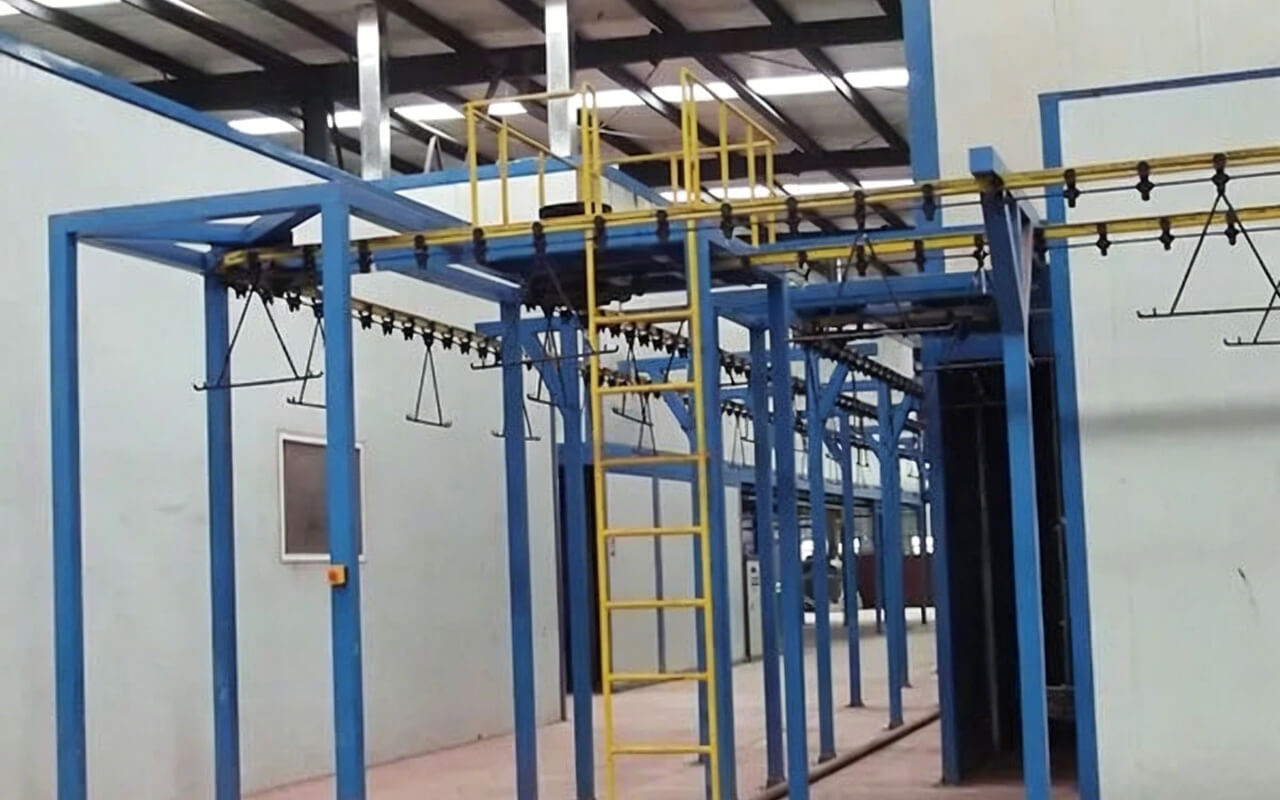
Automated coating systems are widely used across industries, including:
Massage chair coating lines
Motorcycle parts painting lines
Wooden door finishing systems
Chain conveyor spray coating lines
General industrial product coating
Pre-Treatment: The Foundation of High-Quality Coating
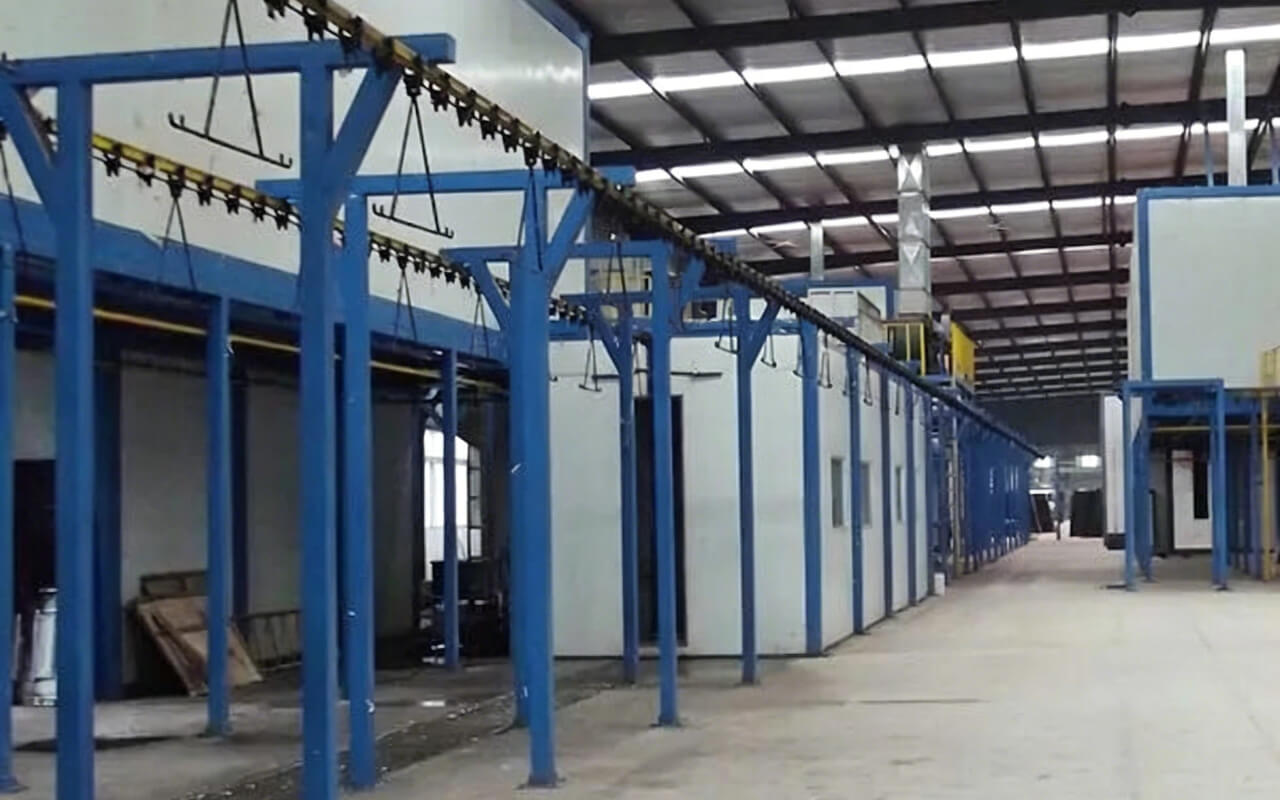
Pre-treatment is critical to achieving optimal coating performance. It includes processes such as:
Degreasing
Rust removal
Surface conditioning
Phosphating or passivation
Two main approaches are used:
Manual pre-treatment
Automated systems (spray or immersion)
Proper handling of chemicals (e.g., degreasers, rust removers, phosphating agents) is essential. Facilities must implement strict safety protocols, provide protective equipment, and install waste gas and wastewater treatment systems to meet environmental standards.
Powder Coating Production Management
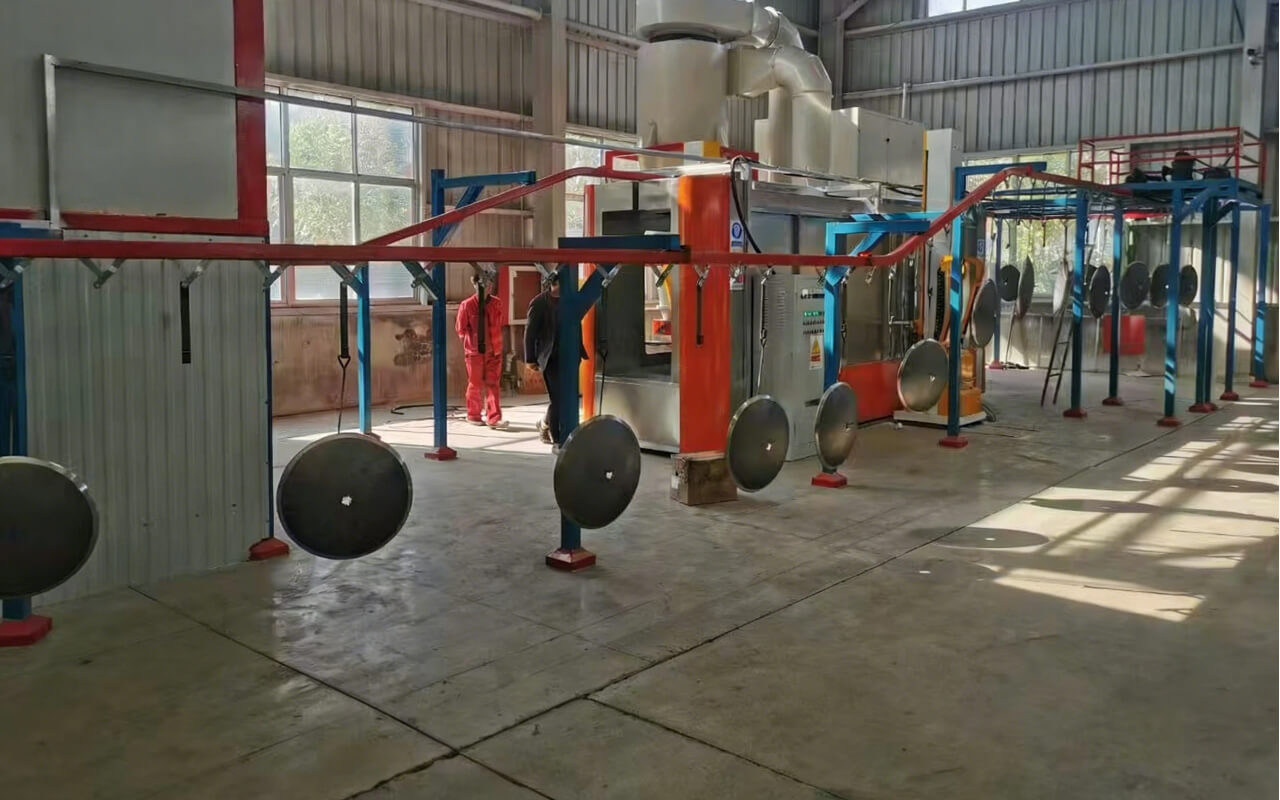
For small batches, manual powder coating may be sufficient, while large-scale production typically uses automated systems.
Key quality control points include:
Uniform coating thickness
Avoiding missed spots or thin layers
Removing excess powder from hooks before curing
Ensuring proper conductivity for subsequent cycles
Curing Process: Ensuring Coating Performance
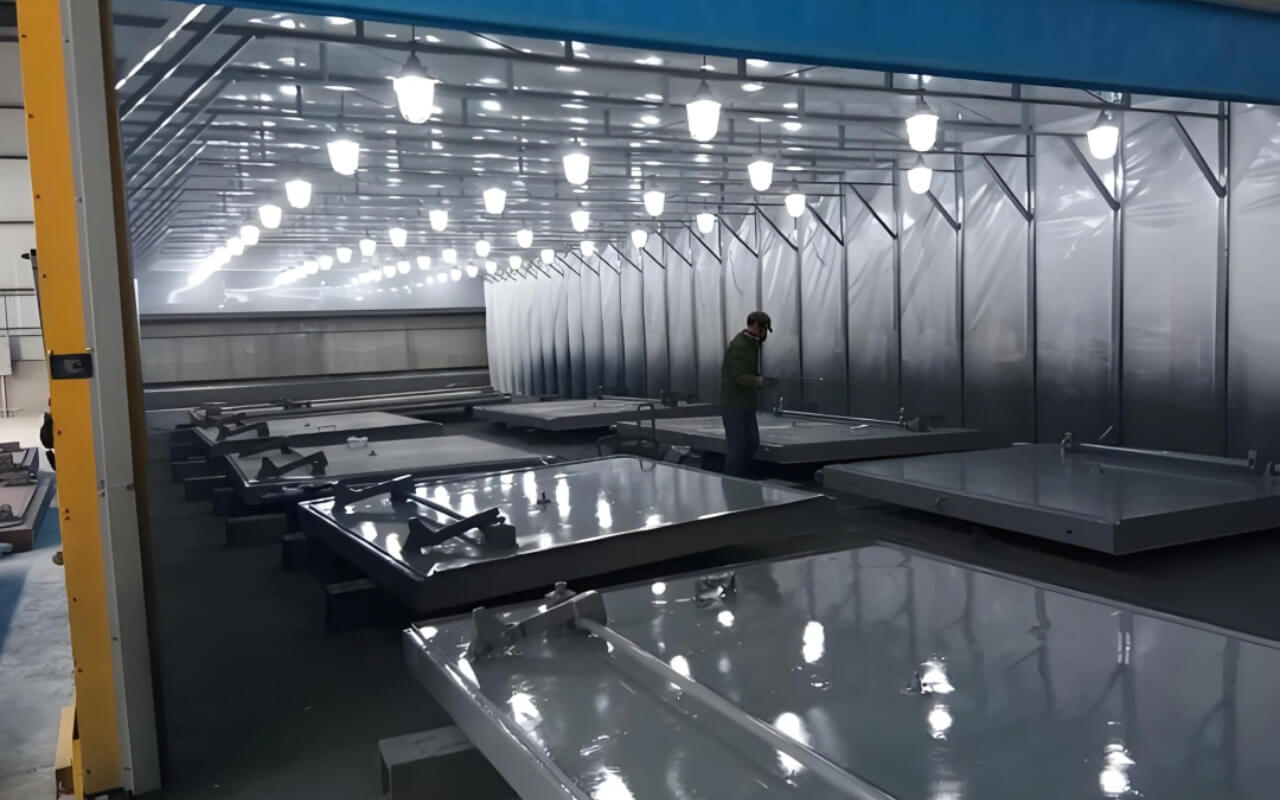
During curing, strict control of temperature and time is essential to prevent:
Color differences
Over-baking or under-curing
Coating defects
For automated lines, all workpieces must be inspected before entering the curing oven to ensure no missed or uneven coating. Defective parts should be reprocessed before curing.
Key Operational Considerations
To maintain optimal performance in coating production lines:
Proper Workpiece Hanging – Ensure correct angles for even coating and drainage
Contamination Control – Prevent solvent evaporation and dust intrusion
Drying Before Baking – Allow solvents to evaporate before oven entry
Viscosity Monitoring – Check coating viscosity regularly (1–2 times per shift)
Film Thickness Control – Typically around 30μm, adjusted via lifting speed
Excess Paint Removal – Use brushing, centrifugal force, or electrostatic methods
Wood Coating Control – Avoid over-absorption during dip coating
Ventilation & Fire Safety – Ensure proper airflow and hazard prevention
Application Features of Automated Coating Lines
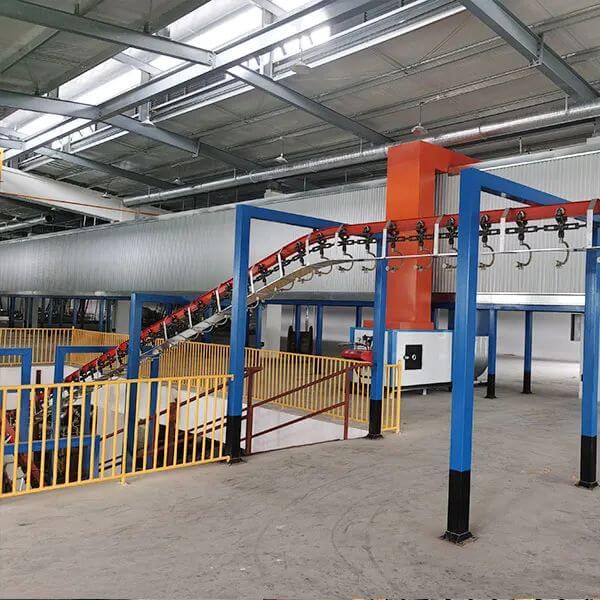
Automated coating equipment is suitable for surface treatment of both metal and non-metal workpieces, including spray painting and powder coating. These systems are often integrated with:
Overhead conveyor chains
Electric rail carts
Floor conveyor systems
Typical Process Layouts
1. Powder Coating Line:
Loading → Powder Spraying → Drying (10 min, 180–220°C) → Cooling → Unloading
2. Spray Painting Line:
Loading → Electrostatic Dust Removal → Primer → Leveling → Topcoat → Leveling → Drying (30 min, 80°C) → Cooling → Unloading
Driving the Future of Smart, Green Manufacturing
Eco-friendly automated spray painting equipment represents a key step toward sustainable, intelligent manufacturing. By combining efficiency, environmental protection, and advanced control systems, these solutions empower manufacturers to stay competitive in an increasingly automated industrial landscape.


