

 English
 Español
 Português
 Русский
 عربي
عربي Türkçe
 Deutsch
 Polski
 Français
 Italiano
 Tiếng Việt
Surface Treatment Methods for Aluminum Profiles

Powder Coating and Liquid Painting
Spray Coating Process for Aluminum Alloy Profiles
The spray coating process for aluminum alloy profiles includes electrostatic powder coating and electrostatic liquid spraying. Electrostatic liquid spraying treatments commonly used on architectural aluminum alloy profiles include fluorocarbon paint spraying, as well as acrylic paint spraying and polyester paint spraying.
The aluminum alloy profile spray coating process generally consists of three steps: pre-treatment, spraying treatment, and baking/curing.
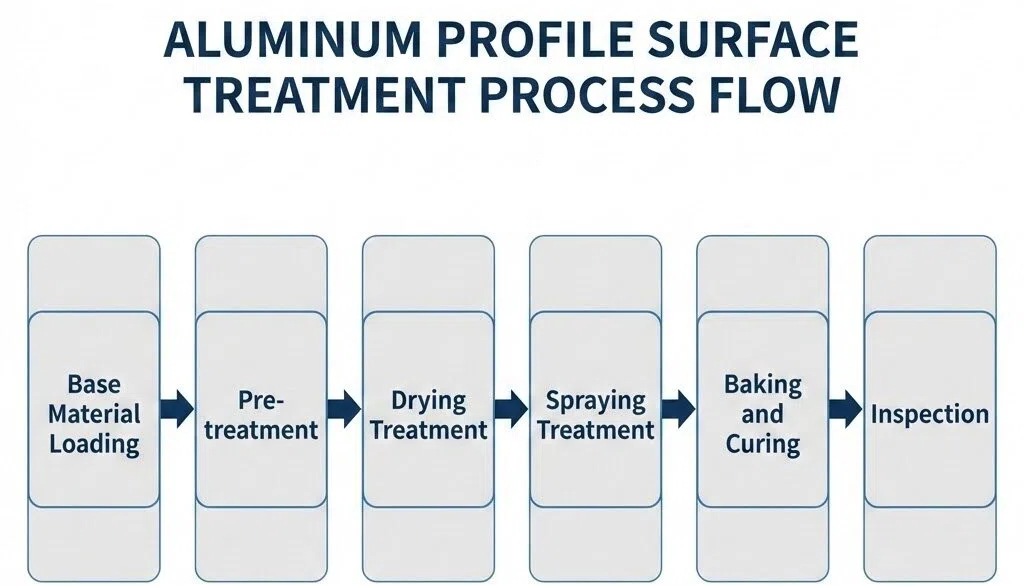
Figure 1 shows a typical process flow diagram for aluminum alloy profile spray coating.
(1) Pre-treatment
Surface pre-treatment typically involves a process route of degreasing and chemical conversion treatment. Degreasing is generally performed using a dedicated degreasing agent to remove oil, dirt, and residue adhering to the aluminum profile surface during the extrusion process, and also to remove the profile's slight natural oxide film.
Chemical conversion treatment usually involves chromating or phospho-chromating. The purpose is to form a chemical conversion film (such as a chromate film or a phospho-chromate film) on the substrate surface to enhance the adhesion between the substrate and the coating (the spray film formed in subsequent steps), and to protect the substrate. The chemical conversion film should have a specific thickness, analyzed using the mass loss method. A chromate film is generally best at 600 to 1200 mg/㎡, while a phospho-chromate film is generally best at 600 to 1500 mg/㎡.
(2) Drying Treatment
The purpose of drying is to remove the moisture carried over from the pre-treatment process. There are generally two methods of drying: natural drying and high-temperature drying. Natural drying involves slow drip-drying indoors or using a fan to blow-dry, but this method has a long drying time and low efficiency, so it is rarely adopted by companies. Most companies use high-temperature drying.
During high-temperature drying, the drying temperature must be controlled. Generally, the drying temperature after chromating should not exceed 65°C, and after phospho-chromating, it should not exceed 85°C. If the temperature is too high, the chemical conversion film can lose too much water and be damaged.
(3) Spraying Treatment
① Electrostatic Powder Coating Treatment
Electrostatic powder coating involves applying powder paint onto the surface of an aluminum alloy profile using a powder spray gun to form a protective and decorative organic polymer film. This process works on the principle of a high-voltage electrostatic corona field.
In electrostatic powder coating, a high negative voltage is applied to the spray gun, and the workpiece to be coated is grounded, creating a high-voltage electrostatic field between the gun and the workpiece. When the conveying medium (compressed air) transports the powder paint from the powder hopper through the hose to the spray gun's deflecting ring, the deflecting ring, connected to the high-voltage negative electrode, generates a corona discharge. This creates dense electric charges around it, causing the powder paint to become negatively charged. Under the combined action of electrostatic force and compressed air output power, the powder paint flies from the gun nozzle to the workpiece and is uniformly absorbed onto the surface. After the subsequent curing process, it forms a uniform, continuous, flat, and smooth coating.
Key process parameters to control in the electrostatic powder coating process include spraying voltage, spraying distance, and air supply pressure. The typical spraying voltage is controlled at 60 to 80 kV, and the optimal spraying distance for good powder deposition efficiency is typically 200 to 300 mm.
② Electrostatic Liquid Spraying Treatment
Electrostatic liquid spraying involves applying liquid paint onto the surface of an aluminum alloy profile using an electrostatic spray gun to form a protective and decorative organic polymer film. Acrylic and polyester paint spraying are generally single-coat processes (one spray to form one film).
However, fluorocarbon paint spraying typically requires two, three, or four coats:
- Two-coat: Primer followed by a topcoat.
- Three-coat: Primer, then a topcoat, and finally a clear coat.
Four-coat: Primer, then a barrier coat, followed by a topcoat, and finally a clear coat.
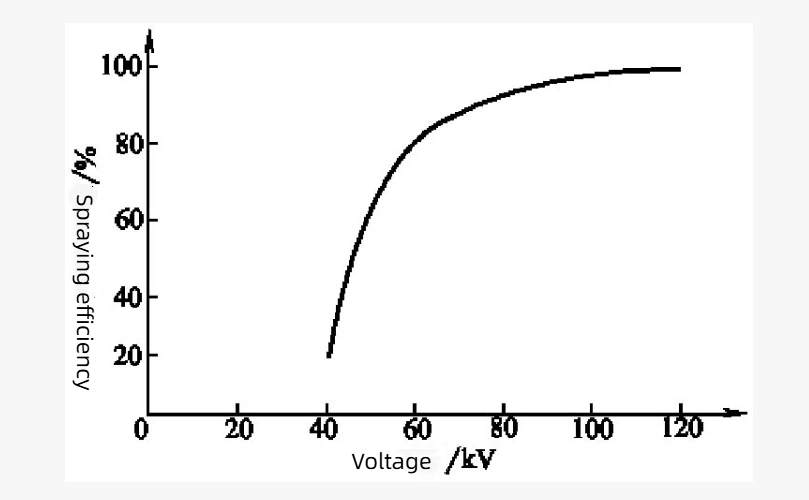
The key equipment for electrostatic liquid spraying is the electrostatic spray gun, classified by atomization principle into centrifugal electrostatic atomization (e.g., disc-type and rotary bell-type, with rotary bell being more common), air electrostatic atomization, and hydraulic electrostatic atomization. Main process control parameters include spraying voltage, spraying distance, paint viscosity, and spray volume. The spraying voltage is typically controlled between 60 and 90 kV, and the distance between the electrostatic spray gun and the workpiece is generally 150 to 350 mm.
(4) Baking and Curing
Baking and curing is a critical step in the spray coating process, which significantly impacts coating quality. If the curing conditions do not meet the process requirements, it can negatively affect the coating's weather resistance, adhesion, chemical stability, and impact resistance. Curing conditions vary for different coatings and must be strictly controlled according to the supplier's process requirements. Generally, the curing conditions for powder coatings are 200°C for 10 minutes, while fluorocarbon paints require a higher curing temperature, typically 230°C for 10 minutes.
Conclusion
Both electrostatic powder coating and electrostatic liquid spraying are highly effective surface treatment methods that provide crucial protection and aesthetic appeal to aluminum alloy profiles. By meticulously controlling each stage—from the preparatory degreasing and chemical conversion, through precise temperature-regulated drying, to the final, carefully calibrated spraying and high-temperature curing—manufacturers can ensure the long-term durability, adhesion, and quality of the final product. The choice between powder and liquid spraying depends on the specific performance requirements, such as the need for the superior weather resistance offered by multi-coat fluorocarbon systems, but the fundamental commitment to process control remains key to delivering a superior finish.
Keywords: Aluminum Profile Treatment, Powder Coating, Liquid Painting/Spraying, Electrostatic Coating, Fluorocarbon Paint, Pre-treatment, Chromating, Curing Process, Coating Adhesion, Surface Finish
Hashtags: #AluminumProfiles #SurfaceTreatment #PowderCoating #LiquidPainting #ElectrostaticSpray #Fluorocarbon #MetalFinishing #CoatingProcess #Manufacturing #IndustrialCoatings


