 English
 Español
 Português
 Русский
 عربي
عربي Türkçe
 Deutsch
 Polski
 Français
 Italiano
 Tiếng Việt
Automatic Powder Coating Line: Process, Performance & Quality Control
1. Workpiece Pretreatment – The Foundation of Coating Quality
Pretreatment is the first and most important step in the powder coating process. Its primary function is to remove oil, grease, rust, and old coatings from the workpiece surface, ensuring the base metal is fully exposed and clean.
A properly designed pretreatment system significantly improves coating adhesion, corrosion resistance, and overall durability. Without effective pretreatment, even the most advanced powder coating line cannot achieve consistent, high-quality results.
2. Workpiece Preheating – Ensuring Thermal Balance
Preheating is a key stage that directly affects coating uniformity and efficiency. The required preheating time depends on the size, wall thickness, and quantity of the workpieces. Heavier or thick-walled parts require longer heating, while lighter parts need less time.
Because different workpieces require different amounts of heat, it is essential to ensure that each part reaches thermal equilibrium before spraying.
If the preheating temperature is too low, the coating may become uneven. If it is too high, defects such as sagging or carbonization may occur, negatively affecting coating performance and appearance.
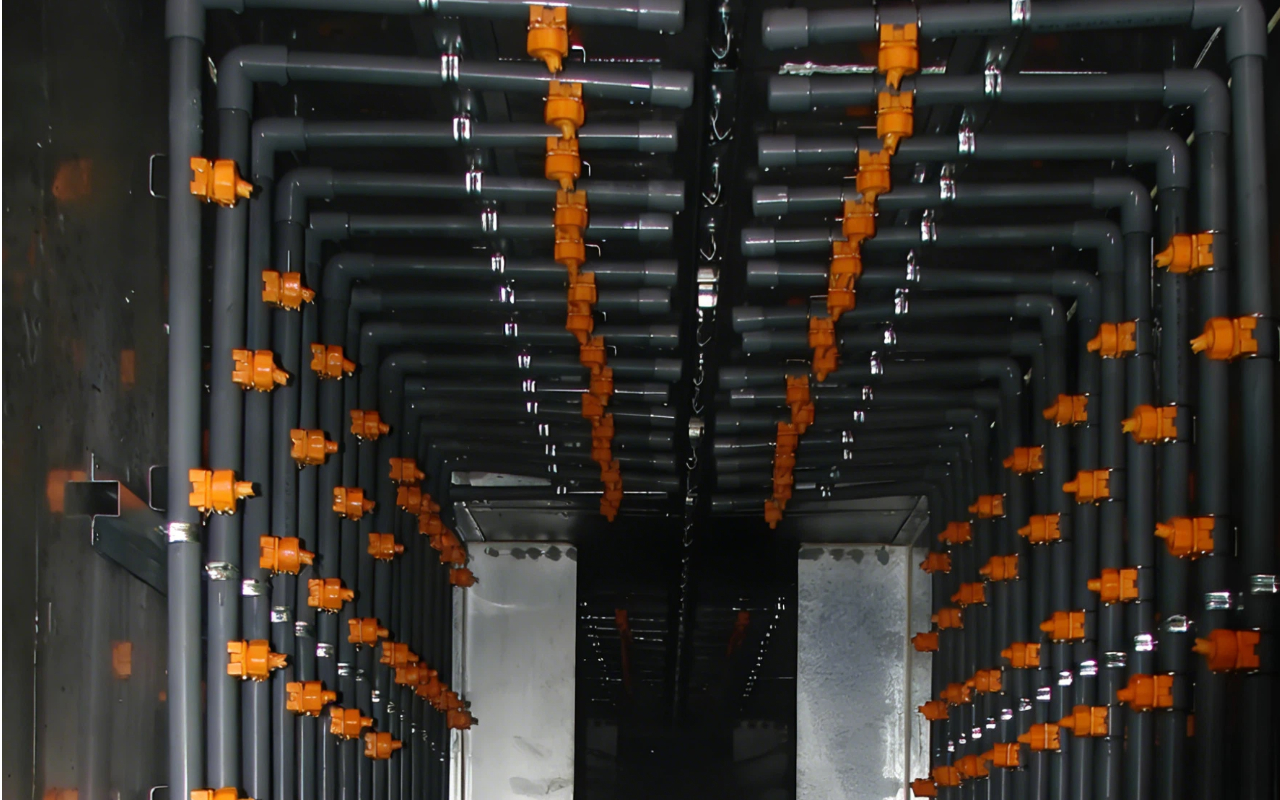
3. Spraying – The Core of the Automatic Powder Coating Line
Spraying is the central process of the automatic powder coating line and requires precise control of multiple parameters.
One of the most important factors is powder output, which directly determines coating thickness and uniformity. In thermal spraying applications, powder output typically ranges from 200 to 300 g/min.
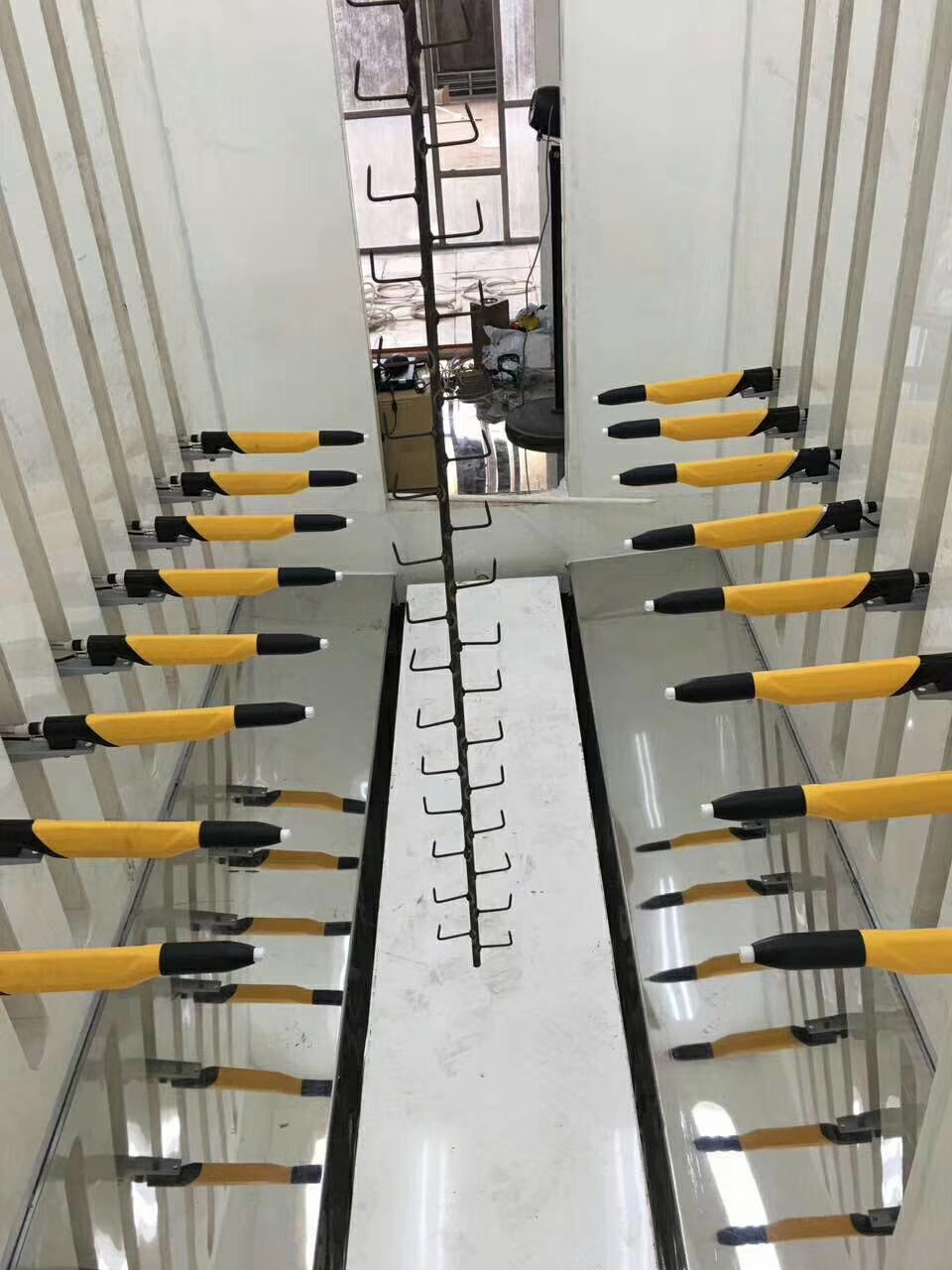
Other critical parameters include:
Distance between the spray gun and the workpiece
Number of spray passes
Spray gun movement path and speed
If the distance is too great, powder transfer efficiency decreases; if too short, powder rebound may occur. Spray frequency and gun trajectory directly influence coating consistency and thickness.
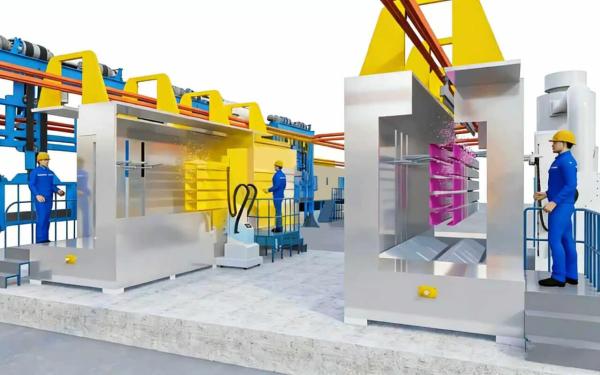
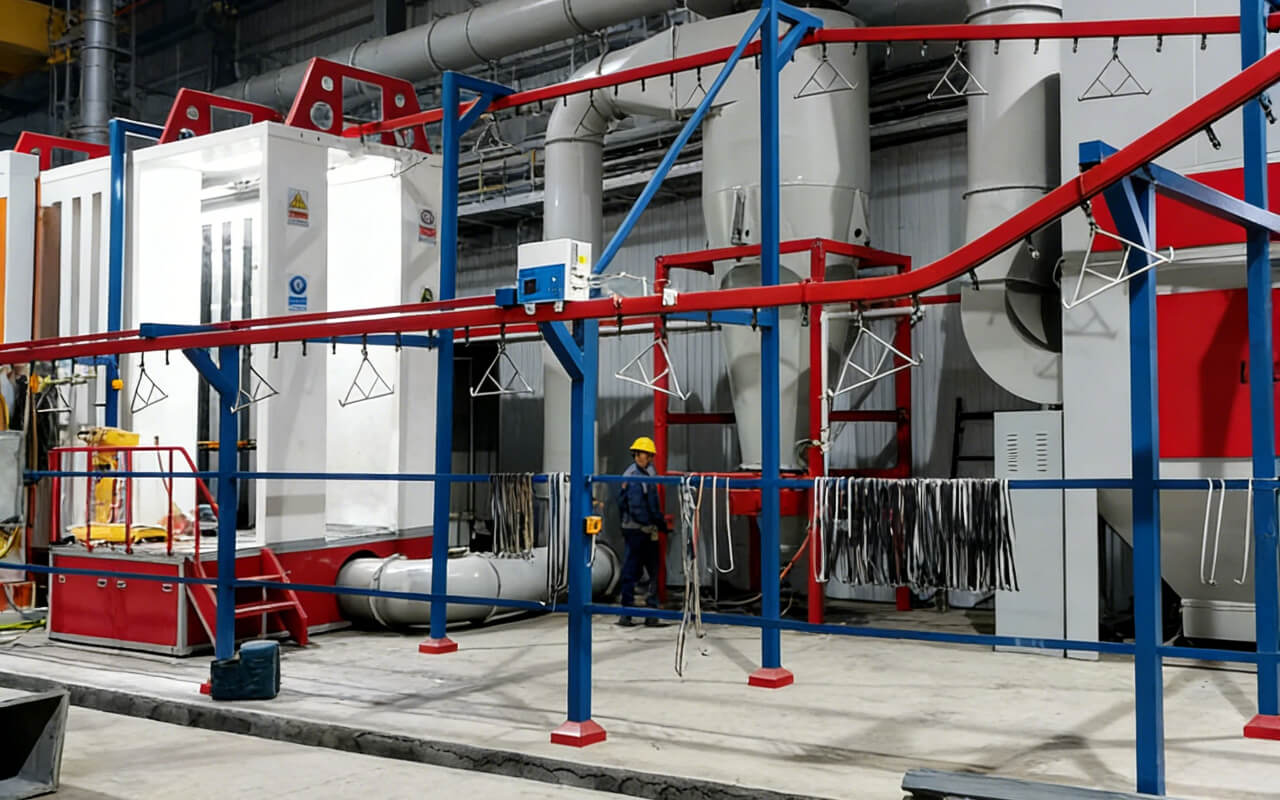
In addition, powder recovery and dust control are essential for efficient and environmentally friendly operation. During spraying, only about 50% of the powder adheres to the workpiece, while the remainder disperses into the spray booth. To minimize dust pollution and material waste, modern spray booths are equipped with optimized suction systems and dust collection units, typically positioned at the top and designed according to the workpiece geometry and spraying method.
Conclusion
The construction and operation of an automated powder coating production line require strict control over every process step and technical parameter. From pretreatment and preheating to spraying and powder recovery, each stage is essential to achieving superior coating quality, high production efficiency, and compliance with environmental standards.