

 English
 Español
 Português
 Русский
 عربي
عربي Türkçe
 Deutsch
 Polski
 Français
 Italiano
 Tiếng Việt
Box-Type Sandblasting Room and Paint Spray Booth Design
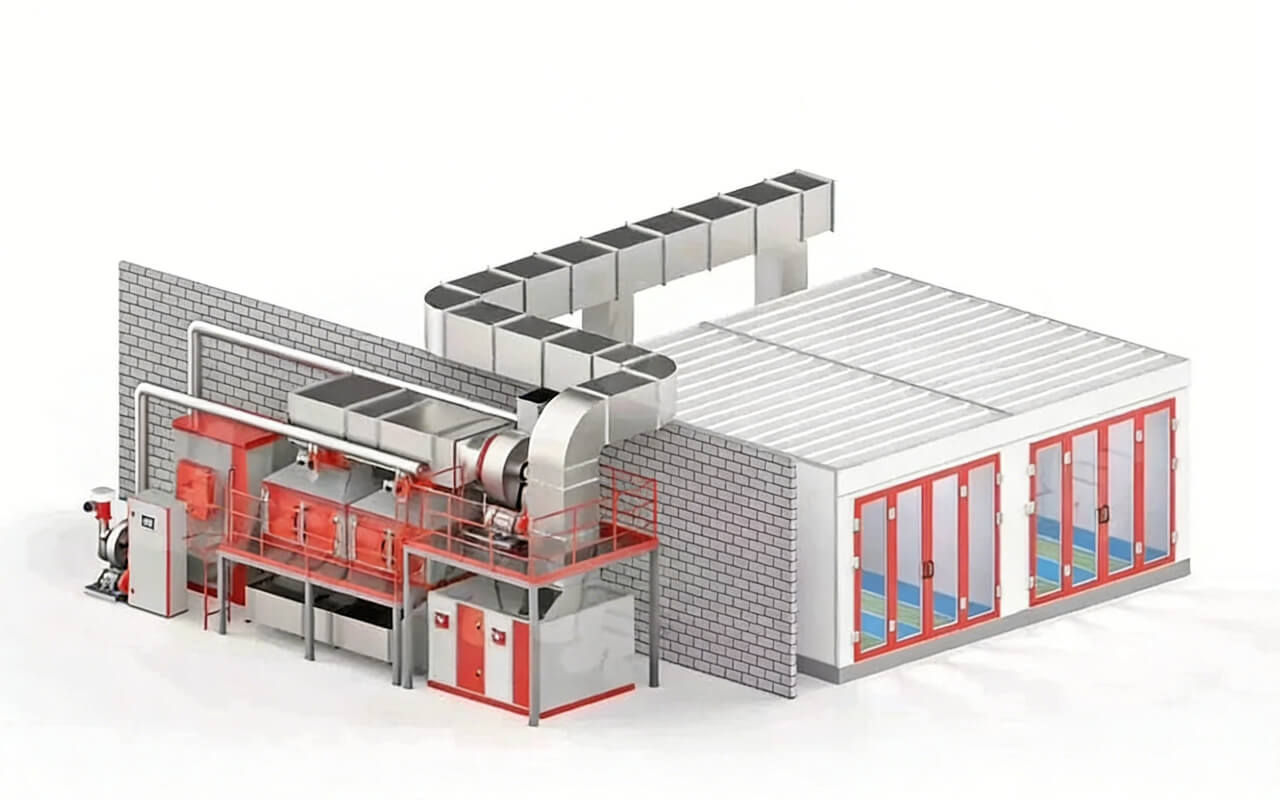
The design of the sandblasting room and paint spray booth should reflect the contemporary level of coating technology development, while adhering to the principle of Practicality. The design goals are the lowest investment, lowest operating costs, minimal maintenance probability, and the simplest operation method.
I. Design Principles
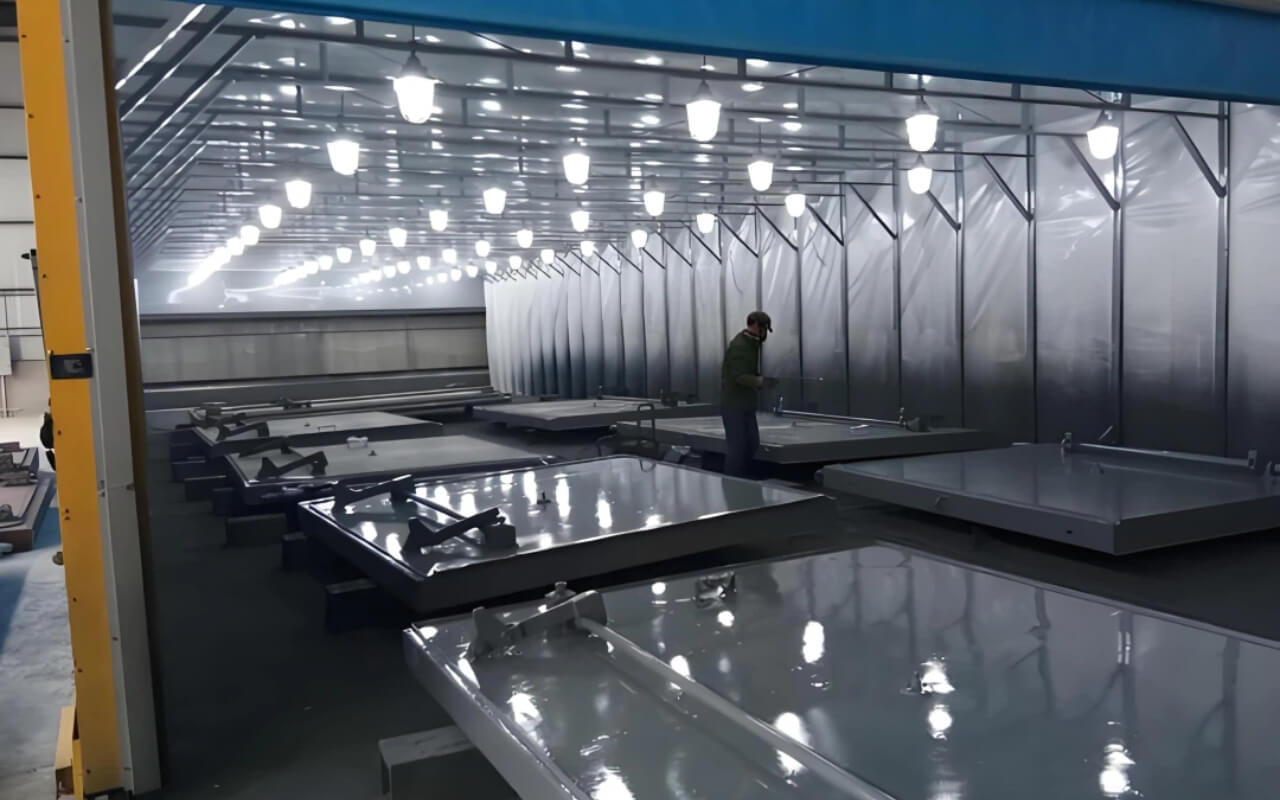
Advancement (Technological Edge)
The system design and equipment matching should meet the requirements of modern production, adopting advanced technology and design where budget allows. Advancement is mainly reflected in high coating efficiency, convenient control, large dust treatment capacity, and low dust emissions. The electrical control system implements centralized control via a control cabinet, separate equipment control, working status display, and safety alarm display.
Practicality (Usability)
The design of the sandblasting room and paint spray booth must first consider ease of use. Practicality is mainly reflected in reliable operation, low fault rate, simple and convenient maintenance, and quick replacement of parts.
Environmental Protection (Sustainability)
Sandblasting and paint spray booth systems generate large amounts of dust, paint mist, and solvents. The design must prevent the leakage of these pollutants, especially considering the sealing of the main doors. Efforts must be made to minimize the concentration of dust, paint mist, and solvents inside the booth and reduce their emission. The breathing air for sandblasting workers must be supplied by specially treated dedicated air. In addition, measures must be fully taken to reduce noise.
Safety
Due to the harsh working environment and the inherent dangers of coating operations in a confined space, the design of the coating system, the layout of the internal room structure, the maintenance and repair of the conveying mechanism, and the design and arrangement of the electrical system must all be considered from a safety perspective. The design must strictly comply with the following national standards:
GB7692 "Safety Regulations for Coating Operations – Industrial Safety for Pre-treatment of Coating"
GB7693 "Safety Regulations for Coating Operations – Ventilation and Purification for Pre-treatment Process of Painting"
GB__ "Integrated Emission Standard of Air Pollutants of the People's Republic of China"
II. Design of Sandblasting Room and Paint Spray Booth for Steel Structure Tank Containers
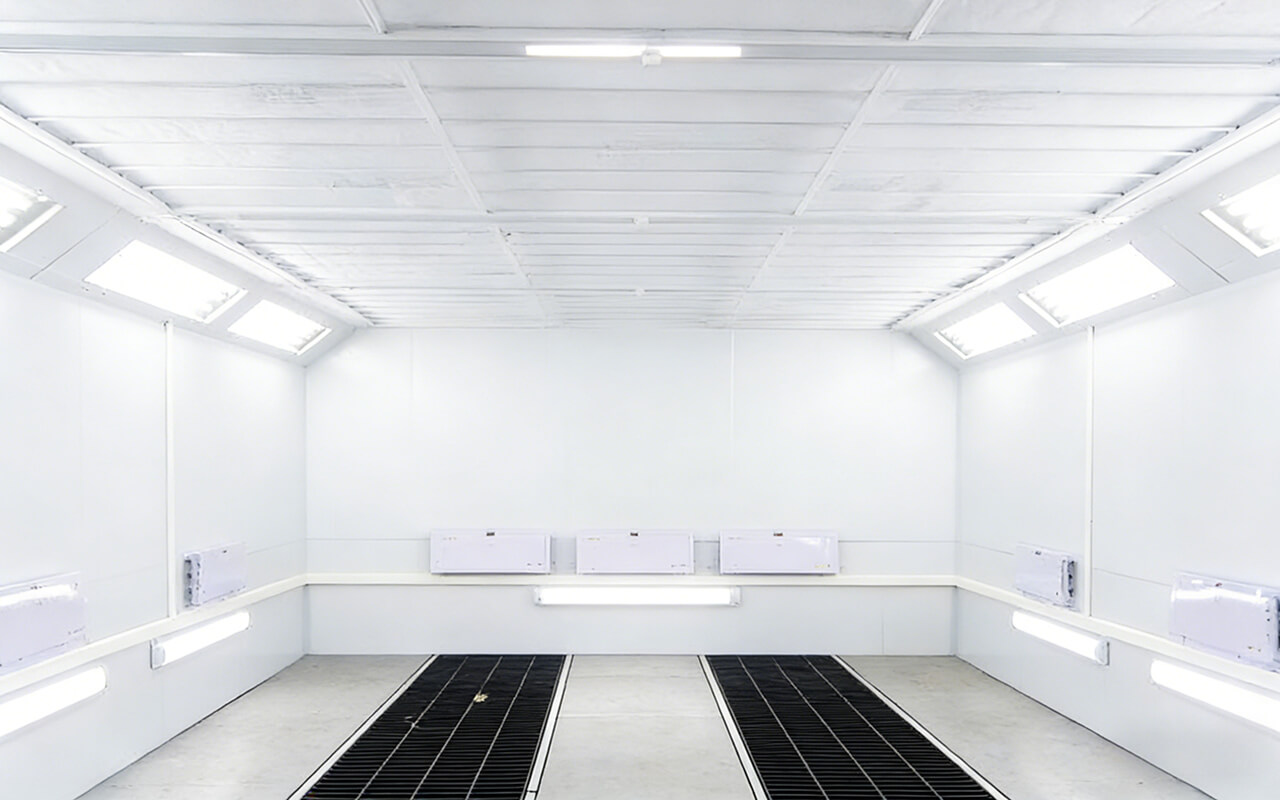
1. Main Technical Process Requirements and Parameters
| Parameter | Requirement |
|---|---|
| Sandblasting/Coating Capacity | 10–12 units/day (40–48 min/unit) |
| Surface Treatment Grade | Sa2.5 |
| Dust Concentration at Dust Collector Outlet (Cleaning Room) | < 100 mg/m³ |
| Paint Mist Treatment System (Paint Spray Booth) | Dry filter system |
| Number of Coating Layers | 2–3 layers |
| Drying Room (Curing Oven) Inner Temperature | 25°C–35°C |
| Organic Solvent Gas Emission Concentration | < 100 mg/m³ |
2. Process Flow
a) Stainless Steel Tank Body Process Flow
Hoist onto trolley → Enter Sandblasting Room (Frame blasting) → Exit Sandblasting Room → Enter Paint Spray Booth 1 (Frame primer) → Enter Paint Spray Booth 2 (Frame intermediate coat, Stainless Steel Tank body primer) → Enter Drying Room → Enter Paint Spray Booth 3 (Frame topcoat, Stainless Steel Tank body topcoat) → Enter Drying Room → Exit line.
b) Carbon Steel Tank Container Process Flow
Hoist onto trolley → Enter Sandblasting Room (Frame and Tank body blasting) → Exit Sandblasting Room → Enter Paint Spray Booth 1 (Frame and Tank container primer) → Enter Paint Spray Booth 2 (Frame intermediate coat) → Enter Drying Room → Enter Paint Spray Booth 3 (Frame topcoat, Tank container topcoat) → Enter Drying Room → Exit line.
3. Overall Process Layout Plan
| Room Type | L × W × H (meters) | Quantity |
|---|---|---|
| Tank Container Max. Size | 9 × 2.6 × 2.7 | - |
| Sandblasting Room | 12 × 5.4 × 5.4 | 1 |
| Paint Spray Booth | 12 × 5.4 × 5.4 | 3 |
| Drying Room (Curing Oven) | 11 × 5.4 × 4.5 | 2 |
| Flashing Off Room (Optional) | 10 × 5.4 × 5.4 | 2 |
III. Operation and Maintenance Requirements
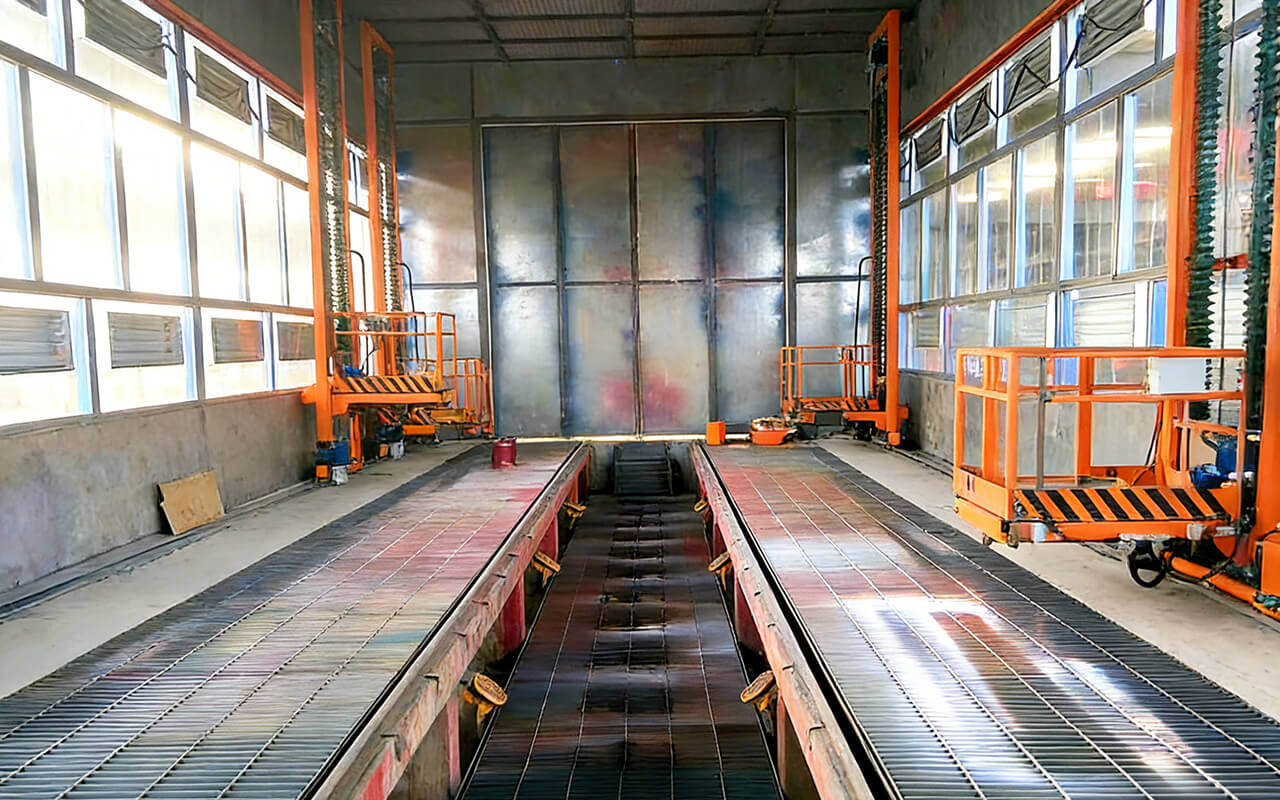
The long-term performance and compliance of the sandblasting and paint spray systems depend heavily on correct operation and rigorous maintenance. The following procedures are essential for maximizing equipment lifespan, ensuring worker safety, and maintaining environmental compliance.
- Standard Operating Procedures (SOPs)
- Worker Training: All personnel must be fully trained on the SOPs for sandblasting, painting, equipment start-up/shutdown, and emergency response.
- Pre-Operation Checks: Before each shift, check the air supply pressure, the condition of the abrasive media, the functionality of the ventilation fans, and the cleanliness of the lighting fixtures.
- During Operation: Monitor the pressure gauges on the dust collector and paint mist filters to ensure they are within the acceptable range, indicating efficient filtration and airflow.
- Post-Operation Shutdown: Follow the specified sequential shutdown procedure for all equipment, ensuring a clean work environment is left for the next shift.
- Regular Maintenance Schedule
- Sandblasting Nozzles: Replace worn-out nozzles promptly as excessive wear significantly reduces blasting efficiency and increases air consumption.
- High-Pressure Spray Equipment: Clean and maintain spray guns and pumps according to the manufacturer’s guidelines to prevent clogging and ensure consistent coating quality.
- Screening and Separation: Regularly check the abrasive screening and separation unit to ensure the effective removal of fines and contaminants, maintaining the quality of the reusable abrasive.
- Conveyor and Elevator: Inspect the belt conveyor and bucket elevator for wear, tension, and correct alignment monthly to prevent mechanical failure.
- Dust Collector Cartridges: Monitor the pressure drop across the filter cartridges. Replace cartridges immediately once the pressure drop exceeds the specified limit (e.g., typically indicating dust concentration build-up).
- Paint Mist Filters: Inspect and replace dry paint mist filters regularly (daily or weekly, depending on usage) to maintain proper exhaust flow and prevent system back-pressure.
- Filter Replacement/Cleaning:
- Abrasive Recovery System:
- Nozzle and Equipment Wear:
- Safety and Environmental Compliance
- Air Quality Monitoring: Periodically monitor the air quality inside the sandblasting and paint spray booths, as well as the emission concentrations at the exhaust stacks, to confirm compliance with national standards (e.g., GB standards mentioned in Section I).
- Personal Protective Equipment (PPE): Ensure all workers use the required PPE, including the dedicated, supplied-air respiratory system for sandblasting and appropriate ventilation masks for painting. Maintain and inspect PPE for damage.
- Fire Safety: Regularly inspect and test all fire suppression and alarm systems, particularly in the paint spray and drying areas where solvent vapours pose a greater risk.
Key Words: Sandblasting Room Design, Paint Spray Booth Design, Surface Coating Technology, Tank Container Blasting, Steel Structure Painting, Design Principles (Advancement, Practicality, Environmental Protection, Safety), Dry Paint Mist Treatment, Dust Collection System, Abrasive Recovery, Ventilation and Purification, Drying Room (Curing Oven), High-Pressure Airless Spraying, Standard Operating Procedures (SOPs)
Hashtags: #IndustrialCoating #CuringOven #SandblastingBooth #SurfaceTreatment #SprayPaintBooth #ProtectiveCoatings #AbrasiveRecovery #DustCollection #IndustrialSafety


