

 English
 Español
 Português
 Русский
 عربي
عربي Türkçe
 Deutsch
 Polski
 Français
 Italiano
 Tiếng Việt
The Difference Between Air Spraying and Airless Spraying

The distinction between Air Spraying and Airless Spraying might sound like a minor technicality, but a closer look reveals that each technology is backed by distinct application scenarios, efficiency levels, and finish qualities. Both have their pros and cons. Mastering the ability to choose the right technology based on your specific needs is the key to working with peak efficiency. So, what exactly is the difference? Let's dive in.
Air Spraying: Driven by Air for Greater Reach
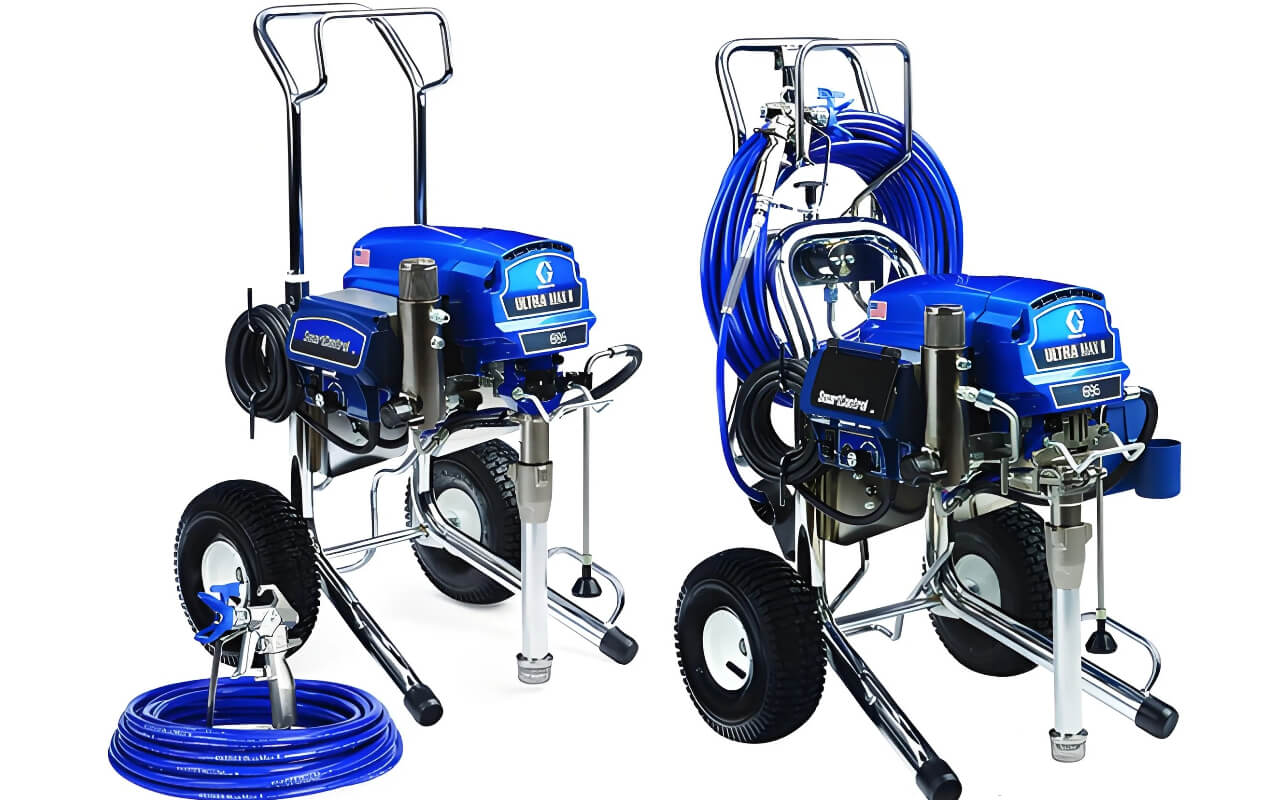
As the name suggests, air spraying uses the power of compressed air to atomize and propel paint onto a surface. The air pressure helps refine the coating into a uniform layer.
The Upside: This technology is mature and the equipment is widely accessible. It can be used on various surfaces, including wood, metal, and concrete. Because air acts as the medium, it accelerates the spray speed, offering high efficiency for large-scale wall coating or rapid-turnaround projects.
The Downside: During the process, the air causes paint particles to scatter, leading to significant overspray and material waste. This "paint mist" not only increases costs but also poses environmental and health risks, especially in confined spaces where protective gear is mandatory.
Airless Spraying: High-Pressure Precision
Airless spraying works by using high pressure to push paint directly through a specially designed nozzle. Without the involvement of air, the paint is compressed into tiny droplets by pure hydraulic force.
The Upside: The standout features are high efficiency and precision. Without air interference, paint waste is drastically reduced, and the resulting finish is more uniform and refined. It is the gold standard for high-quality finishes, such as automotive painting or fine craftsmanship.
The Downside: It is technically demanding. The equipment is complex, expensive, and requires a skilled operator. If handled incorrectly, the finish can suffer, potentially delaying the project. Furthermore, the machinery is bulky and less flexible than air sprayers in tight or highly mobile work environments.
Choosing the Right Tool for the Job
Air Spraying is typically the go-to for large-scale industrial tasks like massive walls, flooring, and steel structures where speed and coverage area trump fine precision. It is cost-effective and ideal for budget-conscious or smaller-scale projects.
Airless Spraying shines in fine-detail applications. This includes automotive finishing, high-end furniture, and exquisite architectural facades. For projects where coating quality and durability are the top priorities, airless is the premier choice.
Which is More Eco-Friendly?
From a material waste perspective, Airless Spraying wins. Its higher transfer efficiency means almost no paint is lost to the wind. While air spraying is simpler to manage in terms of basic equipment, the modern environmental standard favors airless technology, particularly in high-standard industries where pollution control is strict.
Conclusion
The choice depends entirely on your needs. If you need speed, volume, and cost-efficiency for a rougher surface, choose Air Spraying. If you demand a refined, uniform, and high-end aesthetic, Airless Spraying is your winner. Understanding these strengths ensures you make the right decision for a perfect finish every time.
Keywords & Hashtags
Keywords: Air Spraying vs Airless Spraying, Surface Treatment, Industrial Coating, Paint Application Technology, Spray Booths, Coating Efficiency, Surface Finishing Equipment.
Hashtags:
#AirlessSpraying #AirSpraying #SurfaceTreatment #IndustrialCoating #PaintingTechnology #CoatingSolutions #RefiningFinish #PaintingEquipment #ConstructionTech #AutomotivePainting


