

 English
 Español
 Português
 Русский
 عربي
عربي Türkçe
 Deutsch
 Polski
 Français
 Italiano
 Tiếng Việt
Can Motion Trajectory Generation Revolutionize Furniture Spraying Efficiency?
In the furniture manufacturing sector, both traditional manual spraying and conventional robotic systems face significant hurdles. Manual spraying is often plagued by low efficiency, inconsistent quality tied to a worker's skill level, and severe health risks due to prolonged exposure to hazardous environments—leading to a growing labor shortage.
On the other hand, while traditional robots offer stability, their adoption is stifled by the high barrier of professional programming, making automation inaccessible for many small and medium-sized enterprises (SMEs).
Motion Trajectory Generation technology has emerged as a game-changer. By allowing robots to achieve high-efficiency, uniform coating without requiring complex coding, this technology is injecting new vitality into the industry.
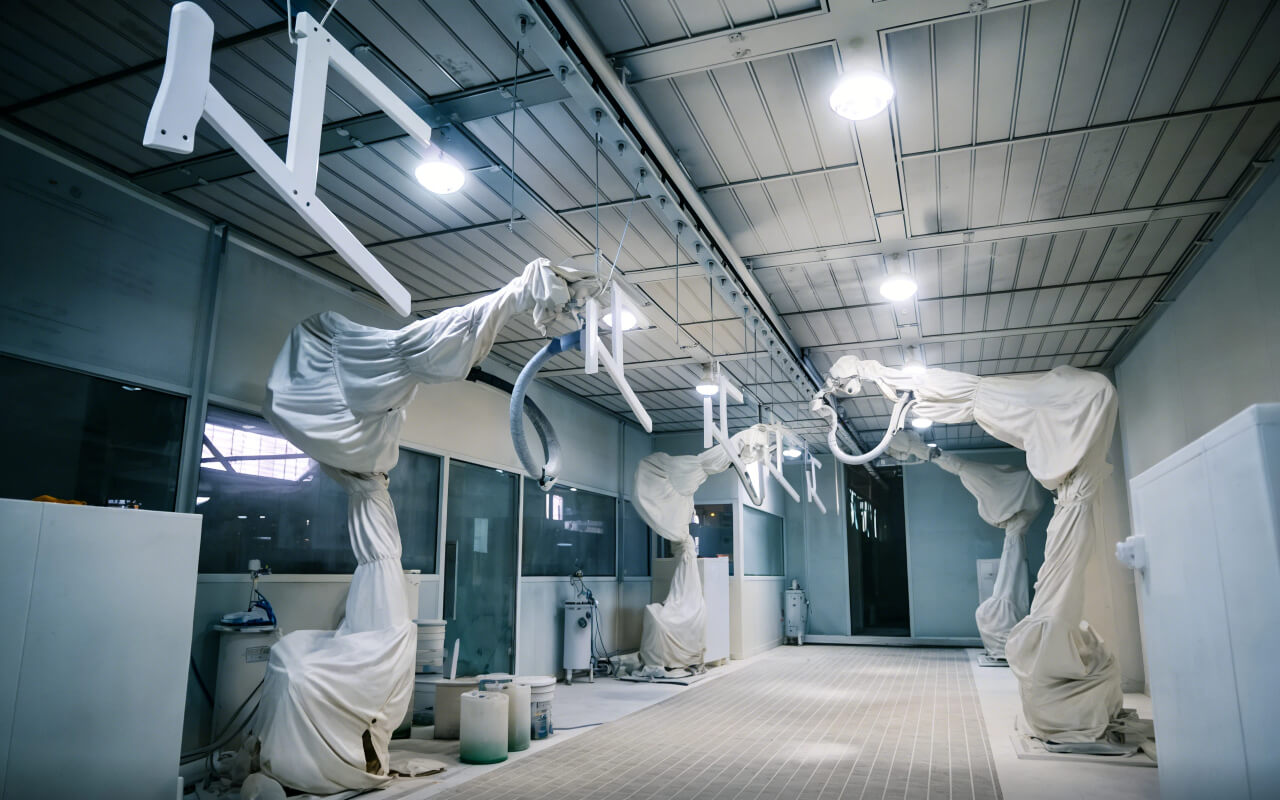
01. Understanding VR Tracking & Trajectory Generation
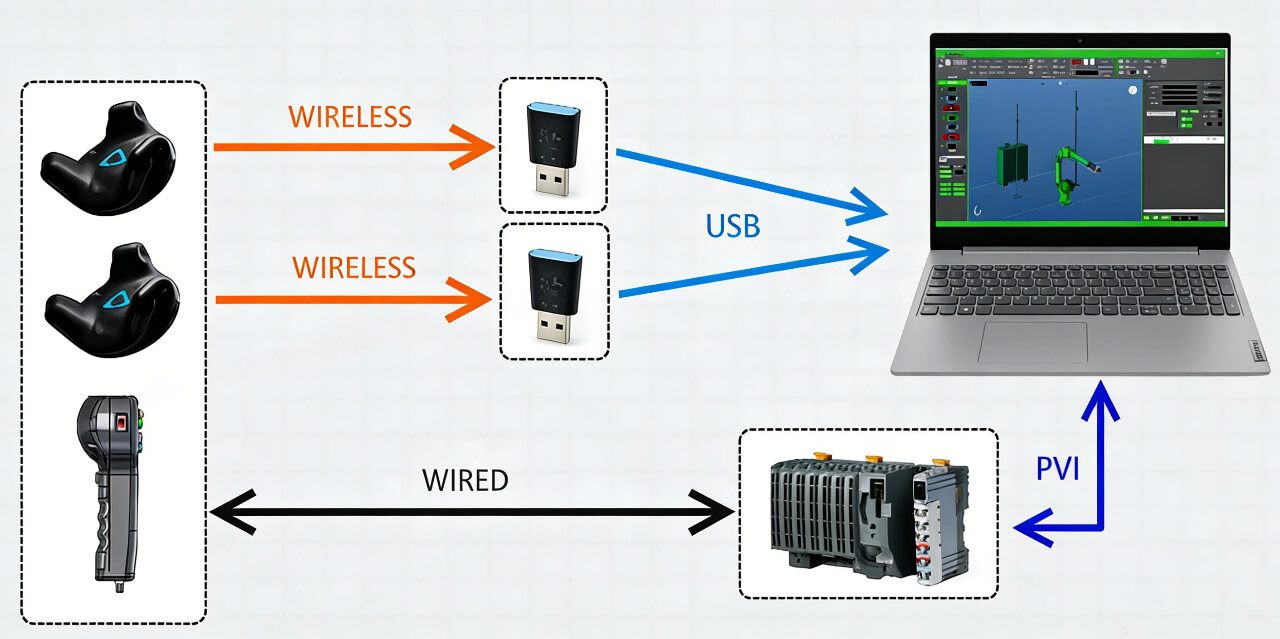
VR Tracking utilizes wireless trackers to capture the spatial coordinates of an operator moving a handheld controller. Through motion trajectory generation technology and offline simulation software, these data points are calculated to create a precise robot motion program.
Once the program is automatically synced to the robot, the machine "replays" the human operator's movements. This "Lead-through Teaching" capability allows users with zero programming experience to operate spraying robots with ease.
02. Simplifying Robotic Spraying for Furniture
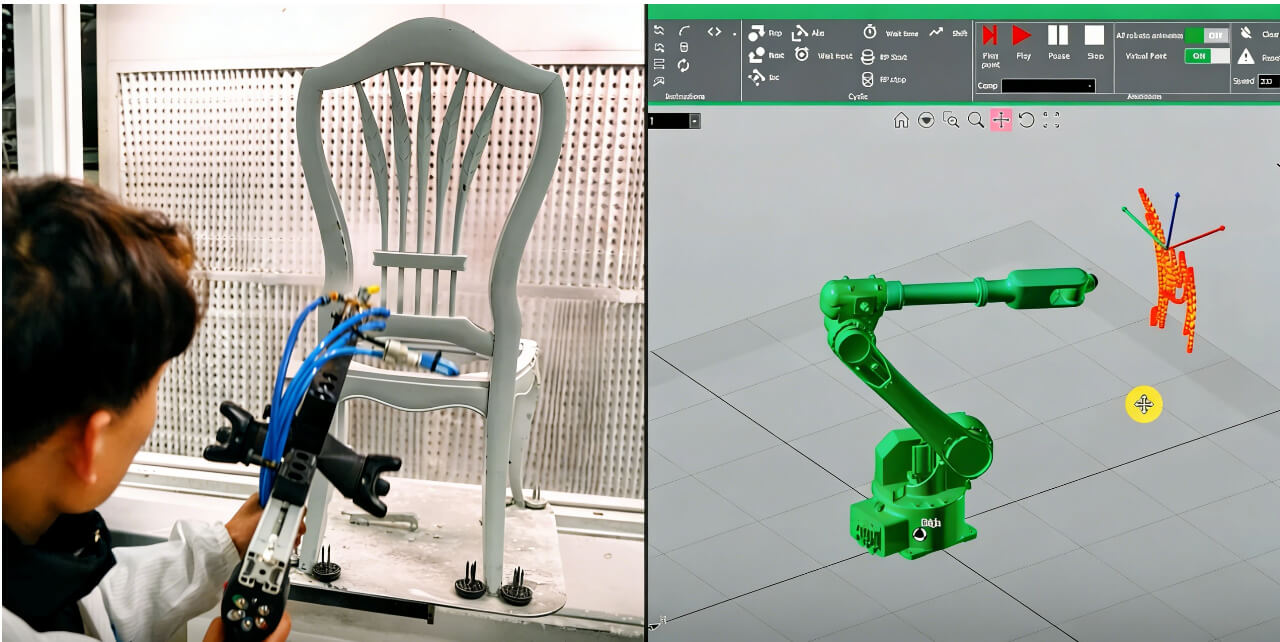
The furniture industry is increasingly aware of the limitations of manual labor: low standardization, high physical intensity, and inconsistent results. Motion Trajectory Generation solves the "programming bottleneck" through a simple three-step workflow:
(1) Manual Process Teaching
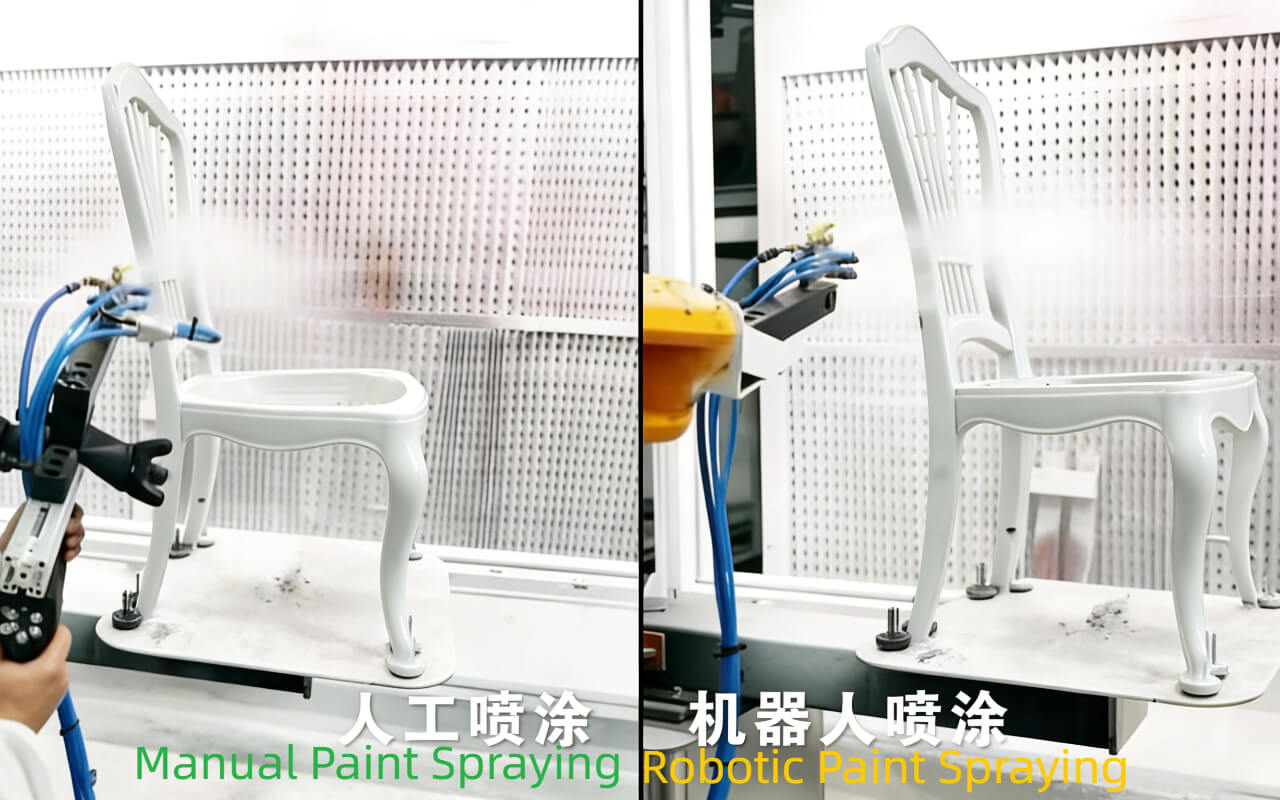
The operator holds a specialized handle and simulates the actual spraying motions in the air, following the required sequence and path for a specific piece of furniture. By planning the start, transition, and end points based on the furniture's structure, the operator creates a "blueprint" of the ideal spray pattern.
(2) Recording the Trajectory
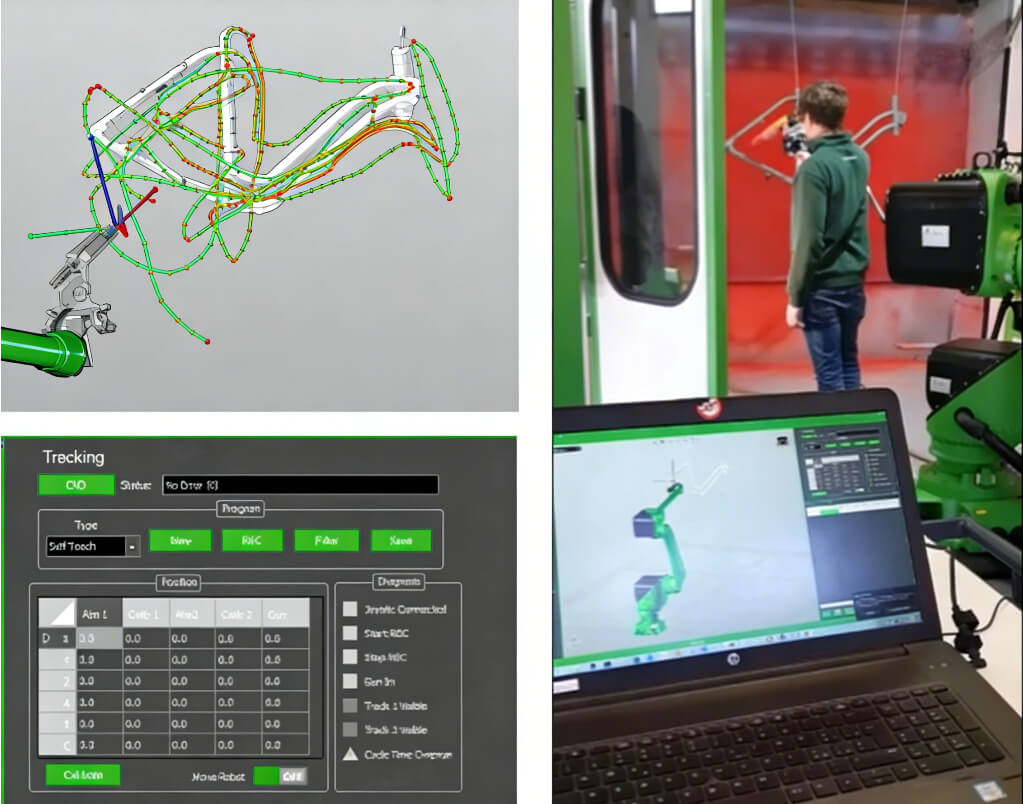
While the operator performs the demonstration, the system captures the spatial trajectory in real-time. Using advanced sensors, the system records position, speed, and acceleration, storing these details as the core data for the robot’s future performance.
(3) Robotic Replication
The recorded data is imported into the robot's control system. The robot then precisely replicates the operator’s movements—maintaining the same speed and sequence—to complete the furniture coating with mechanical precision.
03. Key Advantages in Furniture Manufacturing
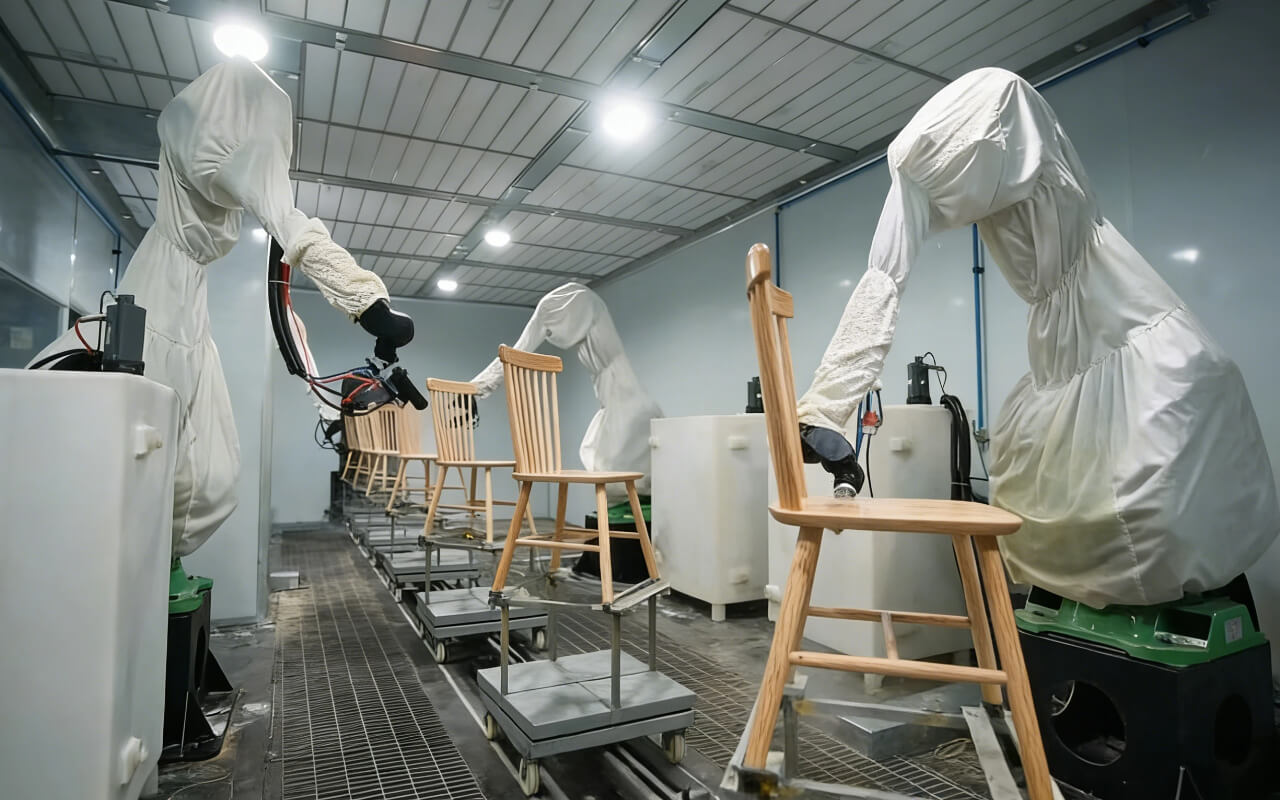
Integrating motion trajectory technology offers four transformative benefits:
Boosted Production Efficiency: Robots provide stable speeds and can operate continuously. Compared to manual labor, this significantly shortens production cycles and helps manufacturers meet high market demand.
Guaranteed Coating Quality: Precise trajectory control ensures uniform thickness and reduces paint waste. It eliminates common human errors such as missed spots, overlaps, or uneven coating, enhancing the product's market competitiveness.
Reduced Operational Costs: By removing the need for highly paid programming specialists, SMEs can train general operators to manage the robots. This lowers labor costs and streamlines the transition to automation.
Improved Workplace Safety: Automation removes workers from toxic environments, reducing exposure to VOCs and other hazardous materials, thereby lowering occupational health risks and insurance liabilities.
04. Conclusion
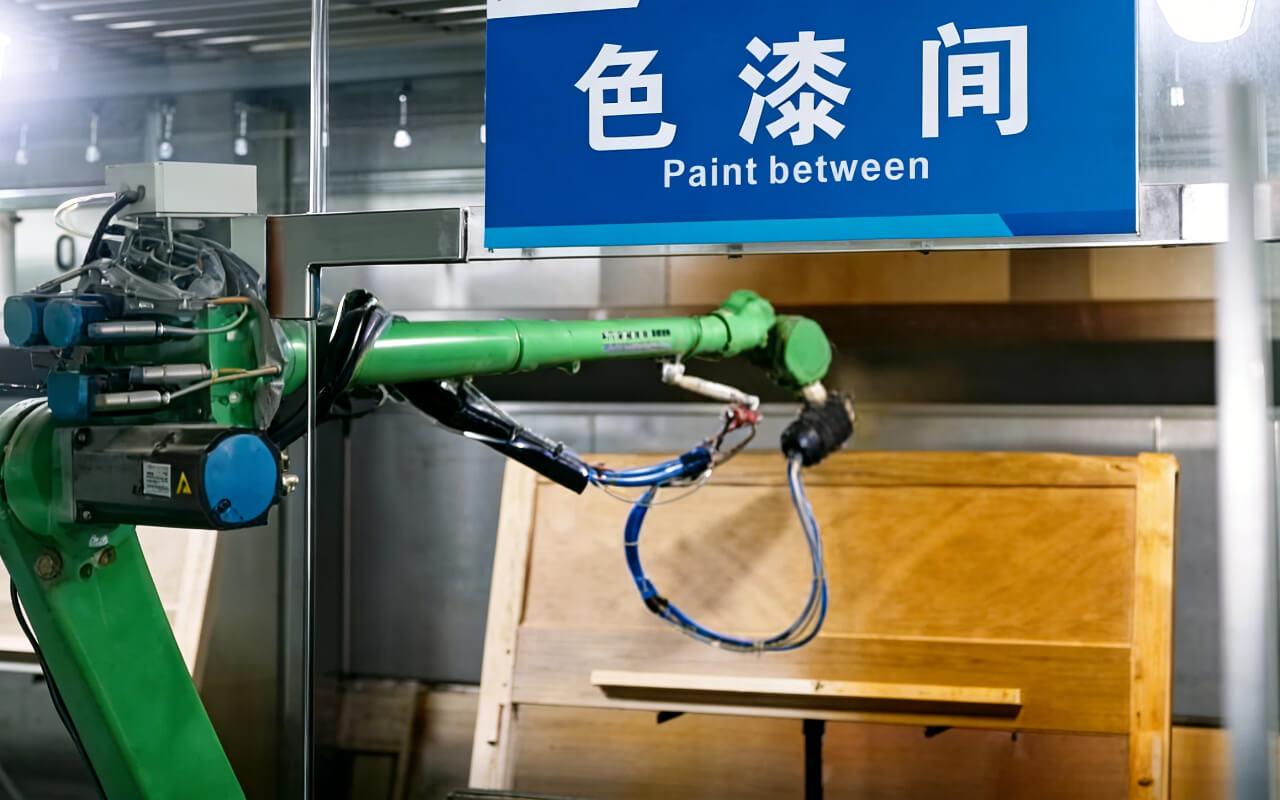
Motion Trajectory Generation is driving a paradigm shift in the furniture industry. Its core value lies in making robotic automation simple and accessible. By bridging the gap between human intuition and machine precision, it allows manufacturers of all sizes to upgrade to intelligent production without the "coding headache."
Whether you are a small workshop or a large-scale manufacturer, this technology provides a clear path to higher efficiency, better quality, and a safer working environment.


