

 English
 Español
 Português
 Русский
 عربي
عربي Türkçe
 Deutsch
 Polski
 Français
 Italiano
 Tiếng Việt
How Should Rust Removal and Coating of Steel Structures Be Properly Executed?
Introduction
Rust removal and protective coating are critical processes in ensuring the durability, safety, and longevity of steel structures. Whether used in construction, energy, or industrial manufacturing, proper surface preparation and coating application directly impact corrosion resistance and overall performance.
This guide provides a comprehensive, standards-based overview of steel structure rust removal and painting processes, aligned with international best practices and optimized for industrial applications.
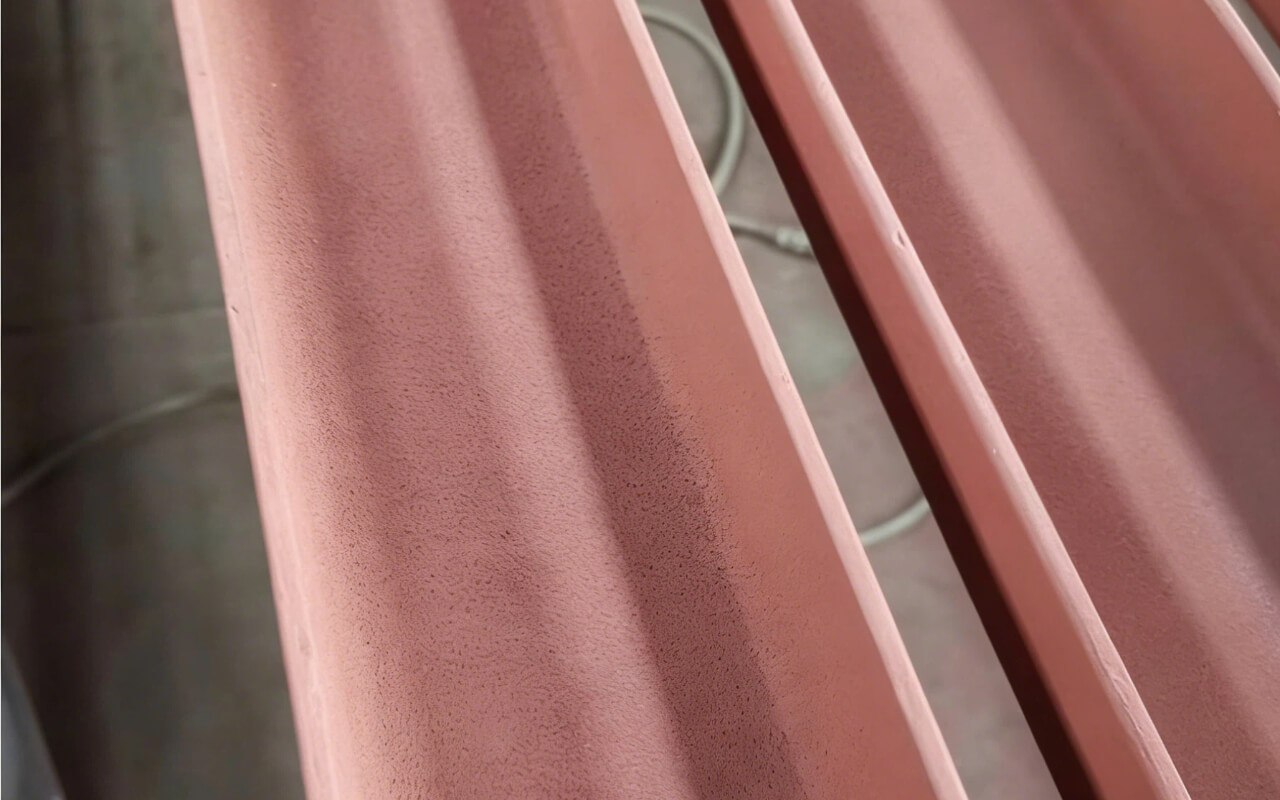
1. Rust Removal and Coating Requirements
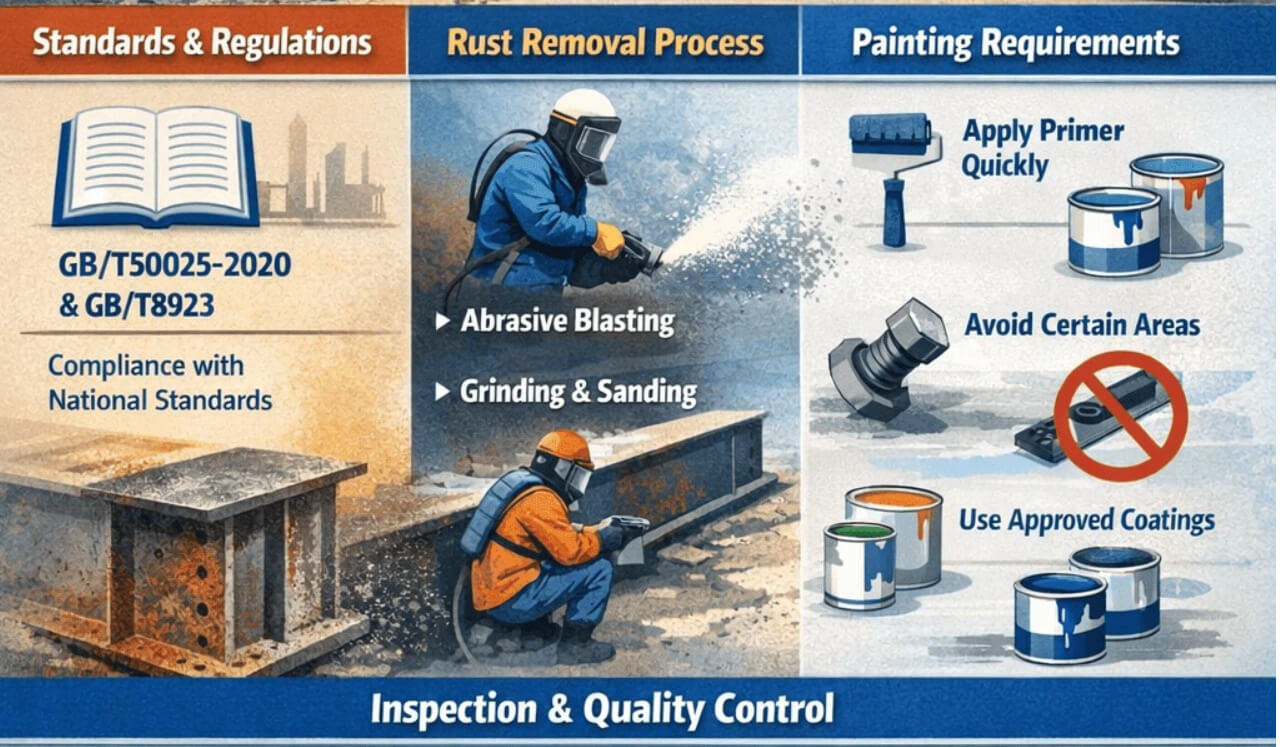
Steel structure surface treatment and coating must comply with recognized standards such as:
GB/T 50025-2020 – Acceptance Standard for Construction Quality of Steel Structures
GB/T 8923 – Rust Grades and Preparation Grades of Steel Surfaces Before Painting
These standards define surface cleanliness, rust removal grades, and coating system requirements.
1.1 Surface Preparation (Rust Removal)
Key Requirements:
Rust removal and coating must be carried out only after structural inspection approval and proper component identification.
All contaminants must be removed prior to treatment, including:
Oil and grease
Welding slag and spatter
Burrs and sharp edges
Surface defects such as weld undercuts, pores, arc craters, and missed welds must be repaired before blasting.
Recommended Method: Abrasive Blasting (Sa2.5)
Steel surfaces should be treated using shot blasting or sandblasting.
Required cleanliness level: Sa2.5, ensuring:
Complete removal of rust, scale, and contaminants
Clean metallic appearance
Critical Timing:
Apply the first primer within 4 hours after rust removal
Maximum interval:
12 hours (indoor or low humidity conditions)
1.2 Coating Application Requirements
Coating should only proceed after rust removal inspection is approved.
Areas NOT to be Coated:
Anchor bolts and base plates
High-strength bolt friction surfaces
Surfaces embedded in concrete
Field welding zones (±100 mm)
General Coating Guidelines:
Follow design specifications for:
Coating type
Color
Number of layers
Film thickness
Use only certified coatings with:
Product certificates
Technical datasheets
Thinner Usage (Maximum Ratios):
| Application Method | Max Thinner Ratio |
|---|---|
| Airless Spray | < 10% |
| Conventional Spray | < 10% |
| Brush / Roller | < 5% |
2. Steel Structure Rust Removal Process
2.1 Selection of Rust Removal Methods
Three common methods are used:
| Method | Advantages | Disadvantages |
|---|---|---|
| Power Tool Cleaning | Flexible, suitable for touch-ups | Lower efficiency |
| Sandblasting | Good cleaning quality | Moderate pollution |
| Shot Blasting | High efficiency, uniform finish, dust-free | Equipment investment required |
Recommended Approach:
Main structures: Shot blasting
Corners / complex areas: Sandblasting or power tools
Secondary treatment: Power tools
2.2 Shot Blasting Equipment ParametersMax width: 2.5 m
Max height: 4.0 m
Conveyor speed: 0.8–2.4 m/min
Blasting angle: -60° to 60°
Abrasive Material:
Use steel shots, tested for:
Cleanliness
Chloride content
2.3 Key Process Control Points
Maintain relative humidity below 85%
Ensure steel surface temperature is ≥3°C above dew point
Clean surface thoroughly before blasting
Remove dust and residual abrasives after blasting
3. Steel Structure Coating Process
3.1 Coating Environment
Temperature: 5°C – 38°C
Humidity: ≤85%
Avoid:
Rain, snow, fog
Strong wind or dust
3.2 Preferred Coating Method: Airless Spray
Advantages:
High efficiency: up to 500 m²/hour
Smooth, dense, high-quality coating
Better adhesion and longer service life
Saves 20–30% paint consumption
3.3 Coating Workflow
Surface preparation
Pre-coating (edges, welds)
Primer application
Intermediate coating
Final coating
3.4 Application Best Practices
Spray distance: ~30 cm
Use brush for hard-to-reach areas
Ensure uniform coating—no sagging or bubbling
Follow recoat intervals strictly
Clean surface before each layer
4. Inspection and Quality Control
4.1 Pre-Coating Inspection
Verify rust removal grade and roughness
Check environmental conditions
Inspect coating materials
4.2 In-Process Inspection
Measure wet film thickness
Ensure no defects:
Peeling
Pinholes
Air bubbles
4.3 Final Inspection
Visual inspection: smooth, uniform, defect-free
Thickness measurement using dry film thickness gauge
Adhesion test (cross-cut method, ≤ Grade 1)
5. Coating Protection and Handling
Avoid contact before full curing
Protect coated surfaces during lifting and transport
Use soft materials (rubber, wood) for support
Repair damaged coatings immediately
6. Packaging and Transportation of Steel Components
Packaging Methods:
Box Packaging – Small, loose components
Bulk (Loose) Loading – Large structural elements
Bundled Packaging – Standardized smaller components
Transportation Requirements:
Use appropriate trailers (flatbed or stake trailers)
Equip vehicles with GPS tracking
Ensure real-time communication for logistics safety
Conclusion
Proper rust removal and coating of steel structures are not just procedural steps—they are critical quality control measures that determine the durability and safety of industrial assets.
By adopting Sa2.5 surface preparation, airless spray coating, and strict inspection standards, manufacturers can significantly improve coating performance, extend service life, and reduce long-term maintenance costs.


