

 English
 Español
 Português
 Русский
 عربي
عربي Türkçe
 Deutsch
 Polski
 Français
 Italiano
 Tiếng Việt
How Can Small Factories Plan a Powder Coating Line?

A Rules-Based Guide to High-Efficiency Installation
In the industrial coating sector, strategic planning of your production line layout and technical workflow is the foundation of operational excellence. Proper planning optimizes manufacturing processes, maximizes equipment utilization, and significantly boosts production efficiency. Furthermore, a well-designed line reduces overhead costs, ensures consistent product quality, and guarantees compliance with environmental and safety standards.
For growing enterprises, a flexible and scalable coating line is a vital asset. It allows for seamless upgrades as production volumes increase, product ranges diversify, or new technologies emerge.
Below are the five fundamental laws for planning a cost-effective and high-performance powder coating production line.
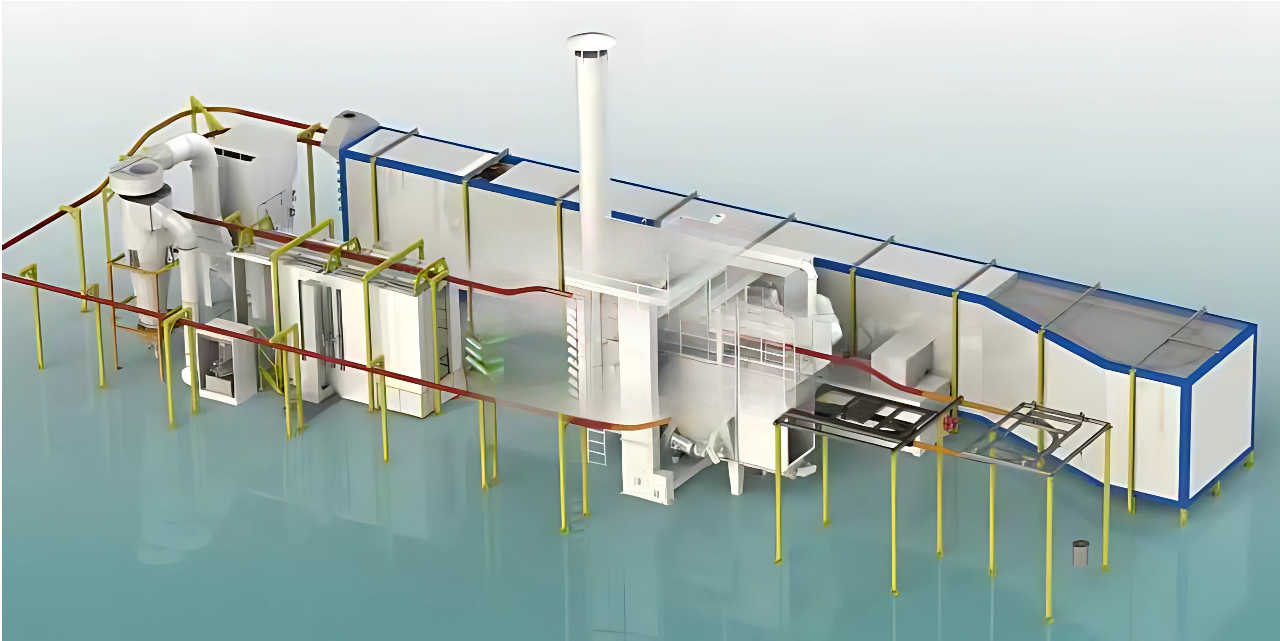
1. The Law of Process Balancing
Achieving "Process Balance" means ensuring that every stage of the coating cycle—from pretreatment to curing—operates in sync. When these stages are balanced, workpieces flow smoothly, idle equipment time is eliminated, and overall output increases.
Key Implementation Measures:
Precise Time Calculation: Measure the exact duration required for every step. For pretreatment (degreasing, phosphating), factor in material type and chemical concentration. For spraying, account for powder type and gun performance. For curing, calculate time based on coating characteristics and oven heat distribution.
Strategic Capacity Allocation: Match the number of units to the process time. If the curing stage takes longer than spraying, you must increase oven capacity or length to prevent a bottleneck.
Automation Integration: Utilize PLC or automated control systems to monitor transit speeds and temperatures in real-time, allowing the line to self-adjust to process fluctuations.
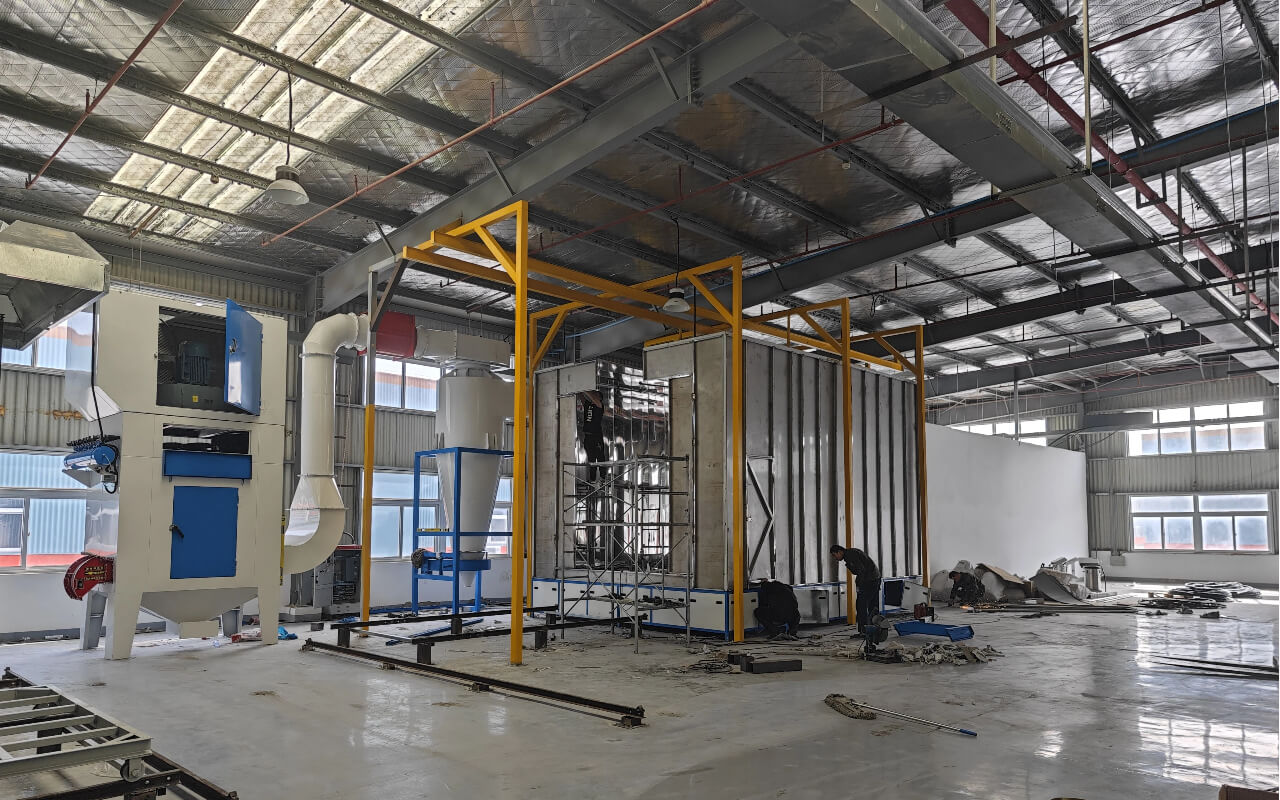
2. The Law of Space Utilization
For small factories, square footage is premium. The goal is to minimize the footprint while maintaining peak accessibility for maintenance.
Sequential Flow Layout: Arrange equipment strictly according to the process sequence. This creates the shortest possible path for the workpiece, reducing transit time and avoiding "cross-traffic" or backtracking.
Compact Station Design: Group smaller components into unified workstations. For larger equipment, minimize gaps while ensuring enough "elbow room" for operators and technicians.
Vertical Expansion: Don’t just look at the floor; look at the ceiling. Utilizing multi-tier structures or overhead conveyor systems allows you to place curing ovens on a mezzanine level, freeing up the ground floor for pretreatment and spraying.
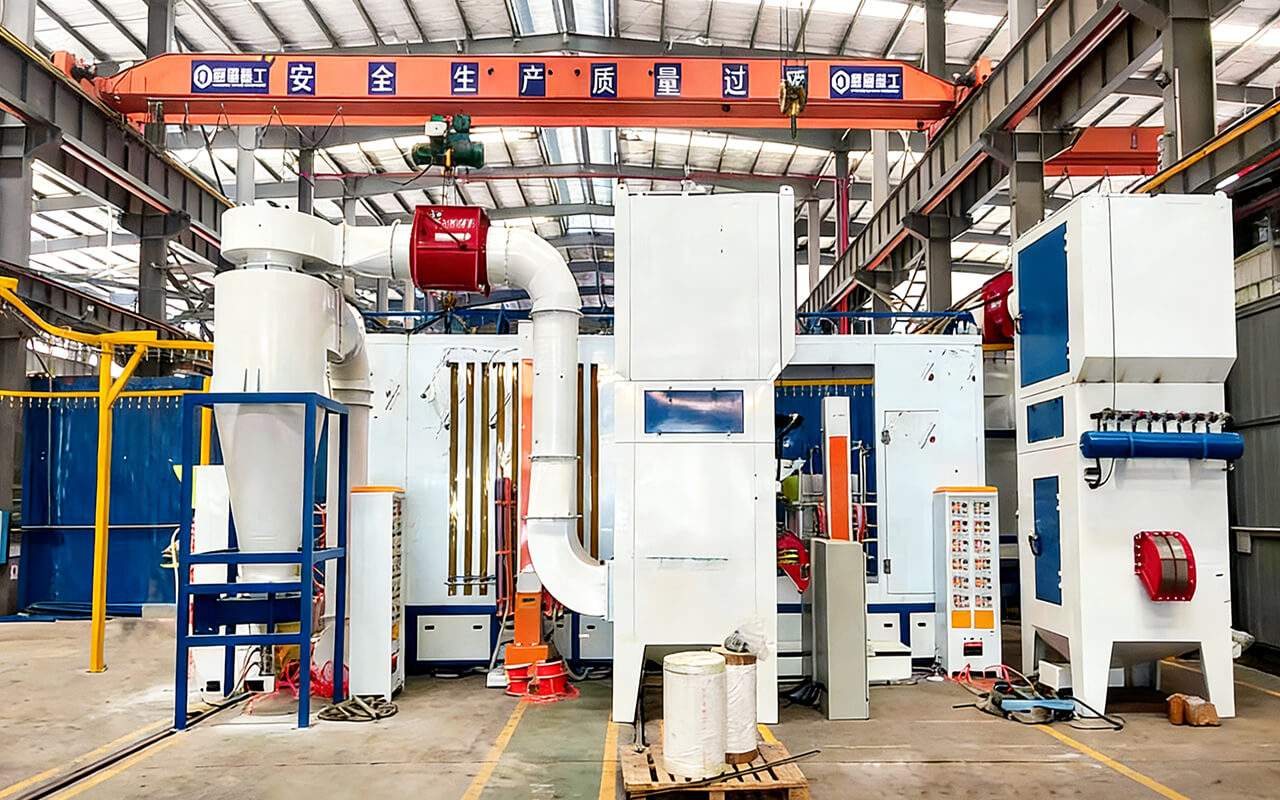
3. The Law of Seamless Logistics
Smooth logistics prevent "logjams" in production. A successful plan defines clear entry and exit points for materials and workpieces.
Optimized Transport Routes: Design loading and unloading zones that allow for rapid transfer between stages. Ensure that the supply of raw powder and the recovery of overspray are integrated into the continuous flow.
Standardized Channel Widths: Primary logistics channels should be 3 to 5 meters wide to accommodate forklifts. Secondary paths for manual carts and personnel can be narrower but must remain unobstructed.
Dedicated Safety Zones: Separate pedestrian walkways from equipment transport paths to improve safety and prevent collisions.
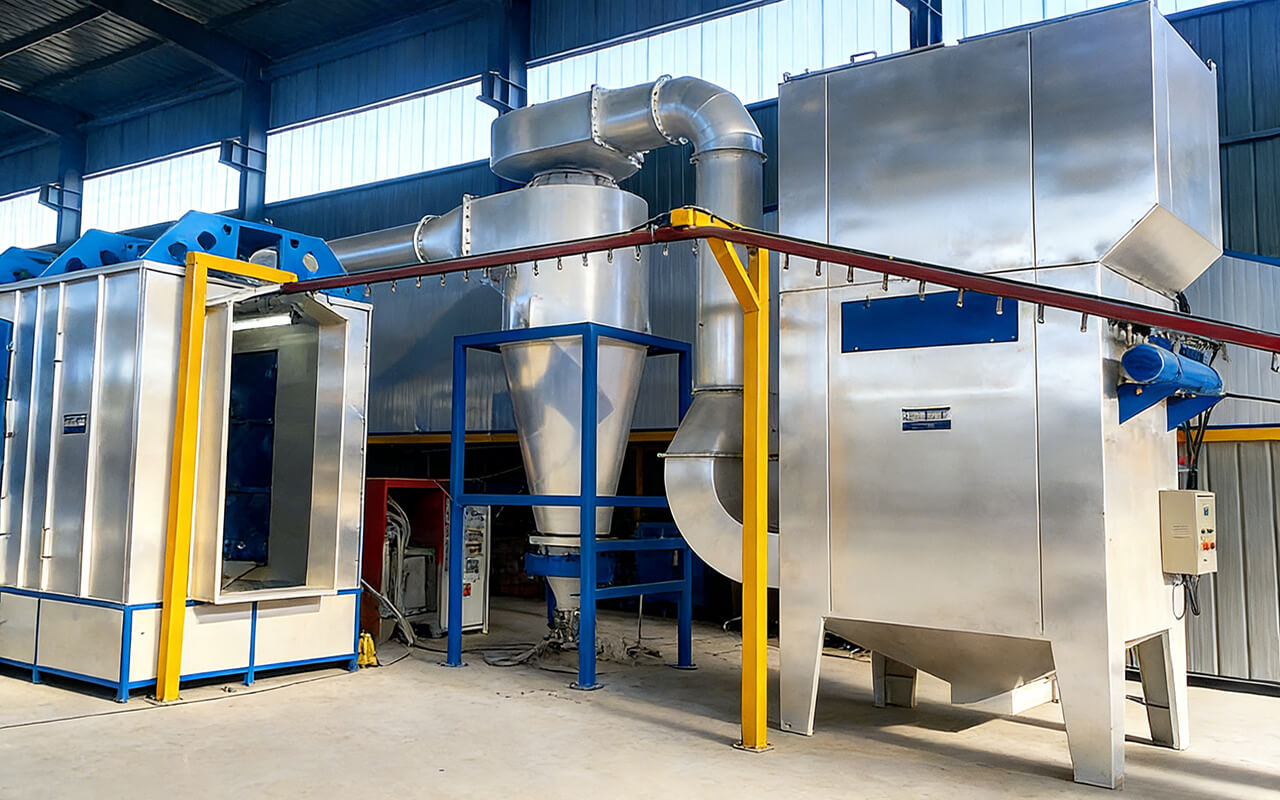
4. The Law of Environmental Protection and Safety
Modern coating must be clean and safe. Planning must account for the "Three Wastes": Exhaust gas, wastewater, and solid residue.
Pollution Control: Integrate high-efficiency exhaust purification systems and wastewater treatment modules to ensure emissions meet local environmental codes.
Safety Safeguards: All equipment must feature mandatory protective devices, including fire suppression, explosion-proof components, and anti-static grounding, especially in the powder application zone.
5. The Law of Flexibility and Scalability
The only constant in manufacturing is change. Your line must be able to adapt to different workpiece specifications and future growth.
Universal Equipment Selection: Prioritize versatile machinery that can be recalibrated for different sizes or materials simply by adjusting parameters or modular components.
Modular Design: Choose modular ovens or booths. This allows you to "plug in" additional sections to increase capacity or change the curing length as your business expands.
Smart Control Systems: Use flexible control architectures (like DCS or advanced PLC) that can be reprogrammed for new coating recipes or different production modes without requiring a total hardware overhaul.


