 English
 Español
 Português
 Русский
 عربي
عربي Türkçe
 Deutsch
 Polski
 Français
 Italiano
 Tiếng Việt
Powder Coating Pretreatment System
ST-PL5915



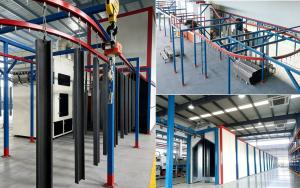


Price: USD4000~30000
Get Quote PDF
Wide Material Compatibility Suitable for steel, iron, aluminum, and galvanized workpieces, meeting diverse industrial coating requirements.
Flexible Structure Design Available in spray type, dip type, or combined spray & dip structure, adaptable to different product sizes and production capacities.
Stable and Uniform Treatment Effect Ensures consistent surface cleanliness and conversion coating quality, improving powder coating adhesion and corrosion resistance.
Automatic Temperature & Process Control Intelligent control system maintains precise temperature and process parameters for stable and repeatable pretreatment results.
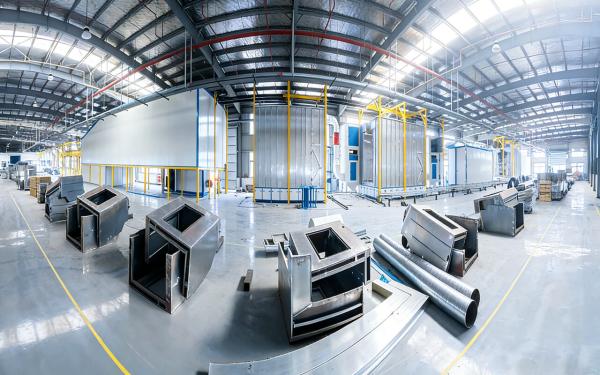
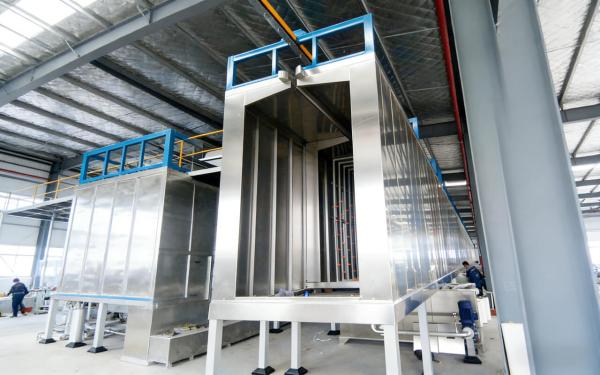
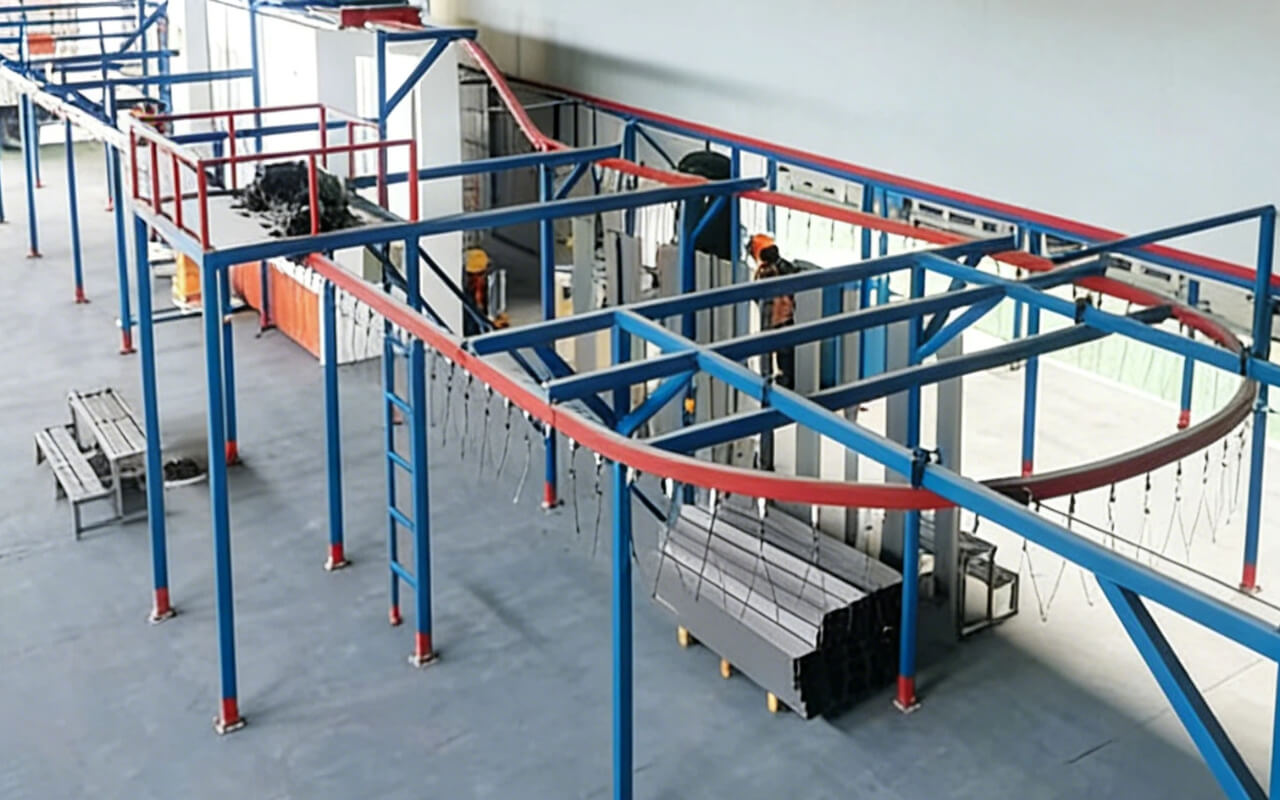
Based on the requirements and site dimensions provided by the customer, full consideration is given to on-site conditions, and careful design is carried out for the process flow and layout of the process plan.
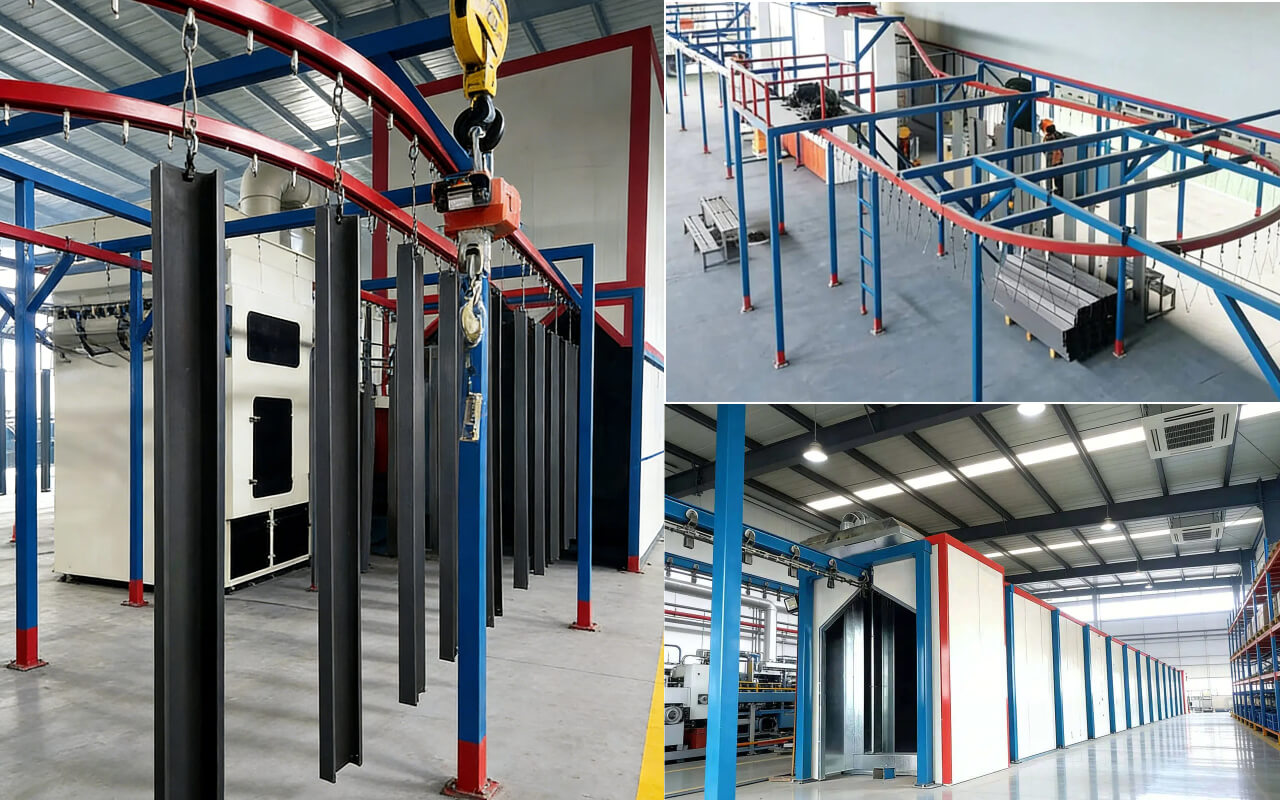
Pretreatment system:①Dry-off oven; ②Powder spraying equipment;③Curing oven and heating system; ④Overhead conveying system
Coating solutions for Industry

Powder Coating Pretreatment System
Preface
1. The determination of the production line process scheme fully considers technological advancement and ensures that product quality requirements are completely met.
2. The design and selection of production line process equipment ensure the realization of all process requirements and technical parameters. 3. All equipment used on the production line is advanced, practical, reliable, and safe. Major equipment and components are selected from nationally designated manufacturers or well-known high-quality brands. 4. For all self-manufactured equipment, common parts and standard components are adopted as much as possible in structural design to improve automation. Full consideration is given to improving the working environment and occupational health conditions, and all relevant national and industry standards and safety measures are strictly implemented. 5. The overall layout of the production line is designed with full consideration of process flow rationality. Equipment arrangement is coordinated, orderly, aesthetically pleasing, and convenient for operation and maintenance.
1. Degreasing
• Purpose:
To remove oil and grease from the workpiece surface. Oil contamination will reduce coating adhesion and may cause issues such as peeling or flaking on both powder coating lines and liquid coating lines, affecting overall finish quality.
• Method:
Chemical degreasing is the most common method. The workpiece is immersed in an alkaline degreasing solution. The alkaline agent reacts with oils through saponification, converting them into water-soluble substances that can be washed away.
Degreasing time depends on the level of contamination, usually 5–15 minutes.
• Lightly contaminated metal sheets may require only 5–8 minutes.
• Heavily contaminated mechanical parts may need 10–15 minutes.
• Rinsing:•
After degreasing, the workpiece must be thoroughly rinsed with clean water to remove residual chemicals. Two or more rinsing stages are typically used to ensure no degreasing agent remains, which is crucial before entering powder coating equipment or any finishing line.
2. Rust Removal
• Purpose:•
To eliminate rust and scale from the metal surface. Rust left under the coating will continue to corrode the workpiece, reducing product durability, whether it is finished on a powder coating line or liquid coating line.
• Methods:•
Two common approaches are acid pickling and mechanical rust removal.
• Acid pickling: Workpieces are immersed in acidic solutions (such as hydrochloric or sulfuric acid), which chemically dissolve rust.
• Mechanical removal: Sandblasting or shot blasting is used, where high-speed abrasive particles impact the surface to remove rust and oxide layers.
Examples:
• Small or complex-shaped parts are more suited for acid pickling.
• Large parts or parts requiring a high-quality finish benefit more from sandblasting.
• Rinsing and Neutralization:
After rust removal, the workpiece is rinsed with clean water to remove acid residues.
For pickling, a neutralization step is essential—usually immersing in a sodium carbonate solution to neutralize remaining acids and prevent damage to the workpiece or the future coating layer.
3. Phosphating (or Passivation)
• Purpose:
Phosphating forms a phosphate protective film on the metal surface, while passivation forms a dense oxide layer. These protective layers significantly enhance coating adhesion and corrosion resistance—critical for high-performance powder coating equipment and liquid coating line applications.
• Method:
For phosphating, workpieces are immersed in a phosphating solution at 35–55°C for 3–10 minutes, where a chemical reaction forms a uniform phosphate film.
Passivation typically uses chromate or other passivating agents to create a dense oxide film.
Examples:
• Steel workpieces benefit greatly from phosphating, which improves adhesion for powder and liquid coatings.
• Aluminum alloy parts often undergo passivation to prevent oxidation before coating.
| Key Components | |||
| Section | Specifications | Process Characteristics / Heating Method | Construction / Materials Used |
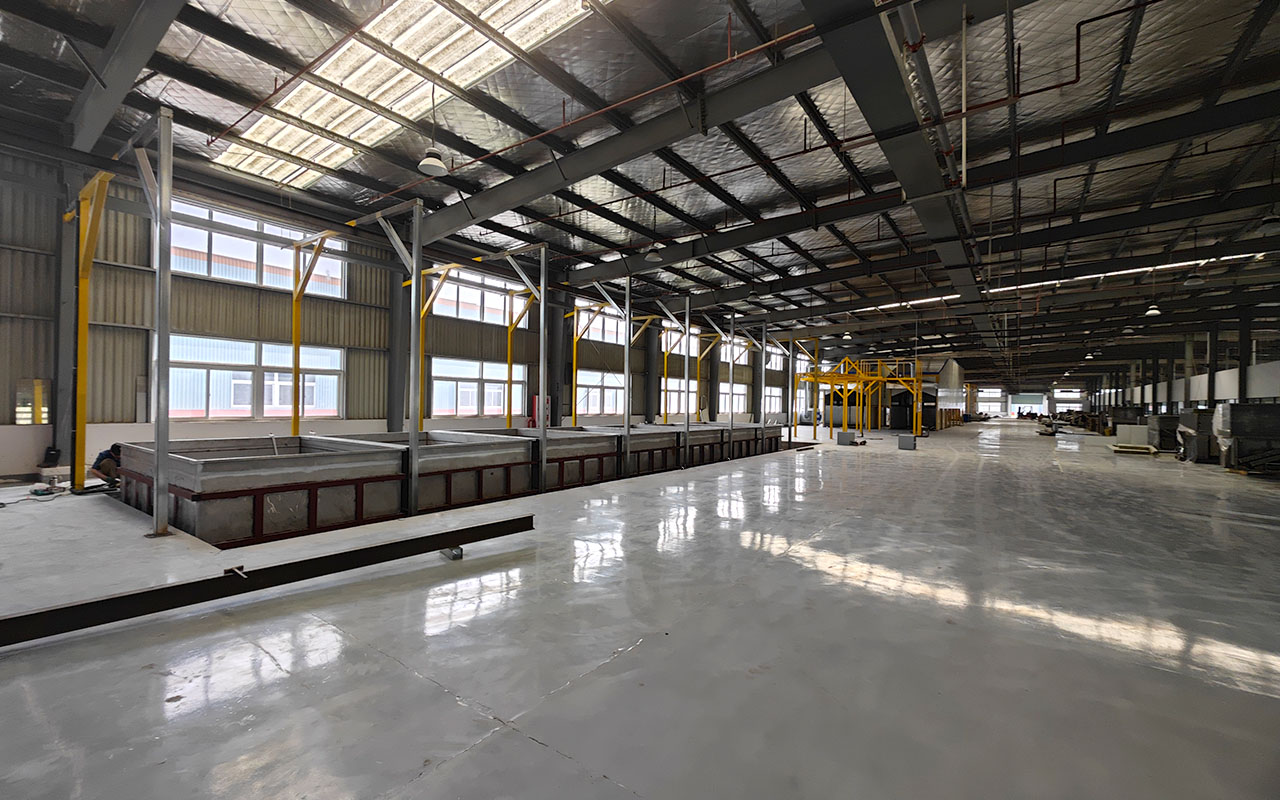
| I) Pretreatment | - Spray section: L59.1m × W1.1m × H5.35m | Room-temperature process. Main structure made of stainless steel, spray pipes are PVC, and the frame uses standard profiles. | Number of storage tanks: 12 total (Pre-degreasing, Main degreasing, Rinse ×2, Derusting, Rinse, Neutralization, Rinse, Surface conditioning, Phosphating, Rinse ×2) |
| - Immersion section: L108.2m × W1.1m × H2.7m | Process method: Combination of spray and immersion. | ||
| II) Drying Oven for Moisture Removal | - Type 1: L14m × W1.2m × H3.1m | Indirectly heated bridge-type oven using diesel fuel. | Construction: Oven body, diesel heating system, exhaust emission system. |
| - Type 2: L9.0m × W2.6m × H3.1m | Materials: | ||
| Outer wall: Color-coated steel sheet (1.0mm) | |||
| Inner wall: Galvanized sheet (1.0mm) | |||
| Insulation layer: Rock wool (≥100mm) | |||
| Frame: Cold-rolled steel plate | |||
| Ductwork: Galvanized steel sheet (1.2mm) | |||