 English
 Español
 Русский
 عربي
عربي Türkçe
 Deutsch
 Polski
 Français
 Italiano
 Tiếng Việt
The Differences Between Powder Coating and Galvanizing
Hot-dip galvanizing evolved from early hot-coating techniques and has been applied industrially since 1836 in France. However, large-scale industrial development of hot-dip galvanizing has mainly occurred over the past 30 years, alongside the rapid growth of cold-rolled strip steel production.
The main production steps of hot-dip galvanized steel sheets include:
substrate preparation → pre-treatment → hot-dip galvanizing → post-treatment → finished product inspection.
Based on different pre-treatment methods, hot-dip galvanizing processes are generally classified into off-line annealing and in-line annealing systems, including wet processes, single-sheet galvanizing, Wheeling (continuous strip galvanizing), Sendzimir processes, modified Sendzimir processes, U.S. Steel (Kawasaki) methods, Selas methods, and Sharon methods.
1. Off-line Annealing
In off-line annealing, hot-rolled or cold-rolled steel sheets are first recrystallization-annealed in pit furnaces or bell furnaces before entering the galvanizing line. This means the galvanizing line itself does not include an annealing section. Before galvanizing, the steel surface must be clean, active pure iron without oxides or contaminants. This is typically achieved by acid pickling to remove oxide scale, followed by applying a protective flux made of zinc chloride or a mixture of ammonium chloride and zinc chloride to prevent re-oxidation.
Wet Hot-Dip Galvanizing:
The flux-coated steel enters molten zinc without drying. Disadvantages include thick alloy layers with poor adhesion and zinc dross accumulation, which contaminates the steel surface. This method has largely been phased out.
Single-Sheet Galvanizing:
Annealed steel sheets are pickled with sulfuric or hydrochloric acid, rinsed, dried, and then galvanized in a zinc bath maintained at 445–465°C, followed by oiling and chromating. Product quality is significantly better than wet galvanizing, but this method is only suitable for small-scale production.
Wheeling Process:
This continuous galvanizing line includes degreasing, acid pickling, rinsing, fluxing, and drying, with additional annealing in a bell furnace before galvanizing. The process is complex and costly, and solvent-related defects can reduce corrosion resistance and coating adhesion. As a result, it has not been widely adopted.
2. In-line Annealing
In this method, steel coils from hot- or cold-rolling mills directly enter a continuous galvanizing line, where recrystallization annealing is carried out under protective gas conditions. Representative processes include the Sendzimir, modified Sendzimir, U.S. Steel (Kawasaki), Selas, and Sharon methods.
Sendzimir Process:
Combines annealing and galvanizing. The strip is first oxidized to burn off residual rolling oil, then reduced and recrystallized at 700–800°C, cooled to around 480°C, and finally galvanized without air exposure. This process offers high output and good coating quality and has been widely used.
U.S. Steel Method:
A variation of the Sendzimir process that replaces the oxidation furnace with alkaline electrolytic degreasing. While it reduces oxidation and gas consumption, the increased thermal load on the reduction furnace limits its widespread use.
Selas Process:
Also known as direct flame heating. The strip is rapidly heated in a reducing atmosphere created by controlled incomplete combustion. The equipment is compact and high-capacity, but operational complexity limits its application.
Sharon Process:
Uses hydrochloric acid gas spraying in the annealing furnace to remove oxides and oils simultaneously. Although coating adhesion is excellent, severe equipment corrosion results in high maintenance costs, so this method is rarely used.
Modified Sendzimir Process:
An improved and widely adopted process that integrates preheating, reduction, and cooling into a compact system. It offers high quality, high productivity, low energy consumption, and improved safety. Since 1965, most newly built galvanizing lines have adopted this method, and many older lines have been retrofitted accordingly.
Corrosion Resistance Comparison
In terms of corrosion resistance, both galvanizing and powder coating processes can deliver good protection when proper technology and materials are used. However, in humid environments such as basements, powder-coated products processed on a powder coating line are more susceptible to moisture penetration. Once the powder layer peels off, corrosion can begin. Galvanized coatings, on the other hand, are highly sensitive to mechanical damage—once the zinc layer is scratched, the exposed area loses its protective function.
Under normal conditions, both galvanizing and powder coating can provide excellent protection. In extremely harsh environments, the best solution is often powder coating applied over a galvanized surface, combining galvanizing with advanced powder coating equipment to achieve dual-layer protection and significantly extend product service life.
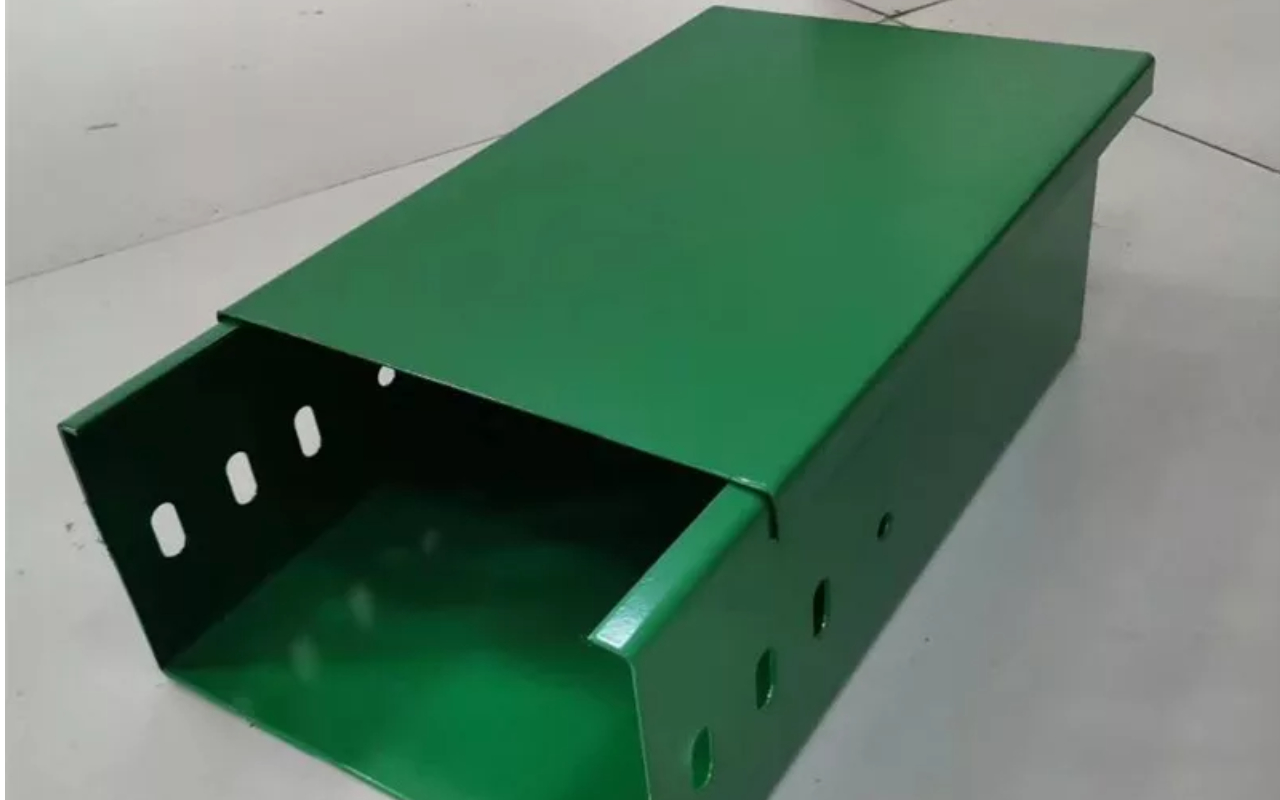
-------Spray-coated cable tray
-------Galvanized cable tray