 English
 Español
 Português
 Русский
 عربي
عربي Türkçe
 Deutsch
 Polski
 Français
 Italiano
 Tiếng Việt
Main Process Flow and Specifications of Electrophoretic Coating
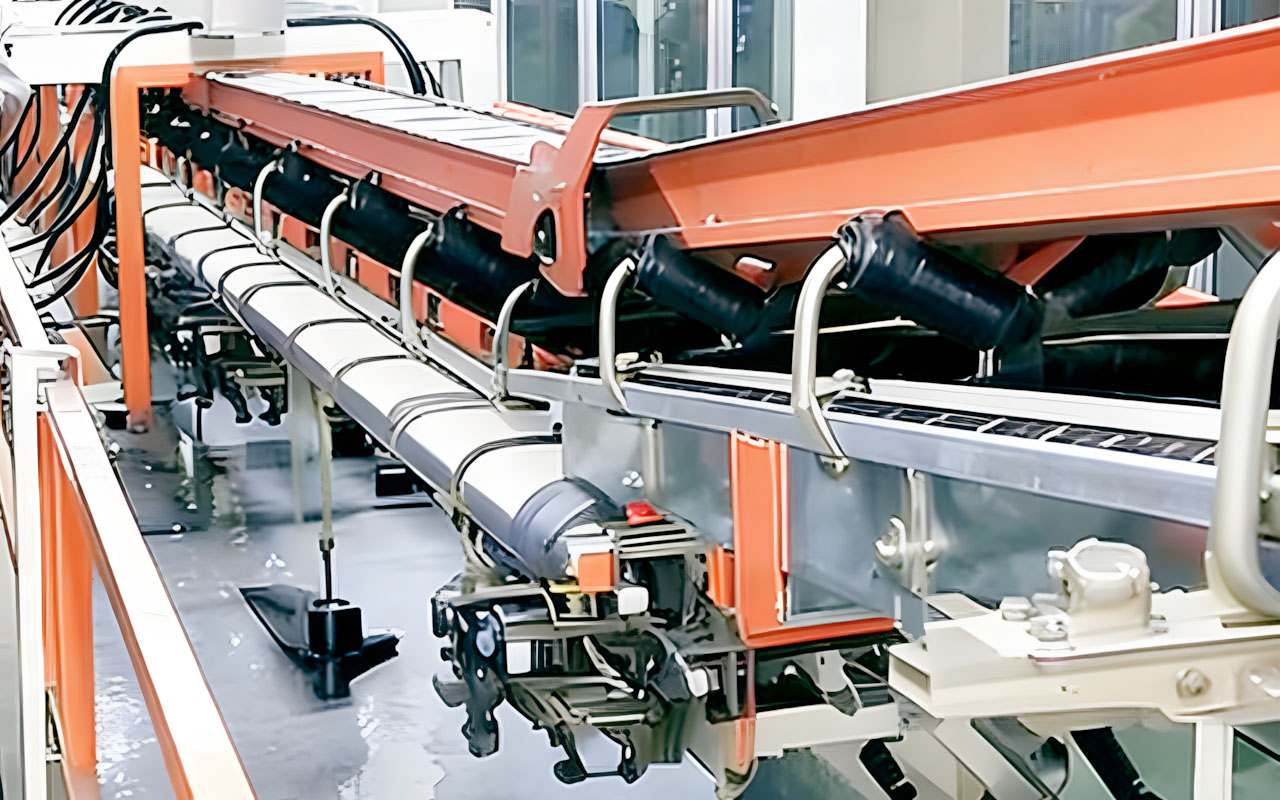
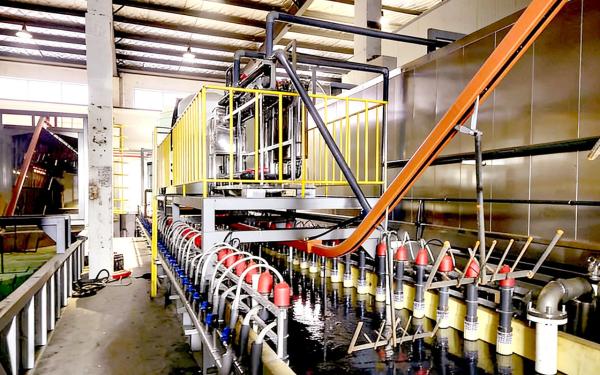
Electrophoretic coating (e-coating) is an advanced coating technology that uses water-soluble organic coatings deposited under the action of an electric field. In this process, the conductive workpiece serves as either the cathode or anode, while stainless steel or carbon plates act as the corresponding counter-electrodes. By applying direct current and a relatively high voltage between the electrodes, the coating is uniformly deposited on the surface of the workpiece, forming a water-insoluble organic coating film. After baking and curing, the coating film achieves high hardness, effectively providing corrosion protection and surface decoration.
Electrophoretic coating originated in the 1960s and was first applied by Ford Motor Company as an automotive primer. Due to its excellent anti-corrosion and rust-prevention performance, it was soon widely adopted in the military industry. With its superior quality and high environmental friendliness, electrophoretic coating is gradually replacing traditional solvent-based spray painting. Its advantages include high efficiency, environmental protection, strong corrosion resistance, and wide applicability. Compared with conventional coating methods, electrophoretic coating does not require harmful solvents, posing minimal risk to the environment and worker health. The resulting coatings are uniform and dense, enhancing durability and service life. In addition, electrophoretic coating can automatically regulate coating thickness, optimizing the balance between cost and performance, and is suitable for workpieces of various materials and shapes.
In practical applications, electrophoretic coating is widely used in automotive manufacturing, construction, machinery parts, electrical appliances, and aerospace industries. For example, in automotive manufacturing, electrophoretic coating provides more durable protection against corrosion, scratches, and fading, thereby improving vehicle quality and longevity. In the construction sector, it offers corrosion and oxidation resistance for steel structures and window frames. Electrophoretic coating not only improves production efficiency but also reduces paint waste, with coating utilization rates as high as 90%–95%. As water-based coatings are used, the consumption of organic solvents is reduced, lowering air pollution and environmental impact. However, electrophoretic coating equipment is complex, requires relatively high initial investment, and consumes significant electrical energy, resulting in stricter operating conditions and the need for wastewater treatment.
With its high efficiency, environmental friendliness, and excellent coating performance, electrophoretic coating technology has been widely adopted in modern industry. As technology continues to advance and improve, electrophoretic coating is expected to play an even greater role in more fields, making greater contributions to industrial development and environmental protection.
I. Common Electrophoretic Coating Process Flow
The typical electrophoretic coating process consists of four main stages: pre-coating surface treatment, electrophoretic coating, post-e-coating rinsing, and baking/curing. In some processes, a pre-baking stage is added before final curing, or an air-drying stage is included before pre-baking.
Before electrophoretic coating, deionized water rinsing (or hot-air drying) is used to ensure that parts enter the e-coating bath either fully wet or fully dry. Depending on production requirements, additional process steps may be introduced. For porous or crevice-containing parts, an intermediate blow-off step may be added after degreasing to remove trapped water, preventing it from affecting subsequent processes and ultimately the quality of the electrophoretic coating. Depending on the type of coating material and the purpose of electrophoretic coating, process flows may vary.
For example, acrylic and polyurethane electrophoretic coatings typically follow specific pretreatment processes. These processes are mainly intended for decorative workpieces with high appearance requirements but relatively low corrosion resistance demands, such as eyewear, lighters, locks, and lighting fixtures. The resulting electrophoretic coating films are transparent and can be combined with various color pastes to achieve a wide range of colors in different electroplating processes.
Different materials may require tailored process flows. For instance, highly porous bonded NdFeB magnets require specialized procedures. Special measures are also applied to certain components, such as bolts and fasteners, which may use dedicated electrophoretic coatings and processes, along with drum conveyors, belt conveyors, or basket conveyors. During hanging, workpieces must be securely fixed on special racks. Contact points between the rack and the workpiece must be ground to expose metallic luster to ensure good electrical conductivity.
Another method is the powder/electrophoretic inverted process. In this process, the exterior surface of the automotive body is first coated with powder paint and thermally melted. Then, electrophoretic coating is applied to the uncoated areas, followed by simultaneous curing of both the powder and electrophoretic coatings. This method improves coating penetration and corrosion protection inside body cavities and reduces electrophoretic paint consumption by approximately 60%. A 70 μm powder coating replaces the traditional electrophoretic primer and intermediate coat on the vehicle exterior, eliminating the intermediate coating and curing steps, thereby saving materials and energy. The coating also offers excellent stone-chip resistance. However, a key challenge of this process is ensuring the integrity and corrosion resistance of the coating interface between the powder and electrophoretic layers.
II. Electrophoretic Coating vs. Powder Coating
Both electrophoretic coating and powder coating have their own advantages and disadvantages and are suitable for different application scenarios. Selection should be based on specific requirements.
Coating Uniformity
Electrophoretic coating produces extremely uniform coatings. By adjusting electrical parameters and coating formulations, film thickness can be easily controlled within 10–35 μm or even a wider range. Powder coating generally produces thicker coatings but may be less uniform, especially on complex geometries.
Adhesion and Corrosion Resistance
Electrophoretic coatings have strong adhesion and excellent rust prevention. Anodic e-coatings can withstand over 300 hours of salt spray testing, while cathodic e-coatings can exceed 1000 hours. Powder coatings also offer good adhesion and decorative performance, but their corrosion resistance is relatively lower.
Environmental Friendliness
Electrophoretic coatings are water-based, safe, and environmentally friendly, with no fire or explosion risk and no heavy metal toxicity. They are suitable for mass production, simplify processes, and reduce labor. Powder coatings are also environmentally friendly, but unused powder may be difficult to recycle and may require special handling.
Production Efficiency
Electrophoretic coating processes are highly automated and suitable for large-scale assembly line production, significantly improving efficiency. Powder coating also offers high productivity, but operations are more complex, and color or material changes are more difficult.
Application Scope
Electrophoretic coating is ideal for complex-shaped workpieces, especially those with internal cavities, ensuring uniform internal and external coverage and superior corrosion protection. Powder coating is widely used in industrial manufacturing, construction, and furniture, and is suitable for various materials and surfaces.
Process Complexity
Electrophoretic coating involves relatively complex processes and requires specially trained personnel for on-site control. Powder coating operations are comparatively simpler, but curing conditions are more restrictive.
Cost and Recovery Rate
Powder coating achieves recovery rates of up to 98%, greatly reducing coating waste. Electrophoretic coating also has high paint utilization efficiency; however, once in operation, production lines cannot be easily stopped, as shutdowns significantly increase production costs.
Overall, electrophoretic coating excels in handling complex workpieces, ensuring internal coating quality, environmental performance, and production efficiency, while powder coating offers advantages in coating thickness, decorative appearance, and powder recovery rates.
III. Polarity of Electrophoretic Coatings
Electrophoretic coatings are mainly divided into two types based on polarity: cathodic and anodic coatings.
Cathodic Electrophoretic Coatings
Available in both transparent and pigmented forms.
Characteristics: Excellent color appearance, high transparency, superior corrosion resistance, and good decorative properties. They are widely used for electronic products, furniture hardware, decorative components, and automotive body shells.
Anodic Electrophoretic Coatings
Also available in transparent and pigmented forms.
Characteristics: Good color appearance and transparency, relatively high weather resistance and corrosion resistance. Suitable for electronic products, mobile phone accessories, furniture, and hardware decoration.
Case Example:
In electrophoretic coating applications, cathodic electrophoretic coatings are widely used for automotive body coating due to their superior performance.
Advantages of Cathodic Electrophoretic Coatings:
Excellent film performance: Cathodic coatings have 1.3–1.5 times higher throwing power than anodic coatings, allowing complex internal surfaces to be coated without auxiliary electrodes, thereby simplifying processes and reducing material consumption.
Strong corrosion resistance: On degreased steel plates, cathodic coatings generally provide 3–4 times longer corrosion resistance than anodic coatings, and in some cases up to 10 times longer.
Uniform coating: Cathodic coatings form uniform films and avoid the adverse effects of oxygen generated during electrolysis in anodic processes, ensuring consistent coating quality.
Limitations of Anodic Electrophoretic Coatings:
Poor resistance to alkali, salt spray, and water: During electrolysis, anodic coatings tend to precipitate, darkening the film and reducing corrosion resistance.
Oxygen generation during electrolysis: Oxygen released during anodic deposition can mix with the coating film, darkening its color and further reducing corrosion resistance.