 English
 Español
 Português
 Русский
 عربي
عربي Türkçe
 Deutsch
 Polski
 Français
 Italiano
 Tiếng Việt
Eight Common Spray Painting Problems and Solutions
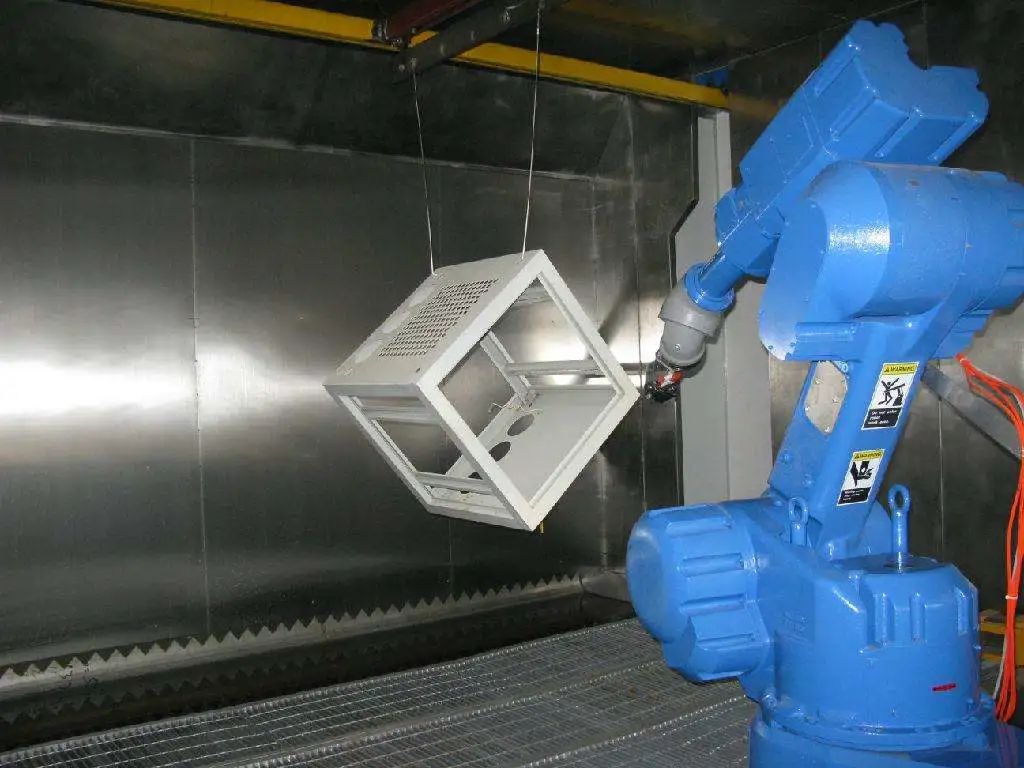
Eight Common Problems in Spray Painting and Their Solutions
I. Basics of Spray Painting
Spray painting is a coating process in which paint is atomized into fine, uniform droplets by compressed air and applied onto the surface of a workpiece using a spray gun. It is widely used across many industries and is a core process in a modern liquid coating line.
According to the application principle, spray painting is mainly divided into three types: air spray, airless spray, and electrostatic spray.
In actual production, coating defects may occur due to factors such as improper substrate treatment, unsuitable process parameters, or environmental conditions. Below is a detailed analysis of eight common problems and their corresponding solutions, commonly encountered in automated coating systems supplied by ShengTai Equipment.
II. Eight Common Problems and Countermeasures
(1) Pinholes Phenomenon:
Needle-like pits penetrating to the substrate appear on the coating surface. The hole diameter is about 100 microns, resembling needle marks, which affect surface smoothness and protective performance.
Main Causes:
Improper substrate preparation (wood fibers or burrs remaining, difficult to fill);
Recoating before the previous layer is fully dry, trapping moisture between layers;
Paint not allowed to stand for defoaming, with excessive viscosity retaining bubbles;
Excessive single-layer thickness (over 20 μm), causing uneven shrinkage during drying;
Incorrect matching or excessive addition of hardener or thinner;
High temperature and humidity during application, with excessive wood moisture content (>12%).
Solutions:
Sand raw boards smooth and seal pores with appropriate primers;
Strictly control recoating intervals and ensure complete drying between layers;
Let mixed paint stand for 15–20 minutes to eliminate air bubbles;
Adjust paint viscosity and apply multiple thin coats, keeping each layer under 20 μm;
Use specified matching hardeners and thinners at standard ratios;
Avoid high-temperature and high-humidity environments; dry wood to 10–12% moisture content.
(2) Blistering Phenomenon:
Round bubbles of varying sizes appear on the coating after drying, forming either between the substrate and coating or between coating layers. Severe blistering may rupture and peel off.
Main Causes:
Excessive substrate moisture or unremoved volatile substances such as resin or aromatic oils;
Putty or primer not fully dry before topcoat application;
Gaps or pores at wood joints not properly filled, trapping air;
Paint viscosity too high, leaving bubbles formed during brushing;
Oil, dust, or moisture on the substrate, or water introduced via tools or air lines;
Causes similar to pinholes (improper ratios, unsuitable environment).
Solutions:
Dry wood to specified moisture content and remove resin and oils in advance;
Ensure putty and primer layers are fully dry before topcoating;
Fill gaps and pores with putty, then sand smooth before coating;
Clean the substrate with a clean cloth, avoid hand contact, and coat immediately;
Adjust viscosity and apply using correct brushing or spraying techniques;
Regularly drain compressors and install oil-water separators;
Minor blisters: sand smooth after drying and recoat;
Severe blisters: puncture, sand, clean, and repair layer by layer.
(3) Lifting (Solvent Attack) Phenomenon:
Solvent in the topcoat softens and swells the underlying layer, reducing adhesion and causing peeling or lifting.
Main Causes:
Topcoat applied before primer is fully dry;
Slow operation and excessive repeated brushing;
Incompatible primer and topcoat systems (e.g., phenolic primer with nitro topcoat);
Insufficient hardener in the previous coating layer.
Solutions:
Apply topcoat only after the base layer is fully dry;
Operate quickly and accurately when applying solvent-based coatings;
Use compatible primer and topcoat systems;
Severe lifting requires complete removal and recoating with the same coating system.
(4) No Drying or Slow Drying Phenomenon:
The coating remains sticky or soft beyond the specified drying time and cannot proceed to the next process step in the liquid coating line.
Main Causes:
Residual moisture on the substrate;
Insufficient or missing hardener;
Use of non-matching thinners with high water or alcohol content;
Low temperature or high humidity during application;
Excessive film thickness or too short recoating intervals.
Solutions:
Ensure the substrate is completely dry before coating;
Add hardener accurately according to specifications and mix thoroughly;
Use manufacturer-recommended matching thinners;
Apply at normal room temperature (15–30°C) and low humidity;
Apply multiple thin layers with sufficient intervals; if not dry, remove and recoat.
(5) Coating Peeling Phenomenon:
Poor adhesion between coating layers leads to peeling, flaking, blistering, or delamination, eliminating protective and decorative functions.
Main Causes:
Incompatible primer and topcoat;
Oil, dust, or moisture contamination on the substrate;
Improper substrate preparation (no sanding or sealing);
Recoating before full drying, causing uneven shrinkage;
Low application temperature.
Solutions:
Use matching primer and topcoat systems;
Thoroughly clean the substrate;
Sand, fill, prime, sand again, then topcoat;
Avoid low-temperature environments during application.
(6) Rough Coating Surface Phenomenon:
The coating surface shows grainy, pimple-like protrusions and feels rough, seriously affecting appearance.
Main Causes:
Impurities in paint or contaminated tools;
Dusty environment during coating;
Poor substrate preparation with residual dust or sanding particles.
Solutions:
Filter paint after mixing;
Let paint stand for 15–20 minutes before use;
Avoid dusty environments and protect fresh coatings;
Sand and clean the substrate thoroughly before coating;
For existing roughness, wet-sand and recoat.
(7) Brush Marks Phenomenon:
Visible brush strokes remain on the coating surface, causing uneven thickness and reduced gloss.
Main Causes:
Paint viscosity too high or thinner evaporates too quickly;
Incorrect brushing direction or repeated brushing;
Poor-quality or hardened brushes;
Excessive absorption by the substrate.
Solutions:
Adjust viscosity using appropriate matching thinner;
Brush along the wood grain consistently;
Use soft, high-quality brushes and clean them properly;
Seal the substrate first to reduce absorption;
Sand lightly and recoat if brush marks appear.
(8) Powdering (Chalking) Phenomenon:
After drying, pigment powder rubs off when touched. The coating lacks gloss and adhesion.
Main Causes:
Insufficient hardener in two-component coatings;
Inadequate mixing after opening the paint container;
Expired or improperly stored hardener;
Excessive thinner diluting the curing effect;
Spraying onto overheated workpieces.
Solutions:
Measure and add hardener accurately;
Stir paint thoroughly before use and seal unused paint;
Store hardeners properly and check expiration dates;
Control thinner addition and use compatible products;
Allow hot parts to cool to room temperature before coating.
III. General Precautions
Fully understand coating properties and strictly follow product specifications for ratios, temperature, and humidity;
Substrate preparation is critical—ensure surfaces are dry, clean, smooth, and free of contaminants;
Mix and allow paint to stand for defoaming before use;
Use compatible primers, topcoats, hardeners, and thinners to avoid compatibility issues;
Keep application tools clean and well maintained (e.g., brush cleaning, compressor drainage);
When defects occur, identify the type and severity first, then apply targeted corrective measures.