 English
 Español
 Português
 Русский
 عربي
عربي Türkçe
 Deutsch
 Polski
 Français
 Italiano
 Tiếng Việt

How Are Intelligent and Green Technologies Transforming Modern Industrial Paint Shops?
Driven by strict global environmental regulations and the push for low-carbon manufacturing, the "green coating" concept has become an industry consensus. Led by the "Industry 4.0" trends—particularly in sectors like industrial barrel and drum manufacturing—smart manufacturing technologies are seeing widespread adopt......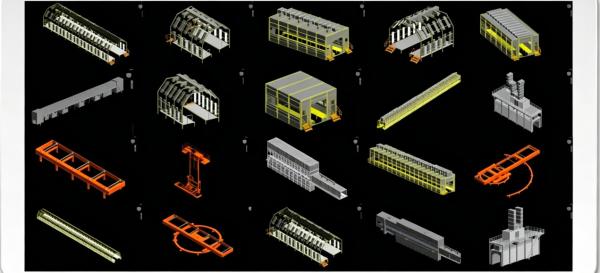
How to Plan and Design a Coating Workshop for Maximum Efficiency and Quality?
01. Overview of Coating Workshop Planning1.1 Objectives and PrinciplesPlanning Objectives:Ensure high production efficiency and consistent coating quality while enhancing overall business competitiveness.Planning Principles:Rational layoutEfficient production flowSafety and environmental complianceSustainable developme......
Trucks: Cab — What Are the Advantages of Replacing E-coating with Powder Coating?
1. Process FlowPre-treatment (thin-film pre-treatment) → Powder primer coating → Curing → Intermediate coat / Topcoat2. Advantagesa. Environmental Protection & ComplianceZero VOCs, no wastewater: Powder coatings are 100% high-solid with near-zero VOC emissionsPowder recovery rate above 98%: Overspray powder can be r......
How to Eliminate Mottling in Non-Electrostatic Automated Silver Paint Spraying?
The "Golden Rules" for Flawless ResultsSilver metallic coatings are widely used for their premium visual appeal—but in automated non-electrostatic spraying, defects like mottling, streaking, or uneven metallic distribution are common challenges. To achieve a smooth, uniform finish, it is essential to master both proce......
How Does a Fully Automated, Unmanned NdFeB Surface Coating Line Improve Efficiency and Quality?
Overview of the Fully Automated NdFeB Surface Treatment SystemThe fully automated surface coating system for NdFeB (Neodymium Iron Boron) magnets is designed to deliver high-efficiency, unmanned production through advanced automation technologies. Featuring a dual-disc design, the system effectively doubles production ......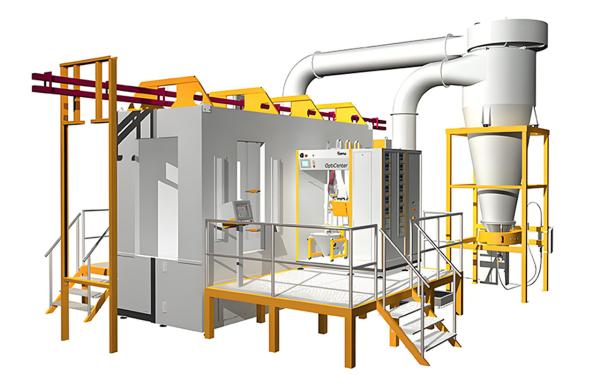
How Do Powder Coating Recovery Systems Work? A Complete Guide to Primary, Secondary, and Tertiary Recovery
From the perspective of equipment configuration in powder coating recovery systems, the coating industry typically classifies them into primary recovery, secondary recovery, and even tertiary recovery systems.1. Primary RecoveryPrimary recovery uses only a filter separator to recover powder and is usually designed toge......
What Are the Benefits of an Automated Powder Coating Line in Modern Factories?
Automation Lines: Reducing Costs, Boosting Efficiency, and Ensuring Consistent QualityIn today's wave of manufacturing transformation and industrial upgrading, automated production lines—especially automated powder coating lines—have become a critical engine for enhancing factory competitiveness and achieving sustain......
What Makes Eco-Friendly Automated Spray Painting Equipment a Smart Choice for Modern Manufacturing?
In today's era of rapidly advancing automation, the level of automation in spray painting equipment directly determines both product quality and production efficiency. Modern industrial manufacturing often requires precise, quantitative coating processes. Relying on manual labor for these repetitive and complex tasks i......
How Can You Balance Space, Throughput, and Stability in racks Coating Production Lines?
In cabinet coating projects, the real challenge often lies not in the equipment itself, but in achieving the right balance between space utilization, production takt time, and operational stability.This is especially true in the European market, where manufacturers expect continuous, high-efficiency production, yet mus......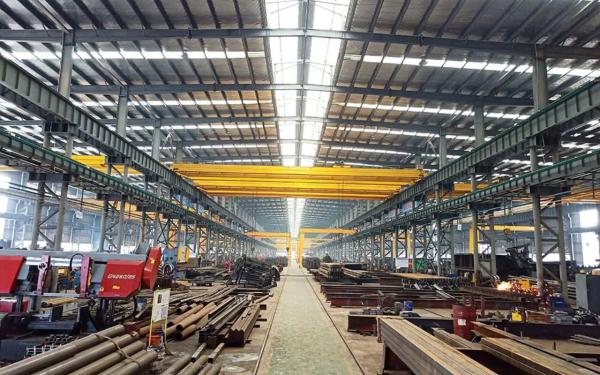
What Are Primer, Intermediate Coat, and Topcoat in Industrial Coating Systems?
Water-based coatings are classified similarly to traditional solvent-based paints and are broadly divided into architectural coatings and industrial coatings. Industrial waterborne coatings are further categorized based on substrate type, application environment, and functional requirements, including alkyd, amino, acr......